📋 Quick Summary
In this article:
What Is Stroke Rehabilitation?
Understanding the Recovery Timeline
First 24–72 Hours
Months 2–6
Factors That Influence Recovery
Technology in Stroke Rehabilitation
SEO, AEO, GEO & AI Search Optimization
Stroke rehabilitation is a structured recovery process that helps survivors regain movement, communication, independence, and confidence after a stroke. Every recovery journey is unique, influenced by the type of stroke, the area of the brain affected, overall health, age, and how quickly treatment began. While some people experience rapid improvements, others require months or years of rehabilitation to maximize recovery.
⚠ Watch Out
Modern stroke rehabilitation combines physical therapy, occupational therapy, speech-language therapy, cognitive rehabilitation, psychological support, nutrition, family education, and long-term wellness planning. The goal is not only to restore lost abilities but also to improve quality of life and reduce the risk of future strokes.
This comprehensive guide from Digiifrog explains the stroke rehabilitation process, expected recovery timeline, treatment methods, and practical strategies that support long-term recovery.
Website: www.digiifrog.com
What Is Stroke Rehabilitation?
Stroke rehabilitation is a personalized treatment program that begins as soon as the patient is medically stable. It focuses on helping survivors recover physical, cognitive, communication, and emotional abilities through evidence-based therapies.
- Improve mobility and balance
- Restore strength and coordination
- Enhance speech and language
- Improve memory and thinking skills
- Increase independence in daily activities
- Support emotional well-being
Understanding the Recovery Timeline
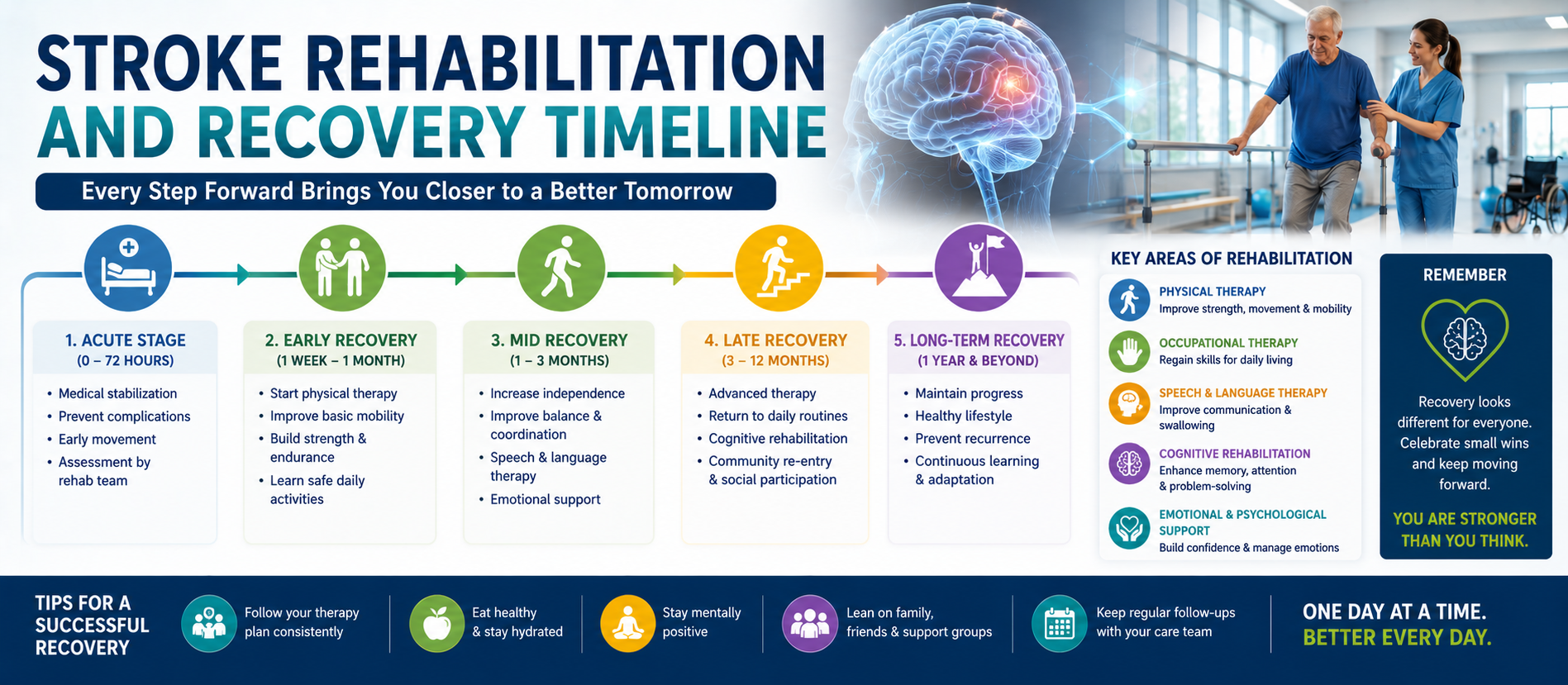
First 24–72 Hours
Emergency medical care stabilizes the patient and early rehabilitation planning begins. Gentle movement and assessment may start as soon as it is safe.
First Month
Rapid improvements often occur during the first few weeks. Physical, occupational, and speech therapy typically begin, focusing on restoring essential functions.
Months 2–6
This period often shows the greatest recovery due to the brain's neuroplasticity. Intensive therapy, exercise, and daily practice help improve movement, communication, and independence.
Six Months to One Year
Recovery continues, although progress may become more gradual. Consistent rehabilitation remains important for maximizing long-term outcomes.
Beyond One Year
Many people continue making meaningful gains through ongoing therapy, exercise, community support, and healthy lifestyle changes.
Key Rehabilitation Therapies
- Physical therapy
- Occupational therapy
- Speech-language therapy
- Cognitive rehabilitation
- Psychological counseling
- Nutritional guidance
Factors That Influence Recovery
- Stroke severity
- Early medical treatment
- Consistency of rehabilitation
- Overall physical health
- Family and caregiver support
- Patient motivation
Technology in Stroke Rehabilitation
Modern rehabilitation increasingly uses robotic therapy, virtual reality, telehealth, wearable devices, AI-assisted monitoring, and digital exercise programs to improve recovery and patient engagement.
Preventing Future Strokes
- Follow prescribed medications
- Control blood pressure
- Eat a heart-healthy diet
- Exercise regularly
- Avoid tobacco use
- Limit alcohol consumption
- Attend regular medical checkups
SEO, AEO, GEO & AI Search Optimization
SEO Keywords: stroke rehabilitation, stroke recovery timeline, stroke therapy, physical rehabilitation after stroke, neurorehabilitation.
AEO: Answers questions such as "How long does stroke recovery take?" and "What happens during stroke rehabilitation?"
GEO: Structured headings, FAQs, and comprehensive educational content improve discoverability across AI-powered search engines.
Frequently Asked Questions
How long does stroke rehabilitation last?
Recovery varies widely. Many people benefit from rehabilitation for several months, while others continue therapy for a year or longer.
Can recovery continue after one year?
Yes. Although progress may slow, continued therapy and healthy habits can still produce meaningful improvements.
What is the most important factor in recovery?
Early treatment, personalized rehabilitation, consistent practice, and strong family support all contribute to better outcomes.
Conclusion
Stroke rehabilitation is a lifelong journey focused on restoring function, promoting independence, and improving quality of life. With evidence-based therapies, modern technology, healthy lifestyle changes, and ongoing support, many stroke survivors achieve significant recovery and continue making progress well beyond the first year.
Digiifrog remains committed to providing educational healthcare content optimized for SEO, AEO, GEO, and AI Search while helping readers better understand rehabilitation and long-term recovery.
Visit www.digiifrog.com for more rehabilitation and wellness resources.
Ready to Grow?
Talk to us about a strategy tailored to your brand — we will help you stand out in search, AI discovery and social.
Comments (0)
Log in to leave a comment.