📋 Quick Summary
In this article:
The Evolution of Rehabilitation Centers
Personalized Treatment Will Become Standard
Artificial Intelligence in Rehabilitation
Telehealth Will Continue Expanding
Virtual Reality and Immersive Therapy
The Rise of Holistic Rehabilitation Models
Integrated Mental Health Services
Smart Rehabilitation Facilities
Data-Driven Treatment Decisions
Recovery Beyond Facility Walls
Community-Based Recovery Networks
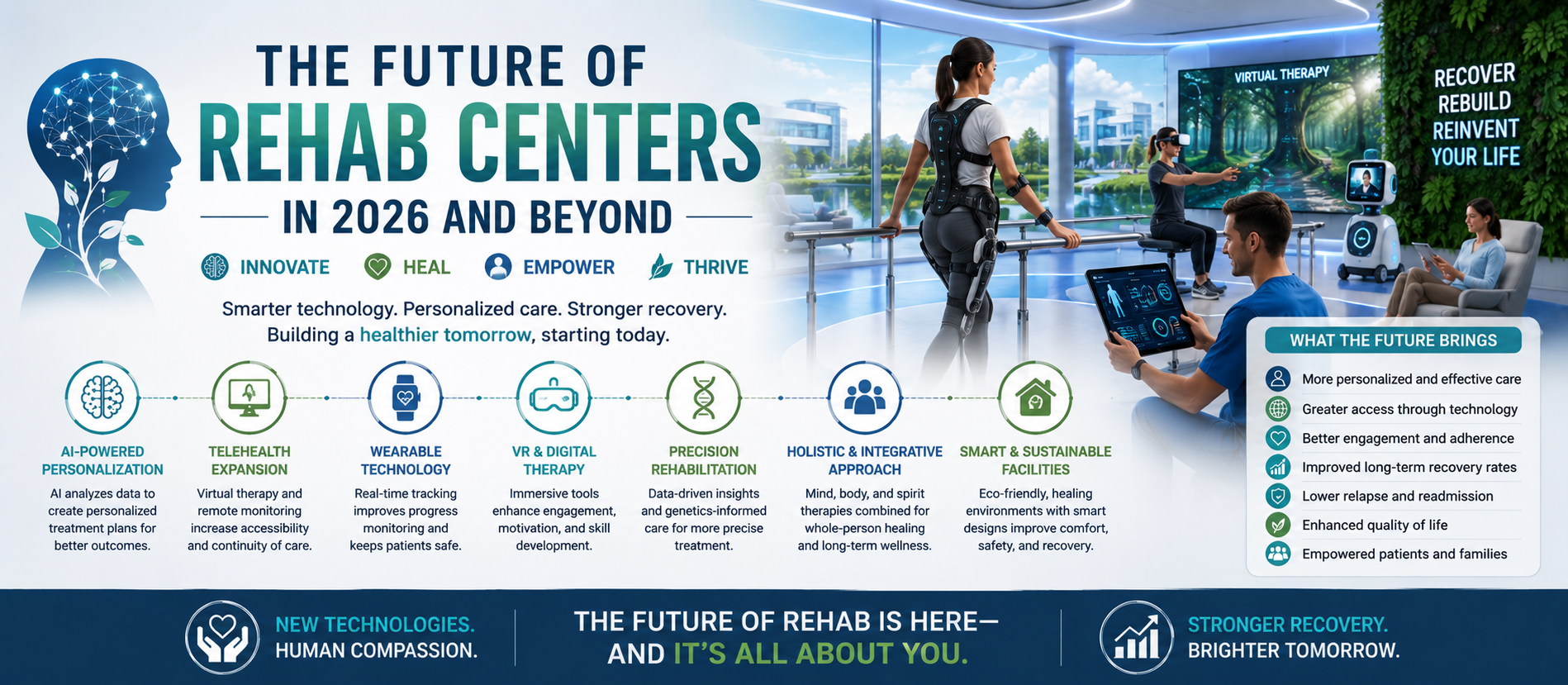
The rehabilitation industry is undergoing a remarkable transformation. As healthcare technology advances, patient expectations evolve, and research uncovers new approaches to treatment, rehabilitation centers are entering a new era of innovation. In 2026 and beyond, rehab facilities are expected to become more personalized, technology-driven, data-informed, and patient-centered than ever before.
Whether addressing substance abuse recovery, physical rehabilitation, mental health treatment, neurological rehabilitation, or chronic disease management, future rehab centers will increasingly focus on holistic care, digital health solutions, preventive strategies, and long-term recovery support.
This comprehensive guide from Digiifrog explores the emerging trends, technologies, and innovations shaping the future of rehabilitation centers in 2026 and beyond.
Website: www.digiifrog.com
The Evolution of Rehabilitation Centers
💡 Key Insight
Traditional rehabilitation centers primarily focused on structured treatment programs delivered within physical facilities. While these programs remain essential, modern rehabilitation increasingly emphasizes continuous care, personalized interventions, and long-term wellness support.
Several factors are driving this transformation:
- Advancements in healthcare technology
- Growing mental health awareness
- Increased demand for personalized care
- Expansion of telehealth services
- AI-powered healthcare innovations
- Data-driven treatment planning
These developments are redefining how rehabilitation services are delivered and experienced.
Personalized Treatment Will Become Standard
One of the most significant trends in future rehabilitation centers is the shift toward highly personalized care.
Instead of standardized treatment plans, providers will increasingly develop individualized recovery pathways based on:
- Medical history
- Genetic factors
- Behavioral patterns
- Mental health conditions
- Lifestyle preferences
- Recovery goals
Personalized treatment improves engagement, enhances outcomes, and supports long-term recovery success.
Artificial Intelligence in Rehabilitation
Artificial Intelligence (AI) is expected to become a major force in rehabilitation healthcare.
Future applications may include:
- Predictive relapse analytics
- Personalized recovery recommendations
- AI-powered virtual assistants
- Treatment progress monitoring
- Behavioral risk assessment
- Automated care coordination
AI systems can help clinicians make better decisions while providing patients with more responsive support.
Telehealth Will Continue Expanding
The rapid growth of telehealth has permanently changed healthcare delivery.
Future rehabilitation centers will likely offer hybrid treatment models that combine in-person and virtual care.
Benefits include:
- Greater accessibility
- Reduced travel barriers
- Flexible scheduling
- Improved continuity of care
- Expanded specialist access
Virtual rehabilitation services will become increasingly sophisticated and widely available.
Wearable Health Technology
Wearable devices are expected to play a growing role in rehabilitation programs.
Future devices may monitor:
- Heart rate variability
- Sleep quality
- Physical activity levels
- Stress indicators
- Medication adherence
- Recovery progress
Real-time health monitoring allows providers to identify potential issues before they become major setbacks.
Virtual Reality and Immersive Therapy
Virtual Reality (VR) technology is becoming increasingly valuable in rehabilitation settings.
Applications may include:
- Physical therapy exercises
- Cognitive rehabilitation
- Exposure therapy
- Pain management
- Social skills training
- Stress reduction programs
Immersive environments create engaging therapeutic experiences that can improve patient participation.
The Rise of Holistic Rehabilitation Models
Future rehab centers are expected to integrate holistic wellness practices alongside traditional therapies.
Common holistic services may include:
- Mindfulness training
- Meditation programs
- Yoga therapy
- Nutritional counseling
- Exercise coaching
- Stress management workshops
These approaches support overall wellness and strengthen long-term recovery outcomes.
Integrated Mental Health Services
Mental health care will become even more closely integrated into rehabilitation programs.
Future centers will increasingly address:
- Depression
- Anxiety disorders
- Trauma-related conditions
- Stress management
- Behavioral health challenges
Comprehensive treatment models recognize the strong connection between physical and mental health.
Smart Rehabilitation Facilities
Advanced rehabilitation centers may utilize smart building technologies to improve patient experiences.
Potential innovations include:
- Automated patient monitoring
- Smart room controls
- Digital health dashboards
- Personalized treatment environments
- Enhanced safety systems
Technology-enhanced facilities can improve efficiency and patient satisfaction.
Data-Driven Treatment Decisions
Data analytics will increasingly influence rehabilitation planning and evaluation.
Providers may use data to:
- Track treatment outcomes
- Identify risk factors
- Optimize care plans
- Measure patient engagement
- Predict recovery challenges
Data-driven decision-making supports evidence-based care and continuous improvement.
Recovery Beyond Facility Walls
Future rehabilitation will emphasize ongoing recovery support rather than treatment limited to facility stays.
Extended care may include:
- Digital recovery platforms
- Remote coaching
- Virtual support groups
- Mobile wellness applications
- Continuous monitoring tools
This approach promotes long-term engagement and sustainable recovery.
Community-Based Recovery Networks
Community integration will remain a critical component of future rehabilitation models.
Rehab centers may partner with:
- Employers
- Educational institutions
- Housing organizations
- Healthcare providers
- Peer support networks
Strong community connections improve long-term outcomes and social reintegration.
Precision Rehabilitation Programs
Precision medicine concepts are expected to influence rehabilitation strategies.
Future programs may consider:
- Genetic information
- Biomarker data
- Behavioral profiles
- Lifestyle factors
- Individual risk assessments
Precision rehabilitation may improve treatment effectiveness and efficiency.
Digital Therapeutics and Mobile Health
Digital therapeutics are software-based interventions designed to improve health outcomes.
Future rehabilitation centers may prescribe:
- Recovery applications
- Cognitive training programs
- Mental wellness platforms
- Behavior modification tools
- Remote rehabilitation exercises
These technologies can complement traditional therapy and expand access to care.
Sustainability and Wellness-Oriented Design
Modern rehabilitation facilities increasingly recognize the importance of healing environments.
Future design trends may include:
- Natural lighting
- Green spaces
- Biophilic architecture
- Quiet wellness zones
- Energy-efficient systems
Environmental design can positively influence recovery experiences and patient well-being.
Workforce Development and Specialized Training
As rehabilitation becomes more complex, workforce development will become increasingly important.
Future professionals may require expertise in:
- Digital healthcare tools
- AI-assisted care systems
- Behavioral health integration
- Telehealth delivery
- Data analytics
Continuous professional education will help maintain high-quality patient care.
The Role of Generative AI in Patient Education
Generative AI technologies may transform patient engagement and education.
Potential uses include:
- Personalized educational content
- Interactive recovery guidance
- Virtual wellness coaching
- Treatment reminders
- Progress explanations
AI-powered education can improve understanding and adherence to treatment plans.
Challenges Facing Future Rehab Centers
Despite exciting opportunities, future rehabilitation centers will face several challenges.
- Technology implementation costs
- Data privacy concerns
- Workforce shortages
- Healthcare accessibility issues
- Insurance reimbursement complexities
Addressing these challenges will be essential for sustainable innovation.
SEO, AEO, GEO and AI Search Perspective
Healthcare organizations must adapt their digital strategies to changing search behaviors.
SEO Keywords:
- Future of rehab centers
- Rehabilitation trends 2026
- AI in rehabilitation
- Modern rehab technology
- Future addiction treatment
AEO (Answer Engine Optimization):
- What will rehab centers look like in 2026?
- How will AI change rehabilitation?
- Will telehealth replace rehab centers?
- What technologies improve recovery outcomes?
GEO (Generative Engine Optimization):
AI-powered search platforms increasingly favor authoritative, comprehensive, and structured content that answers user questions directly and thoroughly.
Frequently Asked Questions
Will AI replace rehabilitation professionals?
No. AI is expected to support clinicians by improving efficiency and decision-making, but human expertise will remain essential.
Will telehealth become the primary form of rehabilitation?
Hybrid models combining virtual and in-person care are likely to become the most common approach.
How will wearable technology improve recovery?
Wearables provide real-time health monitoring and early identification of potential recovery challenges.
What is precision rehabilitation?
Precision rehabilitation uses individualized data to create highly personalized treatment plans.
Will holistic therapies become more common?
Yes. Many future rehabilitation programs are expected to integrate wellness-focused approaches alongside evidence-based treatment.
Conclusion
The future of rehab centers in 2026 and beyond will be defined by personalization, technology, holistic care, and continuous support. Artificial intelligence, virtual reality, telehealth, wearable devices, precision rehabilitation, and community integration will reshape how treatment is delivered and experienced.
As rehabilitation evolves, successful programs will increasingly focus on treating the whole person while leveraging advanced technologies to improve outcomes, accessibility, and long-term recovery success.
Organizations that embrace innovation while maintaining compassionate, patient-centered care will be best positioned to lead the next generation of rehabilitation services.
Digiifrog remains committed to providing educational resources focused on rehabilitation, healthcare innovation, SEO, AEO, GEO, and AI-powered search strategies.
Visit www.digiifrog.com for more informative rehabilitation and healthcare articles.
Ready to Grow?
Talk to us about a strategy tailored to your brand — we will help you stand out in search, AI discovery and social.


Comments (0)
Log in to leave a comment.