📋 Quick Summary
In this article:
1. Comprehensive Assessment
2. Medically Supervised Withdrawal Management
3. Behavioral Therapy
4. Medications for Substance Use Disorders
5. Individual and Group Counseling
6. Family Therapy
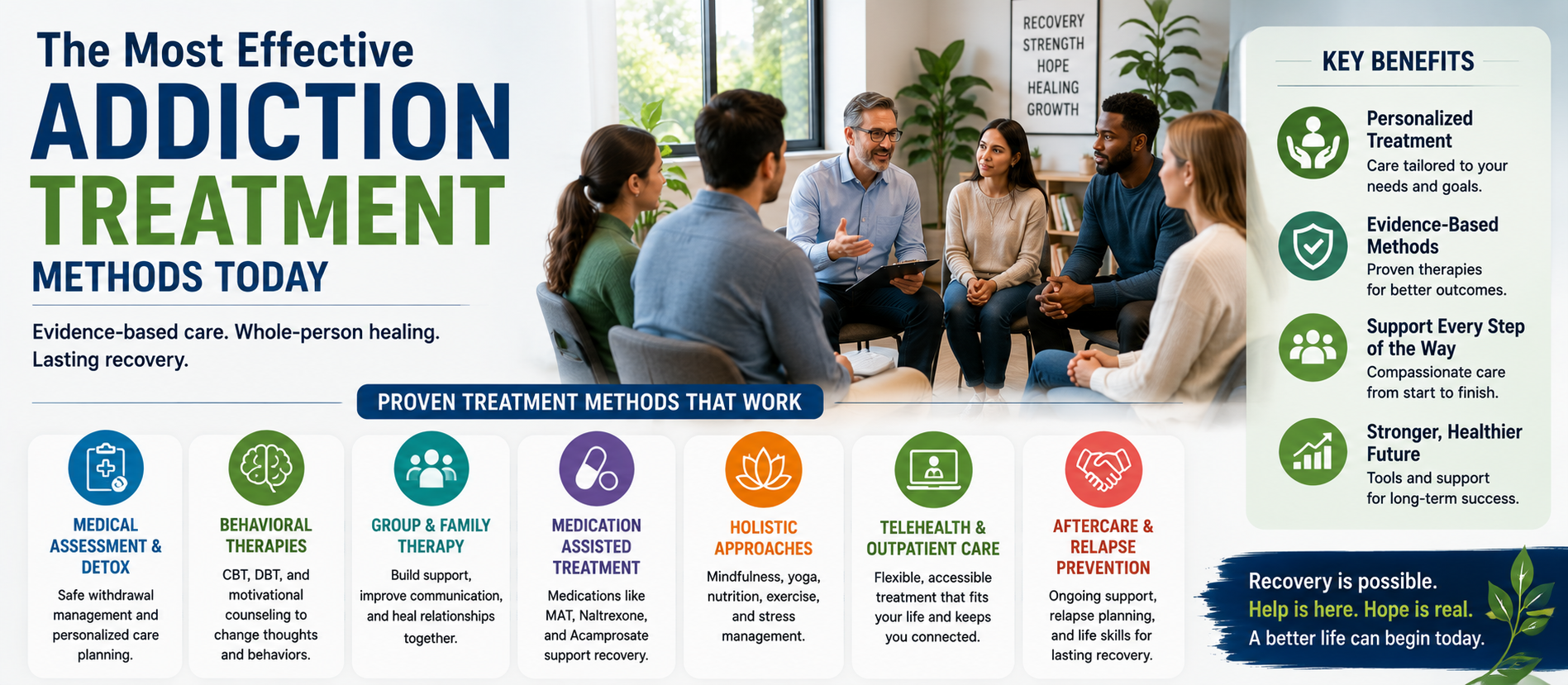
Addiction treatment has evolved into a whole-person approach that can combine medical care, behavioral therapy, medications, family involvement, peer support, and long-term recovery planning. No single method works for everyone. Treatment should be personalized according to the substance involved, severity, physical and mental health, living situation, previous treatment, and individual goals.
What Is Addiction Treatment?
Addiction treatment is a structured process designed to reduce harmful substance use, manage cravings and withdrawal, address contributing factors, improve health, and develop skills for lasting recovery. Care may be provided through outpatient programs, intensive outpatient services, residential rehabilitation, hospitals, or telehealth when clinically appropriate.
1. Comprehensive Assessment
A strong treatment plan begins with assessment. Professionals may review substance use patterns, medical history, mental health, medications, family circumstances, housing, employment, and previous treatment. Assessment helps determine the appropriate level of care and identify co-occurring conditions that also need attention.
2. Medically Supervised Withdrawal Management
Some people need medical supervision when stopping alcohol, opioids, sedatives, or other substances. Withdrawal can range from uncomfortable symptoms to potentially serious complications. The safest approach depends on the substance, amount used, duration of use, and individual health.
Withdrawal management is an important first step for some patients, but it is not the same as complete addiction treatment. Continued care is often needed to address behavior, health, environment, and relapse risk.
3. Behavioral Therapy
Behavioral therapy helps people understand patterns associated with substance use and develop healthier responses to cravings, stress, triggers, and difficult situations.
Cognitive Behavioral Therapy
CBT helps people identify unhelpful thoughts and behaviors and replace them with healthier strategies. It can teach practical skills for managing cravings and high-risk situations.
Motivational Interviewing
Motivational interviewing helps people explore their reasons for change and strengthen motivation, especially when they feel uncertain about treatment.
Contingency Management
Contingency management uses structured incentives to reinforce desired recovery behaviors and has evidence for several substance use disorders.
4. Medications for Substance Use Disorders
For some substance use disorders, medications are an important evidence-based treatment option. Medication choices should be made with qualified healthcare professionals because suitability, interactions, side effects, and monitoring requirements vary.
Opioid Use Disorder
Common FDA-approved medications include buprenorphine, methadone, and naltrexone. They can reduce cravings and withdrawal and support continued recovery. They may be used for extended periods when clinically appropriate.
Alcohol Use Disorder
Common medications include acamprosate, disulfiram, and naltrexone. They can be valuable components of a broader treatment plan that includes counseling and recovery support.
5. Individual and Group Counseling
Individual counseling provides space to explore substance use, emotions, relationships, trauma, motivation, and recovery goals. Group counseling provides opportunities to learn from others, practice communication, reduce isolation, and build community.
6. Family Therapy
Addiction affects families as well as individuals. Family therapy can improve communication, establish healthier boundaries, reduce conflict, and help relatives understand recovery. Family participation should be guided by the person's needs and qualified professionals.
7. Integrated Treatment for Co-Occurring Conditions
Some people experience both a substance use disorder and a mental health condition. Integrated treatment addresses both concerns. Depending on individual needs, care may include therapy, medication management, psychiatric services, case management, and peer support.
8. Residential Rehabilitation
Residential rehab provides a structured living environment with intensive treatment. Programs may include medical services, therapy, group sessions, education, family services, wellness activities, and discharge planning. Residential care can be useful when a person needs significant structure or has a home environment that makes recovery difficult.
9. Outpatient and Intensive Outpatient Treatment
Outpatient treatment allows people to receive care while living at home. Intensive outpatient programs provide more frequent treatment while allowing participants to maintain certain home, education, or employment responsibilities. Outpatient care can also be delivered through telehealth when clinically appropriate.
10. Telehealth Addiction Treatment
Telehealth can provide counseling, follow-up appointments, medication management, and recovery support for people facing distance, transportation, or scheduling barriers. It is not appropriate for every situation; people requiring emergency or intensive in-person care may need a higher level of support.
11. Peer Recovery Support
Peer recovery support connects people with others who have relevant lived experience. Peer workers and mutual-support communities can provide encouragement, practical knowledge, accountability, and belonging. Peer support complements rather than replaces professional healthcare.
12. Relapse Prevention
Relapse prevention involves identifying high-risk situations, developing coping skills, strengthening support networks, improving stress management, and creating a plan for warning signs. A setback should be treated as a reason to reassess support, not as proof that recovery is impossible.
13. Recovery-Oriented Aftercare
Aftercare helps people transition from intensive treatment to everyday life. It may include continuing therapy, medication follow-up, peer support, recovery groups, family services, vocational assistance, housing support, and regular healthcare.
14. Choosing a Quality Treatment Program
Look for licensed and appropriately accredited providers, evidence-based methods, individualized care, qualified professionals, clear medication policies, family services when appropriate, and continuing-care planning. Ask how progress is measured, how treatment is changed when needs evolve, and what happens after discharge.
How to Choose the Right Level of Care
The appropriate level depends on withdrawal risk, medical needs, mental health, current substance use, previous treatment outcomes, housing stability, family support, work responsibilities, and the person's ability to participate safely. A qualified professional can help determine whether outpatient, intensive outpatient, residential, or medically supervised care is appropriate.
Signs of an Effective Recovery Plan
- Personalized rather than one-size-fits-all.
- Addresses physical and mental health needs.
- Uses evidence-based therapies.
- Considers medication when clinically appropriate.
- Includes relapse-prevention strategies.
- Uses family or peer support when appropriate.
- Includes continuing care after intensive treatment.
- Reviews progress and adjusts treatment as needed.
SEO, AEO, GEO & AI Search FAQs
What is the most effective addiction treatment?
There is no single best treatment for everyone. Evidence supports individualized care that may combine behavioral therapy, medications when appropriate, medical services, family involvement, and recovery support.
Is medication effective for addiction treatment?
For some substance use disorders, FDA-approved medications are effective components of treatment. Opioid and alcohol use disorders have established medication options that should be selected and monitored by qualified healthcare professionals.
Is detox enough to treat addiction?
No. Withdrawal management may help a person safely move through withdrawal, but ongoing treatment is generally needed to address behavioral, psychological, social, and medical factors.
Can addiction treatment be done at home?
Some people can receive outpatient or telehealth care while living at home. The appropriate setting depends on clinical needs and safety.
How long should addiction treatment last?
There is no universal duration. Length and intensity depend on the person's condition, goals, response to treatment, and continuing support needs.
Conclusion
The most effective addiction treatment methods today are based on individualized, whole-person care. Behavioral therapies, medications when appropriate, medical support, family involvement, peer services, telehealth, and structured aftercare can work together to address different aspects of substance use disorders.
💡 Key Insight
Recovery is personal and may involve more than one treatment approach. The most important step is connecting with qualified professionals who can assess individual needs and create a safe, evidence-based plan that evolves over time.
Important: This article is educational and does not replace medical advice, diagnosis, or individualized treatment. Anyone considering withdrawal from alcohol, opioids, sedatives, or another substance should discuss a safe plan with a qualified healthcare professional.
For more rehabilitation and wellness content with SEO, AEO, GEO, and AI Search Optimization, visit Digiifrog at www.digiifrog.com.
Why Individualized Treatment Works Better
Addiction is influenced by biology, psychology, environment, relationships, stress, and access to substances. Because these factors differ from one person to another, a standardized program may not address every important need. Individualized care allows professionals to consider the person's goals, medical history, cultural background, family circumstances, and practical barriers to treatment.
Personalization also means treatment can change over time. Someone may begin with intensive support and later move to less intensive services as stability improves. Another person may need additional counseling, medication management, or social services if new challenges appear. This flexibility is an important part of modern recovery-oriented care.
The Role of Nutrition, Sleep, and Physical Activity
Healthy lifestyle habits do not replace addiction treatment, but they can support overall recovery. Regular meals, adequate hydration, consistent sleep, and appropriate physical activity can help create structure and improve general well-being.
Recovery plans should be realistic. Small, sustainable changes are often easier to maintain than dramatic lifestyle changes. Healthcare professionals can help determine what activities are appropriate, particularly for people recovering from significant medical problems.
Addressing Triggers and Cravings
Triggers can include certain people, places, emotions, memories, stressors, or routines associated with substance use. Treatment can help individuals recognize these patterns before they become overwhelming.
Useful coping strategies may include contacting a support person, leaving a high-risk environment, practicing relaxation techniques, attending a scheduled support meeting, using skills learned in therapy, or contacting a treatment professional. A personalized plan is especially useful because cravings can occur unexpectedly.
Employment, Housing, and Social Stability
Recovery does not happen in isolation. Employment, education, housing, transportation, finances, and relationships can strongly affect a person's ability to maintain progress. Quality treatment programs may help connect people with practical resources such as housing assistance, employment counseling, transportation support, and community services.
Meaningful activities can also create purpose and structure. Work, education, volunteering, caregiving, creative projects, and healthy social activities can become important parts of a recovery lifestyle.
What Families Should Know
Family members may experience fear, frustration, anger, guilt, or uncertainty. Education can help relatives understand that addiction is a treatable health condition and that recovery can involve setbacks as well as progress.
Support does not mean taking responsibility for another person's recovery. Healthy boundaries, clear communication, and professional guidance can help families provide encouragement while protecting their own well-being.
When Treatment Needs to Change
A treatment plan may need adjustment if cravings remain severe, substance use continues, side effects occur, mental health symptoms worsen, living circumstances change, or the person is struggling to participate in the current level of care.
Changing treatment is not necessarily a failure. Addiction recovery can require multiple approaches over time. The goal is to find the combination of services that provides appropriate safety, engagement, and long-term support.
Questions to Ask a Rehab Center
- Are the program and clinicians appropriately licensed?
- Which evidence-based therapies are offered?
- Does the program assess mental health and medical needs?
- Are medications for substance use disorders available when appropriate?
- How is treatment individualized?
- How are emergencies and withdrawal risks handled?
- Are family services available?
- Does the program offer aftercare and relapse-prevention planning?
- Can the level of care be changed if needs change?
- Are there services for employment, housing, or other practical needs?
Evidence-Based Care and Recovery Support
Modern addiction treatment is strongest when clinical care and recovery support work together. Medication may address cravings or withdrawal, behavioral therapy can build coping skills, family services can strengthen relationships, and peer support can reduce isolation. Practical services can address the everyday barriers that make recovery harder.
According to SAMHSA, treatment can include medications, counseling, behavioral therapies, and recovery supports, with care tailored to individual needs. NIDA also emphasizes that no single treatment is appropriate for everyone and that treatment should address multiple needs rather than substance use alone.
Final Takeaway for People Seeking Treatment
Choosing treatment is a major step, but finding the right type of care is equally important. Start with a qualified healthcare professional or reputable treatment provider who can conduct an assessment and explain available options. Be cautious of programs promising instant cures, guaranteed results, or approaches that discourage evidence-based medical care.
The most effective path is usually one that is safe, individualized, evidence-based, and connected to continuing support. Recovery can take time, and seeking help more than once does not mean a person has failed. Treatment can be adjusted as circumstances change, and long-term recovery is possible for many people.
Ready to Grow?
Talk to us about a strategy tailored to your brand — we will help you stand out in search, AI discovery and social.


Comments (0)
Log in to leave a comment.