📋 Quick Summary
In this article:
What Is Holistic Addiction Treatment?
Why Addiction Requires a Whole-Person Approach
1. Medical Assessment Comes First
2. Evidence-Based Medication Treatment
3. Behavioral Therapy and the Brain
4. Treating Mental Health and Addiction Together
5. Nutrition and Physical Health
6. Exercise and Physical Activity
7. Sleep and Recovery
8. Stress Management and Emotional Regulation
9. Mindfulness and Meditation
10. Family and Relationship Support
💡 Key Insight
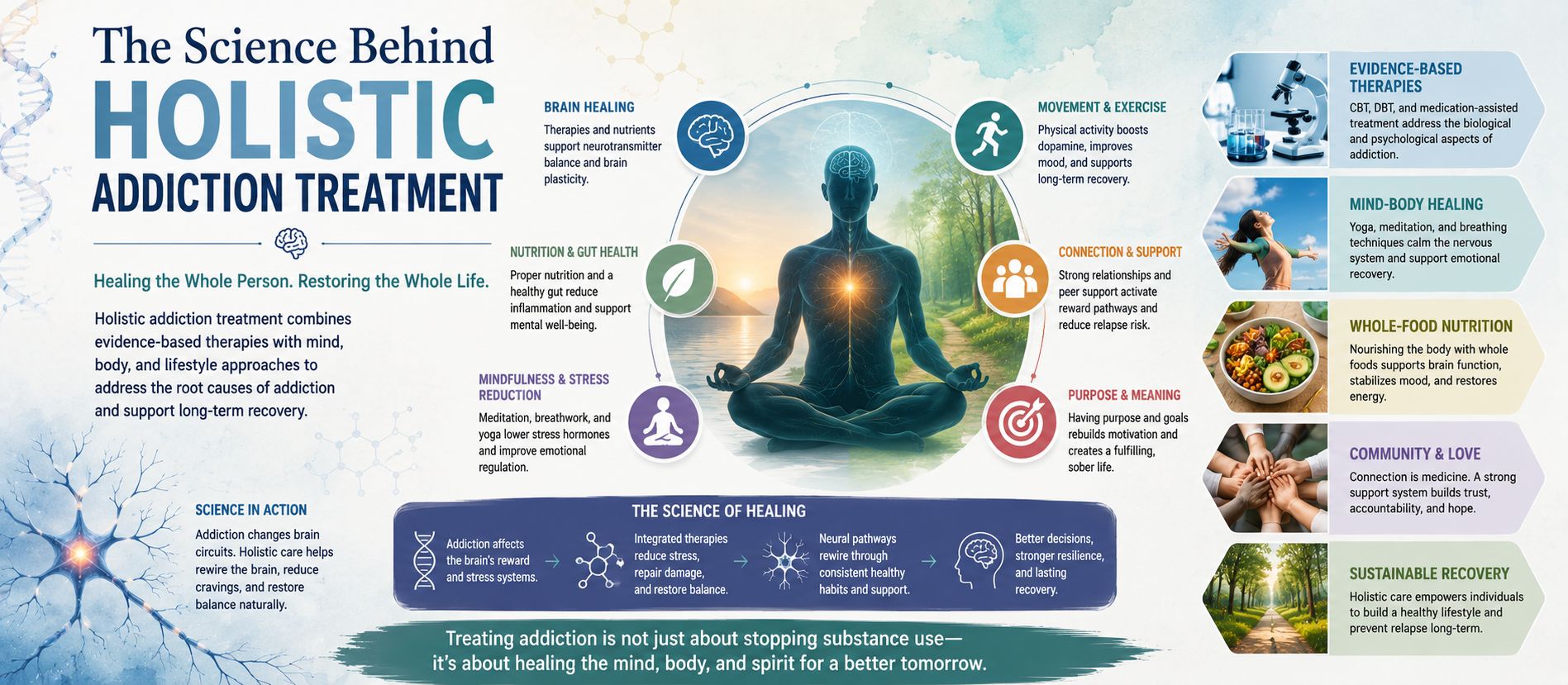
Holistic addiction treatment is based on a simple but important idea: substance use disorders can affect many areas of a person's life, so effective recovery may need to address more than substance use alone. Physical health, mental health, behavior, relationships, sleep, nutrition, housing, employment, purpose, and social connection can all influence recovery.
Modern evidence does not support replacing proven addiction treatments with unproven “natural” cures. Instead, the strongest interpretation of holistic care is an integrated, whole-person approach that combines evidence-based medical and behavioral treatment with appropriate supportive services. SAMHSA describes medication combined with counseling and behavioral therapies as a whole-patient approach to substance use disorder treatment, while current federal programs emphasize integrated physical and behavioral healthcare. citeturn0search7turn0search0
What Is Holistic Addiction Treatment?
Holistic treatment looks at the person rather than focusing exclusively on the substance. A comprehensive plan may include medical assessment, medications when appropriate, psychotherapy, exercise, nutrition support, family services, peer recovery support, sleep management, vocational assistance, and treatment for co-occurring mental or physical health conditions.
The goal is not to use every possible therapy. The goal is to identify the interventions that are appropriate, safe, evidence-informed, and meaningful for the individual.
Why Addiction Requires a Whole-Person Approach
Substance use disorders can influence brain reward and motivation systems, decision-making, stress responses, relationships, and daily functioning. At the same time, pain, anxiety, depression, trauma, unstable housing, financial stress, and social isolation can affect substance use and recovery.
NIDA's treatment principles emphasize that effective care should address multiple needs rather than drug use alone. NIDA also describes evidence-based treatment as including pharmacotherapies and behavioral therapies, with other medical, psychological, and social services often contributing to better care. citeturn0search24
1. Medical Assessment Comes First
A holistic program should begin with an appropriate assessment. Clinicians may review substance use, withdrawal risk, physical health, medications, mental health, sleep, nutrition, family circumstances, and social needs.
This assessment helps determine the right level of care. A person with significant withdrawal risk may need medical supervision, while another person may be appropriate for outpatient counseling. Treatment should be based on clinical need rather than a fixed program formula.
2. Evidence-Based Medication Treatment
Medication can be an important part of holistic addiction care. For some substance use disorders, approved medications can reduce cravings, manage withdrawal, reduce harmful use, or support sustained recovery.
SAMHSA states that medications combined with counseling and behavioral therapies can provide a whole-patient approach and that medication treatment can improve retention and other recovery outcomes. citeturn0search7
Medication is not appropriate for every person or every substance use disorder. Decisions should be made by qualified healthcare professionals after considering medical history, risks, benefits, interactions, and individual preferences.
3. Behavioral Therapy and the Brain
Behavioral therapies help people change patterns associated with substance use. Cognitive Behavioral Therapy can identify thoughts and situations that contribute to harmful behavior and develop alternative coping strategies. Motivational approaches can strengthen readiness for change, while other evidence-based behavioral interventions can reinforce recovery behaviors.
These therapies matter because recovery requires more than removing a substance. People need practical skills for handling cravings, stress, relationships, emotions, and high-risk situations.
4. Treating Mental Health and Addiction Together
Some people experience substance use disorders alongside depression, anxiety, PTSD, or other mental health conditions. Treating these conditions separately can create gaps in care.
SAMHSA recommends integrated screening and treatment for co-occurring mental health and substance use disorders. Its current guidance states that integrated care can improve treatment and recovery outcomes, functioning, quality of life, and housing stability. citeturn0search1
5. Nutrition and Physical Health
Substance use can disrupt appetite, eating patterns, hydration, sleep, and general health. A holistic rehabilitation plan may therefore include nutritional assessment and practical support for developing regular, balanced meals.
Nutrition is supportive rather than a standalone treatment for addiction. Its role is to help address overall health and provide a stable foundation for recovery.
6. Exercise and Physical Activity
Appropriate physical activity can support cardiovascular health, strength, sleep, mood, and daily structure. Exercise may also provide a healthy alternative activity during periods when cravings or stress are high.
A rehabilitation program should select activities according to the person's health, fitness, age, injuries, and medical needs. Walking, stretching, strength training, swimming, yoga, or other activities may be appropriate for different individuals.
7. Sleep and Recovery
Sleep problems are common among people with substance use disorders and may continue during early recovery. Poor sleep can increase stress and make coping with cravings more difficult.
Holistic care can address sleep through consistent routines, appropriate activity, treatment of underlying conditions, behavioral strategies, and professional assessment when persistent insomnia or other sleep problems occur.
8. Stress Management and Emotional Regulation
Stress is a common trigger for substance use. Recovery therefore involves learning healthier ways to respond to difficult emotions and stressful circumstances.
Depending on the person, useful skills may include breathing exercises, mindfulness, journaling, problem-solving, relaxation, exercise, counseling, and reaching out to a trusted support person. These techniques should complement evidence-based treatment rather than replace it.
9. Mindfulness and Meditation
Mindfulness practices are sometimes incorporated into addiction recovery programs to help people notice thoughts, emotions, and cravings without immediately acting on them. Meditation, breathing exercises, and related practices may support stress management and self-awareness.
However, evidence varies by intervention and population. Mindfulness should be viewed as a supportive tool, not as a substitute for medication or evidence-based psychotherapy when those treatments are indicated.
10. Family and Relationship Support
Addiction can damage trust and communication. Family therapy and relationship-focused services can help relatives understand substance use disorders, establish healthier boundaries, improve communication, and support recovery.
NIDA's treatment principles recognize the importance of addressing family and social needs alongside addiction treatment. citeturn0search24
11. Peer Recovery Support
People in recovery may benefit from connection with peers who have lived experience. Peer support can provide encouragement, practical knowledge, accountability, and a sense of belonging.
Peer services can complement clinical treatment. They do not have to replace professional medical or behavioral care.
12. Addressing Housing and Employment
Recovery can be difficult when a person lacks stable housing, employment, transportation, or financial security. Holistic treatment recognizes these practical issues as part of the recovery environment.
SAMHSA's current treatment and workforce initiatives emphasize connecting people in substance use treatment and recovery with supports that help them live independently and participate in the workforce. citeturn0search6
13. Purpose, Routine, and Meaning
Long-term recovery often involves creating a life that feels worth protecting. Work, education, volunteering, hobbies, family responsibilities, creativity, and community involvement can provide structure and purpose.
A holistic program can help individuals identify realistic goals and gradually rebuild routines. These goals should be personally meaningful rather than imposed by others.
14. Trauma-Informed Care
Some people with substance use disorders have experienced trauma. Trauma-informed care aims to create an environment that emphasizes safety, trust, collaboration, choice, and empowerment.
Trauma should be assessed and treated by qualified professionals. A holistic approach should never assume that every person has the same trauma history or needs the same therapy.
15. Recovery After Residential Treatment
Residential rehabilitation can provide structure, but recovery continues after discharge. A holistic aftercare plan may include outpatient therapy, medication follow-up, peer support, family counseling, exercise, employment assistance, housing resources, and regular healthcare.
NIDA emphasizes that treatment needs to continue for an adequate period and that people may need different combinations and levels of services as their circumstances change. citeturn0search24
16. Technology and Telehealth
Telehealth and digital tools can expand access to counseling, follow-up care, education, and recovery support. Technology may be particularly useful for people who face transportation, distance, scheduling, or specialist-access barriers.
Digital services should still use appropriate clinical standards and privacy protections. They are not suitable for every medical or emergency situation.
17. How the Science Fits Together
The science behind holistic addiction treatment is not that every complementary therapy independently cures addiction. The stronger scientific principle is integration.
Medication can address biological aspects of some substance use disorders. Behavioral therapy can build coping and decision-making skills. Mental health treatment can address co-occurring conditions. Family and peer support can strengthen social connection. Nutrition, exercise, sleep, housing, and employment services can improve the conditions in which recovery takes place.
When these components are coordinated around the individual's needs, treatment becomes more comprehensive without abandoning evidence-based medicine.
How to Evaluate a Holistic Rehab Program
- Does the program provide licensed medical and behavioral health professionals?
- Are evidence-based medications available when clinically appropriate?
- Are behavioral therapies part of the treatment plan?
- Does the program screen for mental health and physical health conditions?
- Are family and peer supports available when appropriate?
- Does the program address housing, employment, or other practical needs?
- Are complementary services clearly described as supportive rather than miracle cures?
- Is there a continuing-care and relapse-prevention plan?
- Can treatment be adjusted as the person's needs change?
SEO, AEO, GEO & AI Search FAQs
What is holistic addiction treatment?
Holistic addiction treatment is a whole-person approach that combines evidence-based addiction care with appropriate support for physical health, mental health, relationships, lifestyle, social needs, and long-term recovery.
Is holistic addiction treatment evidence-based?
Some components of holistic care, such as medications, behavioral therapies, integrated mental health treatment, and recovery support, have strong evidence. Complementary practices have varying levels of evidence and should not replace proven treatment.
Can nutrition cure addiction?
No. Nutrition can support general health, but it is not a standalone cure for a substance use disorder. Evidence-based addiction treatment may include behavioral therapy, medication when appropriate, and recovery support.
Does exercise help addiction recovery?
Appropriate exercise can support physical health, mood, sleep, routine, and overall well-being. It should complement rather than replace professional addiction treatment.
Why is mental health treatment important in addiction recovery?
Co-occurring mental health and substance use disorders can complicate recovery. Integrated treatment addresses both conditions and can improve functioning and quality of life. citeturn0search1
What makes a holistic rehab center trustworthy?
A trustworthy program combines qualified professionals and evidence-based treatment with individualized supportive services. Be cautious of programs promising guaranteed cures or asking patients to replace established medical treatment with unsupported alternatives.
Conclusion
The science behind holistic addiction treatment is ultimately the science of treating the whole person. Effective recovery care does not need to choose between medical treatment and supportive wellness strategies. Instead, the strongest approach integrates appropriate medications, behavioral therapies, mental healthcare, family and peer support, physical health, nutrition, sleep, meaningful activity, and practical recovery resources.
Because every substance use disorder is different, treatment should be individualized and regularly reassessed. A holistic approach is most useful when it expands the person's support system without replacing treatments that have demonstrated effectiveness.
Important: This article is for educational purposes and does not replace medical diagnosis or treatment. People considering withdrawal from alcohol, opioids, sedatives, or other substances should consult qualified healthcare professionals because withdrawal can sometimes be medically dangerous.
For more rehabilitation, addiction recovery, SEO, AEO, GEO, and AI Search Optimization content, visit Digiifrog at www.digiifrog.com.
Sources: Substance Abuse and Mental Health Services Administration (SAMHSA) and National Institute on Drug Abuse (NIDA).
Ready to Grow?
Talk to us about a strategy tailored to your brand — we will help you stand out in search, AI discovery and social.

Comments (0)
Log in to leave a comment.