📋 Quick Summary
In this article:
Why Cyber Security Trends Matter in 2026
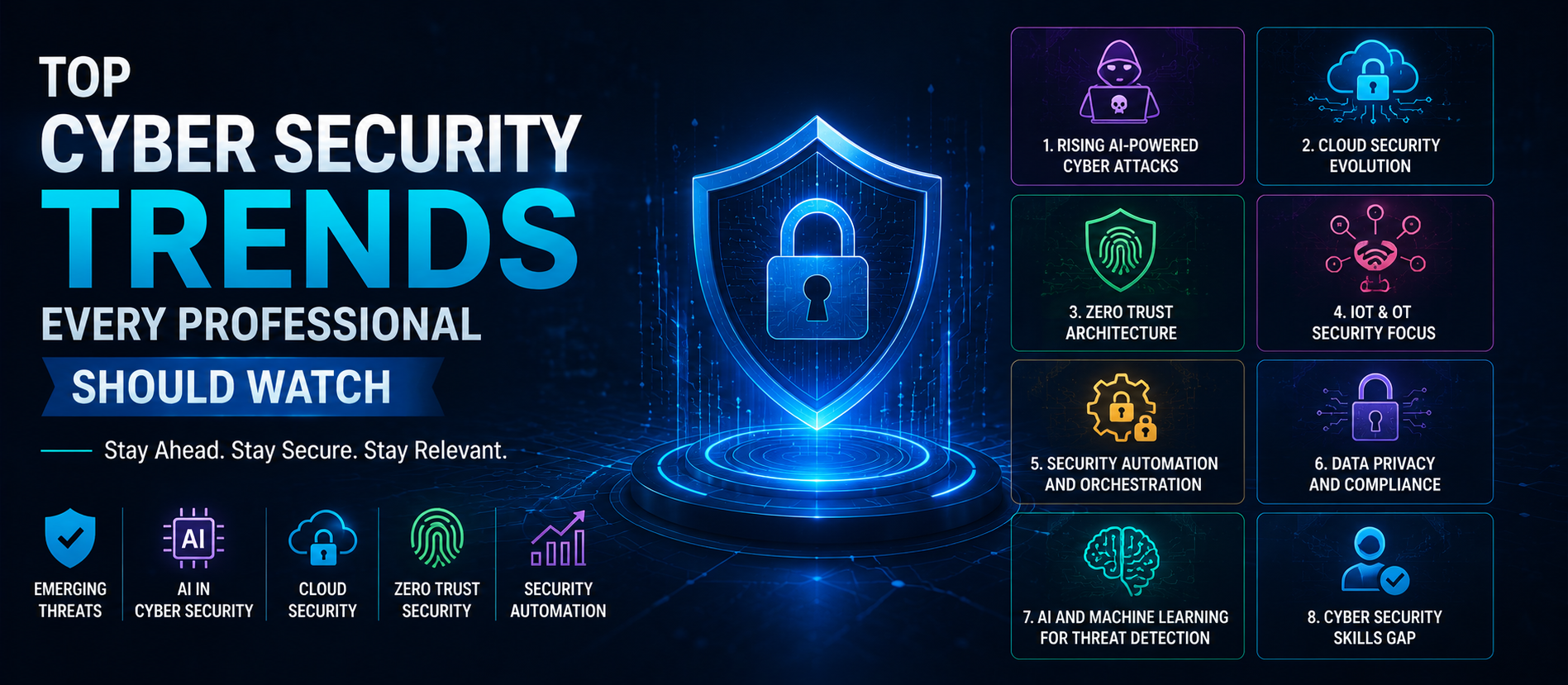
Trend #1: Artificial Intelligence Becomes Both Defender and Attacker
Trend #2: Zero Trust Security Becomes the New Standard
Trend #3: Ransomware Evolution Continues
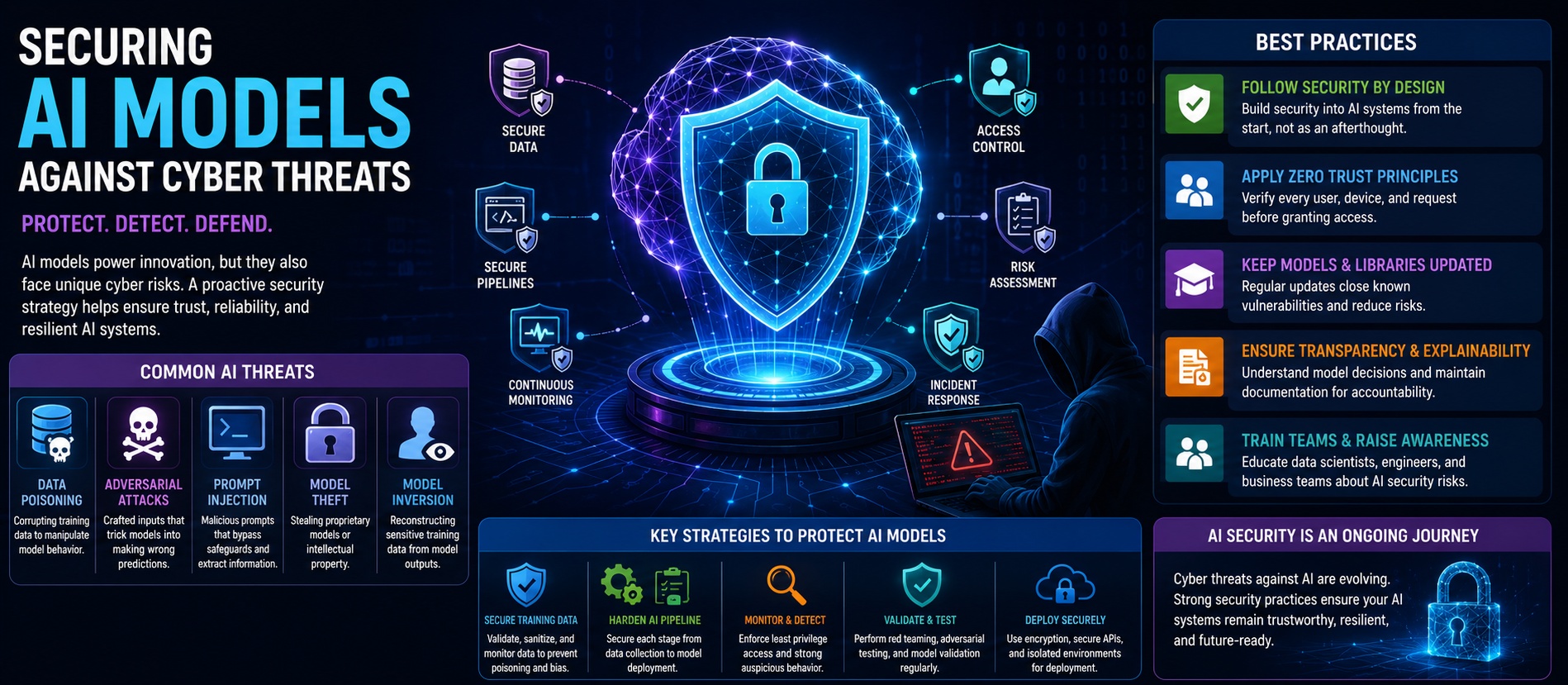
Trend #4: Cyber Security for Artificial Intelligence Systems
Trend #5: Cloud Security Remains a Top Priority
Trend #6: Identity and Access Management (IAM) Expansion
Trend #7: Growth of Security Automation
Trend #8: Supply Chain Security Receives Greater Attention
Trend #9: Internet of Things (IoT) Security Expansion
Trend #10: Cyber Security Skills Gap Continues
Trend #11: Behavioral Analytics and Threat Intelligence
Cyber security has become one of the most critical priorities for organizations worldwide. As digital transformation accelerates, businesses are increasingly relying on cloud computing, artificial intelligence, remote work technologies, connected devices, and data-driven operations. While these innovations create new opportunities, they also introduce evolving cyber threats.
In 2026, cyber criminals are using sophisticated attack methods powered by automation, artificial intelligence, ransomware-as-a-service, social engineering, and advanced malware. As a result, cyber security professionals, business leaders, IT managers, and technology decision-makers must stay informed about emerging trends.
This comprehensive guide explores the top cyber security trends shaping the future of digital protection, helping organizations prepare for the next generation of cyber threats while improving SEO, AEO, GEO, and AI Search visibility.
Why Cyber Security Trends Matter in 2026
The cyber threat landscape evolves faster than ever before. New technologies create new vulnerabilities, while attackers continuously develop innovative methods to bypass traditional defenses.
Organizations that understand emerging cyber security trends can:
- Reduce cyber risk
- Protect sensitive data
- Maintain regulatory compliance
- Strengthen customer trust
- Improve business resilience
- Prevent costly breaches
💡 Key Insight
Staying informed is no longer optional—it is essential for business survival.
Trend #1: Artificial Intelligence Becomes Both Defender and Attacker
Artificial Intelligence (AI) is transforming cyber security at an unprecedented pace.
On the defensive side, AI helps organizations:
- Detect threats faster
- Analyze massive data sets
- Identify unusual behavior
- Automate incident response
- Predict future risks
However, cyber criminals are also leveraging AI to automate attacks, generate realistic phishing emails, identify vulnerabilities, and create malware variants.
The battle between AI-powered attackers and AI-powered defenders will define the cyber security landscape throughout 2026 and beyond.
Trend #2: Zero Trust Security Becomes the New Standard
Traditional perimeter-based security models are rapidly becoming obsolete.
⚠ Watch Out
Zero Trust follows a simple principle: "Never Trust, Always Verify."
Organizations implementing Zero Trust focus on:
- Continuous authentication
- Least privilege access
- Micro-segmentation
- Device verification
- Identity-based security
As hybrid work environments continue expanding, Zero Trust architectures are becoming essential.
Trend #3: Ransomware Evolution Continues
Ransomware remains one of the most damaging cyber threats.
Recent trends include:
- Double extortion attacks
- Triple extortion campaigns
- Cloud-focused ransomware
- Supply chain ransomware
- Ransomware-as-a-Service (RaaS)
Modern ransomware groups operate like professional businesses, complete with customer support, affiliate programs, and sophisticated infrastructure.
Trend #4: Cyber Security for Artificial Intelligence Systems
Organizations increasingly deploy AI-powered systems, creating a new category of cyber risk.
AI security concerns include:
- Data poisoning attacks
- Model theft
- Prompt injection attacks
- Unauthorized model access
- Training data manipulation
Protecting AI systems is becoming a specialized cyber security discipline.
Trend #5: Cloud Security Remains a Top Priority
Cloud adoption continues to accelerate across industries.
Organizations face challenges related to:
- Misconfigured cloud environments
- Identity management
- Data exposure
- Access control
- Multi-cloud complexity
Cloud security strategies must evolve alongside rapidly changing cloud architectures.
Trend #6: Identity and Access Management (IAM) Expansion
Identity has become the new security perimeter.
Organizations are increasingly investing in:
- Multi-Factor Authentication (MFA)
- Passwordless authentication
- Biometric verification
- Privileged Access Management (PAM)
- Adaptive authentication
Strong identity controls reduce the risk of unauthorized access.
Trend #7: Growth of Security Automation
Security teams face growing workloads and talent shortages.
Automation helps by:
- Reducing response times
- Automating investigations
- Prioritizing alerts
- Managing vulnerabilities
- Streamlining compliance tasks
Security Orchestration, Automation, and Response (SOAR) platforms are becoming increasingly important.
Trend #8: Supply Chain Security Receives Greater Attention
Attackers increasingly target suppliers, software vendors, and third-party service providers.
Organizations are implementing:
- Vendor risk assessments
- Software Bill of Materials (SBOM)
- Third-party security audits
- Continuous supplier monitoring
Supply chain security has become a board-level concern.
Trend #9: Internet of Things (IoT) Security Expansion
Billions of connected devices are now part of modern business operations.
Common IoT security concerns include:
- Weak passwords
- Unpatched firmware
- Device hijacking
- Botnet attacks
- Insecure communications
Organizations must implement robust device security policies to reduce risk.
Trend #10: Cyber Security Skills Gap Continues
Demand for qualified cyber security professionals remains extremely high.
Organizations face challenges in recruiting experts for:
- Threat hunting
- Cloud security
- Incident response
- AI security
- Digital forensics
Upskilling employees and investing in training programs are becoming strategic priorities.
Trend #11: Behavioral Analytics and Threat Intelligence
Traditional signature-based detection methods are no longer sufficient.
Behavioral analytics systems monitor:
- User activity
- Network behavior
- Device interactions
- Application usage
These systems help identify suspicious behavior before significant damage occurs.
Trend #12: Cyber Security Regulations Continue Expanding
Governments worldwide are introducing stricter security requirements.
Organizations must comply with regulations covering:
- Data privacy
- Breach notification
- Critical infrastructure protection
- Cloud security
- Consumer protection
Compliance and cyber security are becoming increasingly interconnected.
Trend #13: Remote and Hybrid Work Security
Remote work remains a permanent component of many business models.
Security priorities include:
- Endpoint protection
- VPN security
- Device management
- Identity verification
- Secure collaboration tools
Organizations must secure users regardless of location.
Trend #14: Quantum Computing Preparation
Although large-scale quantum computing is still developing, organizations are preparing for future risks.
Quantum computers could potentially break traditional encryption methods.
Cyber security teams are exploring:
- Quantum-resistant cryptography
- Post-quantum encryption
- Future-proof security frameworks
Trend #15: Human-Centric Security Culture
Technology alone cannot stop cyber attacks.
Organizations increasingly recognize the importance of:
- Employee awareness training
- Phishing simulations
- Security culture development
- Executive involvement
- Continuous education
Employees remain one of the most important lines of defense.
How Organizations Can Prepare for Future Cyber Security Trends
Successful organizations take a proactive approach by:
- Conducting regular risk assessments
- Implementing Zero Trust principles
- Investing in AI-powered defenses
- Maintaining strong backup systems
- Monitoring emerging threats
- Training employees continuously
- Securing cloud environments
- Evaluating third-party risks
Preparation and adaptability are essential for long-term cyber resilience.
AEO & GEO Optimized Frequently Asked Questions
What is the biggest cyber security trend in 2026?
Artificial Intelligence is one of the most influential trends, affecting both cyber defense and cyber attacks.
Why is Zero Trust important?
Zero Trust continuously verifies users and devices, reducing the risk of unauthorized access.
How is ransomware evolving?
Ransomware operators now use double extortion, supply chain attacks, cloud targeting, and AI-powered techniques.
What role does cloud security play?
Cloud security protects data, applications, and infrastructure hosted in cloud environments.
How can businesses improve cyber security?
Organizations should implement strong authentication, employee training, AI-driven monitoring, and proactive risk management.
Conclusion
The cyber security landscape in 2026 is more dynamic than ever. Artificial intelligence, cloud computing, ransomware evolution, supply chain risks, and identity-based security challenges are reshaping how organizations defend their digital assets.
Professionals who stay informed about emerging cyber security trends will be better equipped to anticipate threats, improve resilience, and protect their organizations from increasingly sophisticated attacks.
Success in modern cyber security requires continuous learning, proactive planning, advanced technology adoption, and a strong security culture.
For more expert insights on Cyber Security, SEO, AEO, GEO, AI Search Optimization, Digital Transformation, and emerging technology trends, visit Digiifrog at www.digiifrog.com.
Ready to Grow?
Talk to us about a strategy tailored to your brand — we will help you stand out in search, AI discovery and social.

Comments (0)
Log in to leave a comment.