📋 Quick Summary
In this article:
Why Travel Insurance Can Be Useful
Major Types of Travel Insurance Coverage
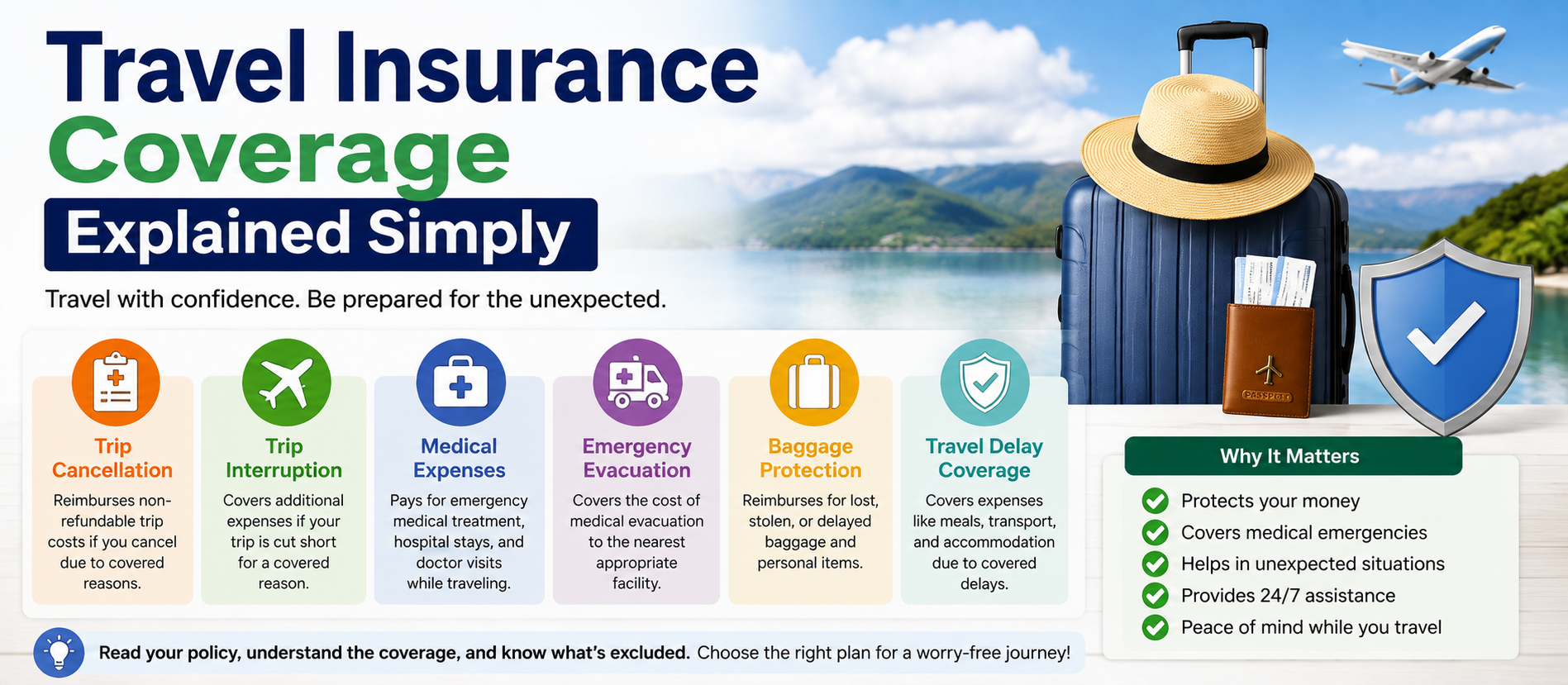
1. Trip Cancellation Coverage
2. Trip Interruption Coverage
3. Trip Delay Coverage
4. Travel Medical Coverage
5. Emergency Medical Evacuation
6. Baggage Loss and Delay
7. Accidental Death and Dismemberment
8. Cancel for Any Reason Coverage
What Travel Insurance Usually Does Not Cover
Introduction
Travel insurance can protect travelers from some of the financial losses that may occur when a trip is cancelled, interrupted, delayed, or disrupted by an unexpected covered event. It can also provide protection for certain medical emergencies, emergency transportation, lost baggage, and other travel-related risks. However, travel insurance is not a single universal product. Each policy has its own benefits, limits, conditions, exclusions, deductibles, and eligibility requirements.
The National Association of Insurance Commissioners (NAIC) explains that travel insurance can include trip cancellation and interruption, trip delay, baggage loss or delay, emergency medical or dental care, emergency transportation, and repatriation coverage. The exact protection varies by policy, so travelers should review both what is covered and what is excluded before purchasing. citeturn0search0turn0search3
This WordPress-ready guide from Digiifrog explains travel insurance in simple language and helps readers understand the major coverage types, common exclusions, policy limits, buying considerations, and claim basics. It is optimized for SEO, AEO, GEO, and AI Search Optimization.
Website: www.digiifrog.com
What Is Travel Insurance?
Travel insurance is designed to protect against certain financial risks associated with a planned trip. Depending on the policy, it may reimburse eligible prepaid and non-refundable travel expenses when a covered event causes a cancellation or interruption. It may also provide benefits for travel medical emergencies, evacuation, baggage problems, or delays.
Travel insurance is different from ordinary health insurance, life insurance, homeowners insurance, and credit-card travel benefits, although those products may sometimes provide overlapping protection. Before buying a policy, check what coverage you already have so you do not pay unnecessarily for duplicate benefits.
Why Travel Insurance Can Be Useful
A vacation, international tour, cruise, business trip, or family holiday can involve significant prepaid expenses. If an unexpected event prevents travel, the financial loss can be substantial. Medical emergencies abroad can create another risk, particularly when a person's domestic health plan provides limited international coverage.
NAIC consumer guidance recommends considering whether you could afford to lose the money spent on a trip or pay for rebooking if something unexpected happens. It also suggests checking whether your existing health insurance covers you outside your home country. citeturn0search0
Major Types of Travel Insurance Coverage
1. Trip Cancellation Coverage
Trip cancellation coverage can reimburse eligible prepaid, non-refundable travel expenses when you cancel for a reason specifically covered by the policy. Covered reasons can include certain illnesses or injuries, hospitalization or death of a family member, severe weather, transportation problems, or other listed events.
The important point is that cancellation coverage is not necessarily “cancel for any reason.” You generally need to meet the policy's definition of a covered reason and follow its requirements.
2. Trip Interruption Coverage
Trip interruption coverage can help when a covered event occurs after your journey begins and you must cut the trip short. Depending on the policy, eligible benefits may include unused prepaid expenses and additional transportation costs required to return home.
3. Trip Delay Coverage
Trip delay coverage can reimburse certain additional expenses when a covered delay lasts long enough to meet the policy's requirements. Benefits may include meals, accommodation, and transportation, subject to daily and overall limits.
4. Travel Medical Coverage
Travel medical insurance can help pay eligible medical expenses resulting from illness or injury during a covered trip. This can be particularly important for international travel because a domestic health plan may provide limited or no coverage abroad.
Before purchasing, check whether the policy requires prior authorization, whether pre-existing conditions are covered, and whether certain activities or destinations are excluded. citeturn0search0
5. Emergency Medical Evacuation
Emergency medical evacuation coverage can help pay for transportation to an appropriate medical facility when medically necessary. Depending on the policy, it may also cover transportation home after treatment or repatriation of remains following death.
This coverage can be especially important for travelers visiting remote areas where suitable medical facilities are far away.
6. Baggage Loss and Delay
Baggage coverage can provide benefits when luggage or personal belongings are lost, stolen, damaged, or delayed, depending on the policy. There are usually per-item and total limits, and certain high-value items may receive special treatment.
Some travelers may already have baggage protection through homeowners or renters insurance or a credit card, so compare existing benefits before purchasing duplicate coverage. citeturn0search0turn0search3
7. Accidental Death and Dismemberment
Some travel policies include accidental death and dismemberment coverage. Benefits can apply when an insured accident causes death or certain specified serious injuries, subject to the policy's definitions and exclusions.
8. Cancel for Any Reason Coverage
Cancel for Any Reason (CFAR) coverage can provide broader cancellation flexibility than standard trip cancellation coverage. It is usually an optional upgrade, costs more, and typically reimburses only a percentage of eligible prepaid trip expenses rather than the full amount.
CFAR policies also commonly have purchase deadlines, cancellation deadlines, and requirements concerning the amount of the trip cost that must be insured. citeturn0search0turn0search3
What Travel Insurance Usually Does Not Cover
Exclusions vary widely, but common examples can include certain pre-existing medical conditions, known or foreseeable events, pandemics, political unrest, pregnancy-related circumstances, and high-risk activities such as certain extreme sports. The exact wording matters, and some policies may offer optional coverage for particular risks. citeturn0search0turn0search3
⚠ Watch Out
Never assume that a situation is covered simply because it seems unexpected. Read the policy's exclusions and definitions before purchasing.
Travel Insurance Limits Explained
A policy can cover a particular type of loss while still limiting how much it will pay. Common limits include:
- Maximum medical benefit.
- Emergency evacuation limit.
- Maximum trip cancellation amount.
- Daily trip-delay allowance.
- Maximum baggage benefit.
- Per-item baggage sublimits.
- Deductibles or excess amounts.
💡 Key Insight
For example, a baggage policy might cover lost belongings but impose a lower limit on individual electronics or jewelry. Understanding these limits is just as important as knowing that the category itself is covered.
Primary vs. Secondary Coverage
Some travel insurance benefits are primary, meaning the travel policy may respond first when a covered loss occurs. Other benefits are secondary or excess, meaning another applicable insurance source may need to respond first.
Check the policy wording carefully, especially if you already have health, homeowners, renters, automobile, or credit-card coverage.
Does Travel Insurance Cover International Medical Care?
It can, but the answer depends on your policy. Travelers should confirm whether their existing health insurance provides international coverage and then determine whether the travel policy fills important gaps.
For international trips, review emergency treatment, hospital care, medical evacuation, repatriation, pre-existing conditions, deductible requirements, and authorization procedures. NAIC guidance specifically recommends checking whether approval is required before receiving certain medical care. citeturn0search0
How Much Does Travel Insurance Cost?
Travel insurance pricing depends on the policy, trip cost, destination, travel dates, age, coverage selected, and other factors. NAIC's current consumer guidance says policies commonly cost around 5% to 10% of the total trip price, although actual prices vary. citeturn0search0turn0search3
Rather than selecting a policy solely because it is inexpensive, compare the benefits and limits with the financial risks you are trying to protect.
When Should You Buy Travel Insurance?
Buying earlier can be useful because some benefits depend on when the policy is purchased. Certain optional protections, including CFAR or coverage related to pre-existing conditions, can have specific eligibility or timing requirements.
Waiting until a known storm or other foreseeable event has already developed may not provide the protection you expect. NAIC consumer guidance recommends considering travel insurance early and reviewing timing requirements before purchasing. citeturn0search0turn0search2
How to Compare Travel Insurance Plans
- Calculate your prepaid, non-refundable trip expenses.
- Check your existing health and property insurance.
- Review credit-card travel protections.
- Compare cancellation and interruption benefits.
- Compare emergency medical limits.
- Review medical evacuation coverage.
- Check baggage limits and exclusions.
- Read the pre-existing-condition provisions.
- Review adventure-activity exclusions.
- Compare deductibles and excess amounts.
- Check the claim reporting process.
- Review the policy's purchase and cancellation deadlines.
Travel Insurance for Families
Families should consider the needs of every traveler, including children, older relatives, and anyone with specific medical requirements. A family policy may be convenient, but compare the benefit limits carefully to determine whether they apply per person or to the entire group.
Parents should also check coverage for missed connections, trip interruption, emergency medical treatment, and the need to return home because of a serious family emergency.
Travel Insurance for Seniors
Older travelers should pay particular attention to medical coverage, pre-existing-condition definitions, age-related eligibility restrictions, evacuation benefits, and policy limits. Never assume that a policy covers a medical condition simply because the condition is stable.
Travel Insurance for Adventure Trips
Travelers participating in skiing, scuba diving, trekking, climbing, bungee jumping, or other higher-risk activities should check whether those activities are excluded. Some insurers offer specialty options or adventure-sports extensions, but coverage conditions can be strict.
Travel Insurance and Credit Cards
Some credit cards provide travel benefits such as trip cancellation, baggage protection, rental-car coverage, or travel assistance. These benefits can be useful, but they may have eligibility requirements, lower limits, exclusions, or conditions such as paying for the trip with the card.
Review the card's benefit guide and compare it with a standalone travel insurance policy before deciding what protection you need.
What to Do If You Need to Make a Claim
If something happens during your trip, contact the insurer or assistance provider as soon as reasonably possible and follow the policy's claim instructions. Keep evidence and documentation such as:
- Receipts for eligible expenses.
- Medical reports and bills.
- Airline or carrier documentation.
- Cancellation confirmations.
- Police reports for theft when applicable.
- Baggage claim records.
- Proof of trip payment.
- Travel itinerary.
Keep copies of all communications and claim documents. Prompt reporting can be important because policies may impose notification or documentation requirements.
Common Travel Insurance Mistakes
- Buying the cheapest policy without comparing benefits.
- Assuming every cancellation reason is covered.
- Ignoring pre-existing-condition exclusions.
- Failing to check adventure-activity exclusions.
- Overlooking medical evacuation coverage.
- Assuming baggage coverage replaces the full value of every item.
- Ignoring policy limits and deductibles.
- Waiting too long to purchase coverage.
- Failing to check existing credit-card benefits.
- Not keeping receipts and supporting documents.
Simple Travel Insurance Checklist
- Destination and travel dates confirmed.
- Total prepaid trip cost calculated.
- Existing insurance reviewed.
- Medical coverage checked.
- Emergency evacuation evaluated.
- Cancellation and interruption limits compared.
- Baggage limits reviewed.
- Exclusions read carefully.
- CFAR considered if appropriate.
- Claim instructions saved.
Frequently Asked Questions
What does travel insurance cover?
Depending on the policy, it can cover eligible trip cancellation, interruption, delays, medical emergencies, emergency evacuation, baggage loss or delay, and other specified travel risks.
Is travel insurance worth it?
It depends on the trip's cost, your risk tolerance, destination, existing insurance, health circumstances, and ability to absorb unexpected expenses.
Does travel insurance cover flight cancellations?
It may cover eligible cancellation or delay costs when the cause meets the policy's covered-event requirements. Not every flight cancellation qualifies.
Does travel insurance cover medical emergencies abroad?
Many travel medical policies provide eligible emergency medical coverage, but limits, exclusions, authorization requirements, and pre-existing-condition rules vary.
Does travel insurance cover lost baggage?
Many policies provide baggage-loss or delay benefits, subject to exclusions, documentation requirements, per-item limits, and overall limits.
What is CFAR travel insurance?
Cancel for Any Reason coverage is an optional benefit that can provide broader cancellation flexibility, usually for a higher premium and partial reimbursement.
When should I buy travel insurance?
Consider purchasing it soon after booking, especially if you want benefits that depend on purchase timing. Always check the policy's deadlines and eligibility requirements.
Does travel insurance cover pre-existing medical conditions?
Some policies exclude them while others may offer limited coverage or a waiver if specific conditions and purchase deadlines are met.
Conclusion
Travel insurance is best understood as a collection of financial protections rather than a guarantee that every travel problem will be paid for. Trip cancellation, interruption, delay, travel medical care, emergency evacuation, baggage protection, and optional CFAR coverage can each address different risks.
The smartest approach is to compare the policy with your actual trip. Calculate how much money is at risk, review your existing insurance and credit-card benefits, check medical and evacuation protection, read exclusions carefully, and understand limits before purchasing. When a policy is needed, buying at the appropriate time and keeping complete documentation can make the claims process much smoother.
Digiifrog
Website: www.digiifrog.com
Travel insurance coverage, exclusions, costs, eligibility requirements, and claim procedures vary by country, insurer, policy, and destination. This article is educational and is not personalized insurance, legal, or financial advice. Always read the current policy documents and confirm requirements with the insurer before traveling.
Ready to Grow?
Talk to us about a strategy tailored to your brand — we will help you stand out in search, AI discovery and social.
Comments (0)
Log in to leave a comment.