📋 Quick Summary
In this article:
Why Adventure Travel Requires Specialized Insurance
How AI Is Improving Travel Insurance
SEO, AEO, GEO & AI Search
Introduction
Adventure travel is more popular than ever, with millions of travelers seeking activities such as trekking, scuba diving, skiing, mountaineering, rafting, skydiving, paragliding, surfing, mountain biking, and wildlife expeditions. While these experiences create unforgettable memories, they also involve higher levels of physical risk than traditional vacations. A standard travel insurance policy may not provide adequate protection for adventure activities, making specialized travel insurance an essential part of trip planning.
In 2026, rising medical costs, unpredictable weather, flight disruptions, and remote rescue operations have made adventure travel insurance more valuable than ever. Whether you are exploring the Himalayas, diving in tropical waters, or skiing in alpine resorts, the right policy can protect your finances and provide access to emergency assistance when it matters most.
This comprehensive WordPress-ready guide from Digiifrog explains everything adventure travelers should know about travel insurance, including coverage options, exclusions, medical evacuation, equipment protection, AI-powered insurance innovations, and practical tips for choosing the best policy. The article is optimized for SEO, AEO, GEO, and AI Search.
Website: www.digiifrog.com
Why Adventure Travel Requires Specialized Insurance
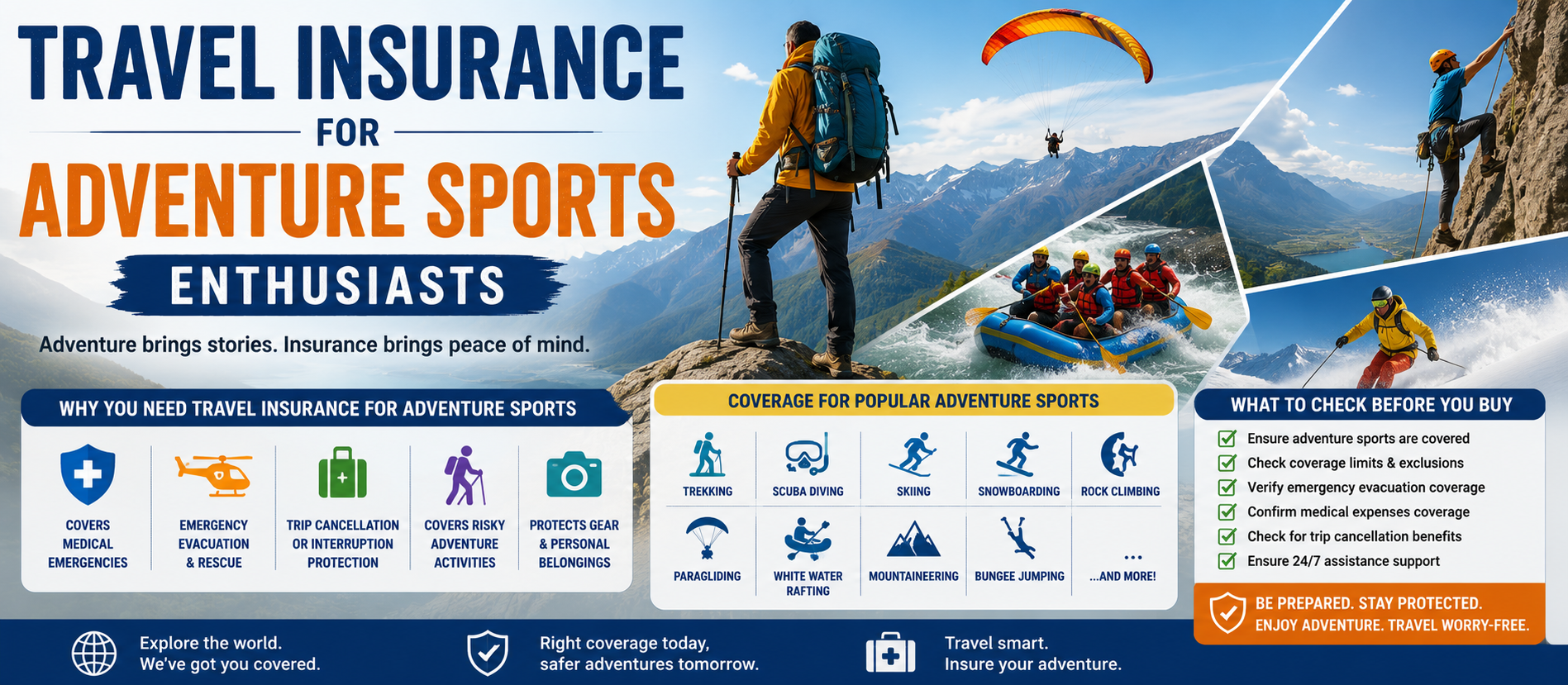
Adventure sports expose travelers to unique risks such as injuries, altitude sickness, equipment damage, rescue costs, and emergency evacuations. Standard travel insurance policies often exclude hazardous activities unless additional adventure sports coverage has been purchased.
- Higher injury risk
- Remote destinations
- Specialized medical care
- Emergency transportation
- Expensive sports equipment
Activities Commonly Covered
- Trekking and hiking
- Scuba diving (within policy limits)
- Snorkeling
- Skiing and snowboarding
- White-water rafting
- Mountain biking
- Rock climbing (where eligible)
- Kayaking
- Surfing
- Ziplining
Coverage Features to Look For
- Emergency medical expenses
- Medical evacuation and repatriation
- Trip cancellation and interruption
- Lost or delayed baggage
- Adventure sports equipment cover
- Personal liability
- 24/7 emergency assistance
- Search and rescue benefits where available
Understand Policy Exclusions
Always review exclusions carefully. Some insurers exclude professional competitions, extreme altitude expeditions, intoxication-related incidents, or activities performed without certified guides.
Choosing the Right Coverage
- List every planned activity.
- Check destination-specific risks.
- Compare medical coverage limits.
- Review evacuation benefits.
- Confirm equipment protection.
- Understand deductibles and claim procedures.
Equipment Protection
Adventure gear can be expensive. Policies may provide protection for eligible equipment against theft, accidental damage, or loss during covered travel.
Medical Evacuation Matters
Remote rescue operations involving helicopters or specialized transport can be extremely expensive. Adequate evacuation coverage can prevent major financial hardship following a serious accident.
How AI Is Improving Travel Insurance
Artificial intelligence helps insurers personalize premiums, assess travel risks, automate claims, detect fraud, provide multilingual assistance, and deliver real-time emergency support. Predictive analytics also help insurers anticipate weather-related disruptions and improve customer service.
Tips for Faster Claims
- Keep digital copies of policy documents.
- Photograph damaged equipment.
- Retain medical records and receipts.
- Report incidents promptly.
- Follow insurer claim instructions carefully.
SEO, AEO, GEO & AI Search
Travel insurers increasingly publish educational resources optimized for SEO, AEO, GEO, and AI Search Optimization, making it easier for travelers to compare policies and understand adventure sports coverage.
Frequently Asked Questions
Does standard travel insurance cover adventure sports?
Not always. Many policies require an adventure sports upgrade or specialized coverage.
Is helicopter rescue covered?
Coverage depends on the insurer and policy terms. Review evacuation benefits before traveling.
Can I insure expensive sports equipment?
Many insurers offer optional equipment protection subject to policy limits and conditions.
Final Thoughts
Adventure travel offers extraordinary experiences, but it also brings additional risks that require thoughtful planning. Choosing specialized travel insurance with adequate medical, evacuation, liability, and equipment protection can help you focus on the adventure instead of worrying about unexpected financial losses. Compare policies carefully, understand exclusions, and review your coverage before every trip.
Digiifrog
Website: www.digiifrog.com
Ready to Grow?
Talk to us about a strategy tailored to your brand — we will help you stand out in search, AI discovery and social.


Comments (0)
Log in to leave a comment.