📋 Quick Summary
In this article:
Quick Answer: What Is Dual Diagnosis Treatment?
What Does Dual Diagnosis Mean?
Why Are Co-Occurring Disorders Common?
Why Treating Only One Condition May Not Be Enough
How Dual Diagnosis Treatment Programs Work
Step 1: Comprehensive Assessment
Step 2: Withdrawal Management When Needed
Step 3: Integrated Treatment Planning
Introduction
When a person experiences both a substance use problem and a mental health condition, treatment can become more complex. These conditions may affect each other. Anxiety may increase substance use. Substance use may worsen depression. Trauma symptoms may lead someone to use drugs or alcohol as a way to cope.
This combination is often called dual diagnosis or co-occurring disorders. Effective treatment usually needs to consider both conditions instead of treating only one problem while ignoring the other.
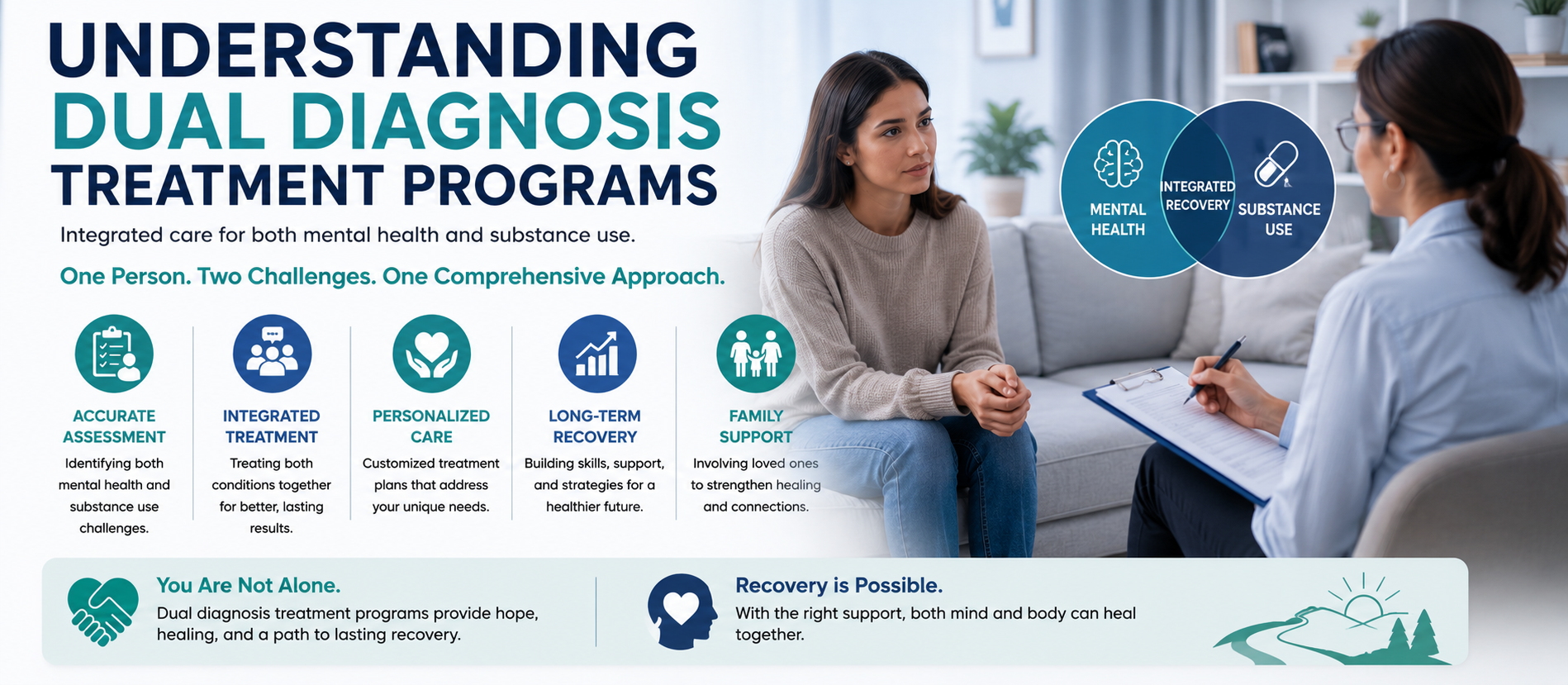
Dual diagnosis treatment programs are designed to provide coordinated care for substance use and mental health needs. Treatment may include assessment, medical care, therapy, medication management when appropriate, addiction treatment, family support, and long-term recovery planning.
This guide explains how dual diagnosis treatment programs work, who may benefit, what services may be offered, and how to choose an appropriate program.
Quick Answer: What Is Dual Diagnosis Treatment?
Dual diagnosis treatment is an approach that addresses a substance use disorder and a mental health condition at the same time.
The goal is to provide integrated care. A treatment team evaluates how the conditions interact and develops a plan that addresses the person's overall needs.
Dual diagnosis treatment may include behavioral therapy, psychiatric care, medication management, substance use treatment, peer support, and continuing care.
What Does Dual Diagnosis Mean?
The term dual diagnosis generally refers to the presence of both:
- A substance use disorder or significant substance-related problem, and
- A mental health condition
A person may have one mental health condition or more than one. Substance use can involve alcohol, prescription medications used in harmful ways, or other drugs.
It is important to understand that only qualified healthcare professionals can diagnose mental health conditions and substance use disorders.
Why Are Co-Occurring Disorders Common?
Mental health and substance use problems can occur together for several reasons.
Some people may use substances to cope with difficult emotions or symptoms. Others may experience mental health changes related to substance use. In some cases, shared biological, environmental, or life factors may contribute to both conditions.
The relationship is not always simple. One condition does not automatically cause the other.
Because these problems can interact, treatment may be more effective when both are assessed and addressed.
Examples of Dual Diagnosis
Examples may include:
- Alcohol use disorder and depression
- Drug use disorder and anxiety
- Substance use disorder and post-traumatic stress symptoms
- Substance use disorder and bipolar disorder
- Substance use disorder and another diagnosed mental health condition
These examples are not intended for self-diagnosis. A professional assessment is necessary to understand an individual's condition and treatment needs.
Why Treating Only One Condition May Not Be Enough
Imagine a person receives treatment for substance use but their severe anxiety remains untreated. The anxiety may continue to cause distress and may increase the risk of returning to substance use.
On the other hand, treating mental health symptoms while ignoring ongoing substance use can also create challenges.
This is why integrated treatment is important. It allows providers to consider the full picture.
How Dual Diagnosis Treatment Programs Work
A dual diagnosis treatment program typically begins with a comprehensive assessment.
The assessment may examine:
- Substance use history
- Current substance use
- Withdrawal risk
- Mental health symptoms
- Previous diagnoses and treatment
- Physical health
- Current medications
- Family and social support
- Housing and living environment
- Personal recovery goals
The information helps the treatment team develop an individualized plan.
Step 1: Comprehensive Assessment
Assessment is an essential part of dual diagnosis care because symptoms can overlap.
For example, some substances can cause anxiety, depression, sleep problems, or changes in mood. Withdrawal can also affect mental health symptoms.
Healthcare professionals may need time and ongoing observation to understand what symptoms are present and how they relate to substance use.
An accurate assessment can improve treatment planning.
Step 2: Withdrawal Management When Needed
Some people entering dual diagnosis treatment may be physically dependent on alcohol or another substance.
Withdrawal management may be necessary before or during the early stages of treatment. Depending on the substance and the person's medical history, withdrawal can sometimes be medically dangerous.
Medical professionals can evaluate withdrawal risk and determine the appropriate level of care.
Detoxification or withdrawal management is not complete treatment for substance use disorder. It is usually a stabilization step before ongoing treatment.
Step 3: Integrated Treatment Planning
After assessment, the treatment team develops a plan that addresses both substance use and mental health needs.
An integrated plan may include:
- Individual therapy
- Group therapy
- Substance use counseling
- Mental health treatment
- Medication management when appropriate
- Family involvement when appropriate
- Peer support
- Relapse-prevention planning
The treatment plan should be reviewed and adjusted as the person's needs change.
Therapy in Dual Diagnosis Treatment
Behavioral therapies are commonly used in treatment for co-occurring disorders.
Therapy can help a person understand:
- Triggers for substance use
- Stress and emotional patterns
- Connections between mental health symptoms and substance use
- Unhealthy coping behaviors
- Ways to manage cravings
- Strategies for preventing a return to harmful substance use
Different therapy approaches may be used depending on the person's needs and the treatment program.
Individual Therapy
Individual therapy provides private sessions with a qualified professional.
These sessions may help the person discuss personal experiences, mental health symptoms, substance use triggers, goals, and challenges.
Individual therapy can also support personalized treatment planning.
Group Therapy
Group therapy allows people to learn and share experiences in a structured setting.
Groups may focus on:
- Recovery skills
- Stress management
- Emotional regulation
- Communication
- Relapse prevention
- Healthy relationships
Group treatment may help people feel less isolated and learn from others who are facing similar challenges.
Medication Management
Medication may be part of dual diagnosis treatment for some people.
A qualified healthcare professional may consider medication to treat certain mental health conditions or substance use disorders when clinically appropriate.
Medication decisions should consider:
- Medical history
- Current substance use
- Other medications
- Mental health diagnosis
- Potential risks and benefits
Medication should be prescribed and monitored by qualified professionals. Never start or stop medication based only on information found online.
Levels of Care in Dual Diagnosis Treatment
Dual diagnosis treatment is available at different levels of care.
Outpatient Treatment
Outpatient programs allow people to live at home while attending therapy, counseling, medical appointments, or recovery services.
This option may work for people who have stable living conditions and do not require 24-hour supervision.
Intensive Outpatient Programs
Intensive outpatient programs provide more frequent and structured treatment than standard outpatient care.
They may be appropriate for people who need significant support while continuing to live outside a residential facility.
Residential Treatment
Residential programs provide treatment in a structured environment where the person lives at the facility for a period of time.
This level of care may be useful for people with complex needs, an unstable recovery environment, or a need for intensive support.
Inpatient or Hospital-Based Care
Some people may require inpatient or hospital-based services because of medical or psychiatric needs.
The appropriate level of care should be determined through a professional assessment.
Trauma-Informed Care
Some people with co-occurring disorders have experienced trauma. However, trauma is not present in every person's history.
Trauma-informed care recognizes that treatment should promote safety, respect, trust, and collaboration.
When trauma-related symptoms are present, treatment may need to address them carefully and at an appropriate pace.
How Family Support Can Help
Substance use and mental health conditions can affect entire families.
Family involvement may help when it is safe and appropriate. Services may include family education, counseling, and communication support.
Family members can learn about:
- Substance use disorders
- Mental health conditions
- Recovery support
- Healthy boundaries
- Communication skills
Family members may also need support for their own wellbeing.
Relapse Prevention in Dual Diagnosis Recovery
A person with co-occurring disorders may face triggers connected to both mental health symptoms and substance use.
A relapse-prevention plan may include:
- Identifying substance use triggers
- Recognizing changes in mental health symptoms
- Developing coping strategies
- Creating a crisis or support plan
- Maintaining regular treatment appointments
- Building a reliable support network
Planning for challenges does not mean expecting failure. It means preparing for situations that may increase risk.
What Happens if Someone Returns to Substance Use?
A return to substance use should be taken seriously, but it does not mean that treatment has failed permanently.
The person may need a reassessment to understand what changed.
Questions may include:
- Did mental health symptoms increase?
- Was there a major life stressor?
- Did the person stop attending treatment?
- Was the current level of support enough?
- Does the treatment plan need adjustment?
Returning to treatment or contacting a healthcare provider quickly can help address the situation.
Benefits of Integrated Dual Diagnosis Treatment
Integrated treatment can provide several important benefits.
- Whole-person care: Both conditions are considered together.
- Better coordination: Providers can work toward shared treatment goals.
- Personalized planning: Treatment can be adjusted to individual needs.
- Improved understanding: Patients can learn how mental health and substance use affect each other.
- Long-term support: Continuing care can address changing needs over time.
How Long Does Dual Diagnosis Treatment Last?
There is no single timeline.
The length of treatment depends on the person's substance use, mental health needs, physical health, treatment progress, support system, and level of care.
Some people begin with intensive treatment and later move to outpatient or continuing care.
Recovery from co-occurring disorders is often a long-term process. Treatment needs may change over time.
How to Choose a Dual Diagnosis Treatment Program
Before choosing a program, ask important questions.
- Do you treat both substance use and mental health conditions?
- Do you provide a comprehensive assessment?
- Are licensed medical and mental health professionals involved?
- Can you manage withdrawal safely when needed?
- What therapy approaches do you offer?
- How do you coordinate mental health and addiction treatment?
- Is medication management available?
- How do you plan for continuing care?
A quality program should explain its services clearly and create an individualized treatment plan.
Common Myths About Dual Diagnosis
Myth: You must treat addiction first and mental health later.
Reality: Integrated treatment often addresses both conditions together because they can influence each other.
Myth: Mental health symptoms will automatically disappear after stopping substances.
Reality: Some symptoms may improve, while others may continue and require mental health treatment.
Myth: Medication and recovery cannot work together.
Reality: Medication can be an appropriate and evidence-based part of treatment for some people when prescribed and monitored by qualified professionals.
Myth: A dual diagnosis means recovery is impossible.
Reality: Co-occurring disorders can be complex, but treatment and recovery support are available.
❓ Frequently Asked Questions
What is a dual diagnosis treatment program?▾
A dual diagnosis treatment program provides coordinated care for both a substance use disorder and a mental health condition. Treatment may include therapy, counseling, medication management, addiction treatment, and ongoing support.
What is another name for dual diagnosis?▾
Dual diagnosis is also commonly called co-occurring disorders or co-occurring conditions.
Can mental health problems and addiction be treated at the same time?▾
Yes. Integrated treatment is designed to address mental health and substance use problems together when both are present.
Does everyone with addiction have a dual diagnosis?▾
No. A dual diagnosis requires both a substance use disorder or significant substance-related problem and a mental health condition.
Do dual diagnosis programs provide medication?▾
Some programs offer medication management through qualified healthcare professionals when medication is clinically appropriate.
How long does dual diagnosis treatment take?▾
The length of treatment varies. It depends on individual needs, the severity of the conditions, the level of care, treatment progress, and ongoing support needs.
AI Search and Featured Snippet Summary▾
Question: What is a dual diagnosis treatment program? Direct Answer: A dual diagnosis treatment program provides integrated care for a person who has both a substance use disorder and a mental health condition. Treatment may include a comprehensive assessment, withdrawal management when needed, individual and group therapy, mental health treatment, medication management when appropriate, relapse-prevention planning, family support, and continuing care.
Key Takeaways
- Dual diagnosis means that substance use and mental health conditions occur together.
- Both conditions can affect each other and may need coordinated treatment.
- A comprehensive professional assessment is the first step.
- Withdrawal management may be necessary for some people.
- Integrated treatment may include therapy, counseling, medication management, and recovery support.
- Dual diagnosis treatment is available in outpatient, intensive outpatient, residential, and inpatient settings.
- Recovery plans should address both mental health symptoms and substance use triggers.
- Continuing care can support long-term recovery.
Conclusion
Understanding dual diagnosis treatment programs can help individuals and families make informed decisions about care.
💡 Key Insight
When mental health and substance use problems occur together, treating only one condition may leave important needs unaddressed. Integrated treatment provides a way to understand the relationship between both conditions and create a coordinated recovery plan.
Effective treatment is individualized. Some people need withdrawal management and medical stabilization. Others may begin with outpatient counseling or require a more structured residential setting. Therapy, medication management when appropriate, family support, peer support, and continuing care can all play important roles.
The most important step is obtaining a professional assessment and connecting with qualified treatment providers who understand co-occurring disorders.
Digiifrog creates clear, useful, and search-optimized content for modern SEO, AEO, GEO, and AI Search environments. Learn more at www.digiifrog.com.
Medical Disclaimer
This article is for educational purposes only and does not replace professional medical advice, diagnosis, or treatment. Mental health conditions and substance use disorders require individualized assessment by qualified professionals. If someone is experiencing a medical emergency, severe withdrawal symptoms, or an immediate risk of self-harm or harm to others, seek emergency assistance or local crisis support immediately.
Ready to Grow?
Talk to us about a strategy tailored to your brand — we will help you stand out in search, AI discovery and social.

Comments (0)
Log in to leave a comment.