📋 Quick Summary
In this article:
1. Confidentiality: Keeping Information Private
2. Integrity: Keeping Data Accurate and Trustworthy
3. Availability: Keeping Systems Accessible
4. Why the CIA Triad Matters to Businesses
5. Confidentiality Controls
6. Integrity Controls
7. Availability Controls
8. The CIA Triad and Cyber Attacks
9. The CIA Triad in Cloud Computing
10. The CIA Triad in Application Security
11. CIA Triad and Risk Management
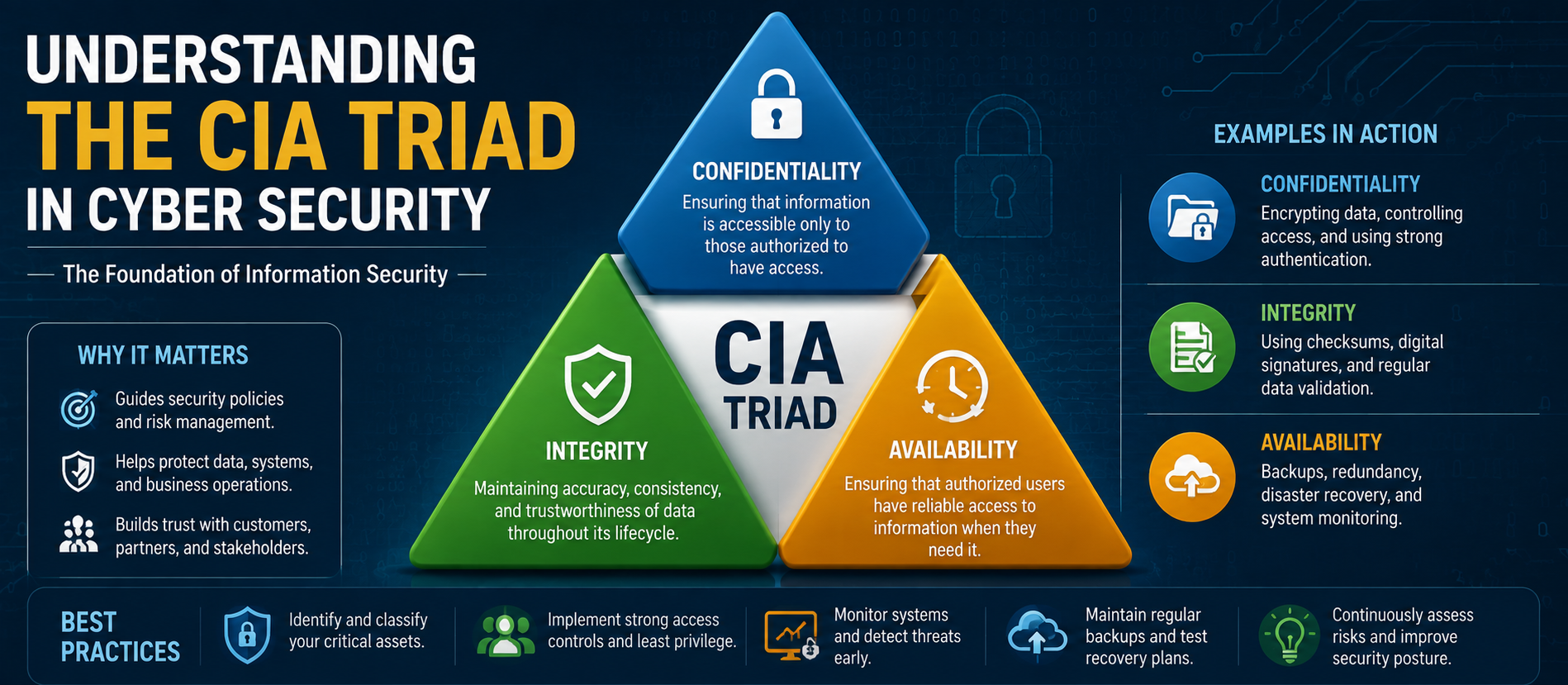
Understanding the CIA Triad in cyber security is one of the best ways to build a strong foundation in information security. CIA stands for Confidentiality, Integrity, and Availability. These three principles describe fundamental security objectives for protecting information and information systems.
NIST defines the CIA concept around confidentiality assurance, integrity assurance, and availability assurance. NIST also describes information security as protecting information and systems from unauthorized access, use, disclosure, disruption, modification, or destruction in order to provide confidentiality, integrity, and availability. citeturn0search0turn0search3
The CIA Triad is not a single security product. It is a framework for thinking about security risks, controls, architecture, incident response, and business priorities. A secure organization must consider who can access information, whether information can be trusted, and whether authorized users can access systems when they need them.
This WordPress-ready HTML article is prepared for Digiifrog (www.digiifrog.com) with SEO, AEO, GEO, and AI Search optimization.
What Is the CIA Triad?
The CIA Triad is a foundational information-security model built around three objectives. Confidentiality protects information from unauthorized disclosure. Integrity protects information from unauthorized or improper alteration. Availability ensures authorized users can access information and systems when required. CISA also presents confidentiality, integrity, and availability as basic security concepts. citeturn0search26
These objectives are connected: poor availability can stop legitimate work, while poor integrity can make systems unsafe even when data remains confidential.
1. Confidentiality: Keeping Information Private
Confidentiality means preventing information from being accessed or disclosed by unauthorized people, systems, or processes. Sensitive information may include passwords, customer records, financial information, health information, intellectual property, business plans, credentials, and personal data.
NIST describes confidentiality as preserving authorized restrictions on access and disclosure, including protections for personal privacy and proprietary information. citeturn0search1 Common controls include access control, authentication, authorization, encryption, data classification, secure permissions, network segmentation, and employee awareness.
2. Integrity: Keeping Data Accurate and Trustworthy
Integrity means protecting information from unauthorized modification, destruction, or corruption. Data should remain accurate, complete, and trustworthy throughout its lifecycle.
Changing a bank account number in an invoice, altering a medical record, modifying inventory quantities, or tampering with a software update can create serious consequences even when information remains confidential.
NIST describes integrity as protecting the accuracy and completeness of assets and guarding against improper modification or destruction. citeturn0search1
3. Availability: Keeping Systems Accessible
Availability means ensuring that authorized users can access information and services when they need them. A system may be confidential and accurate but still fail its business purpose if employees cannot access it.
Availability can be affected by ransomware, denial-of-service attacks, hardware failures, software errors, power outages, network problems, natural disasters, or poorly managed changes. CISA notes that availability concerns whether authorized people can obtain the information they need. citeturn0search26
4. Why the CIA Triad Matters to Businesses
The CIA Triad helps organizations translate technical security concerns into business risks. A confidentiality failure may cause privacy violations, fraud, intellectual-property loss, or reputational damage. An integrity failure may cause incorrect decisions, financial loss, unsafe operations, or corrupted records. An availability failure can stop sales, customer service, production, or internal operations.
NIST notes that cybersecurity risk can arise from loss of confidentiality, integrity, or availability and should be considered in relation to impacts on organizations, individuals, assets, and operations. citeturn0search7
5. Confidentiality Controls
- Multi-factor authentication and strong authentication.
- Role-based access control and least privilege.
- Encryption for sensitive data at rest and in transit.
- Data classification and handling policies.
- Secure password and credential management.
- Network segmentation for sensitive systems.
- Employee security awareness training.
- Monitoring of unusual access and data transfers.
6. Integrity Controls
- File and database integrity monitoring.
- Cryptographic hashes and digital signatures.
- Change-management procedures.
- Access controls that restrict data modification.
- Audit logs and accountability controls.
- Version control and secure backups.
- Input validation and application security testing.
- Secure software-development practices.
7. Availability Controls
- Regular, tested backups.
- Redundant infrastructure where appropriate.
- Disaster recovery and business continuity planning.
- System monitoring and alerting.
- Capacity and performance management.
- Patch management and preventive maintenance.
- Incident response and recovery procedures.
8. The CIA Triad and Cyber Attacks
Different cyber incidents can affect different parts of the triad. Phishing and credential theft may primarily threaten confidentiality. Malware that modifies records can threaten integrity. Ransomware can affect availability and integrity when files are encrypted or damaged. Data exfiltration directly threatens confidentiality.
Real incidents can affect all three objectives at once. A ransomware event may expose stolen data, modify or encrypt systems, and prevent legitimate users from accessing critical services.
9. The CIA Triad in Cloud Computing
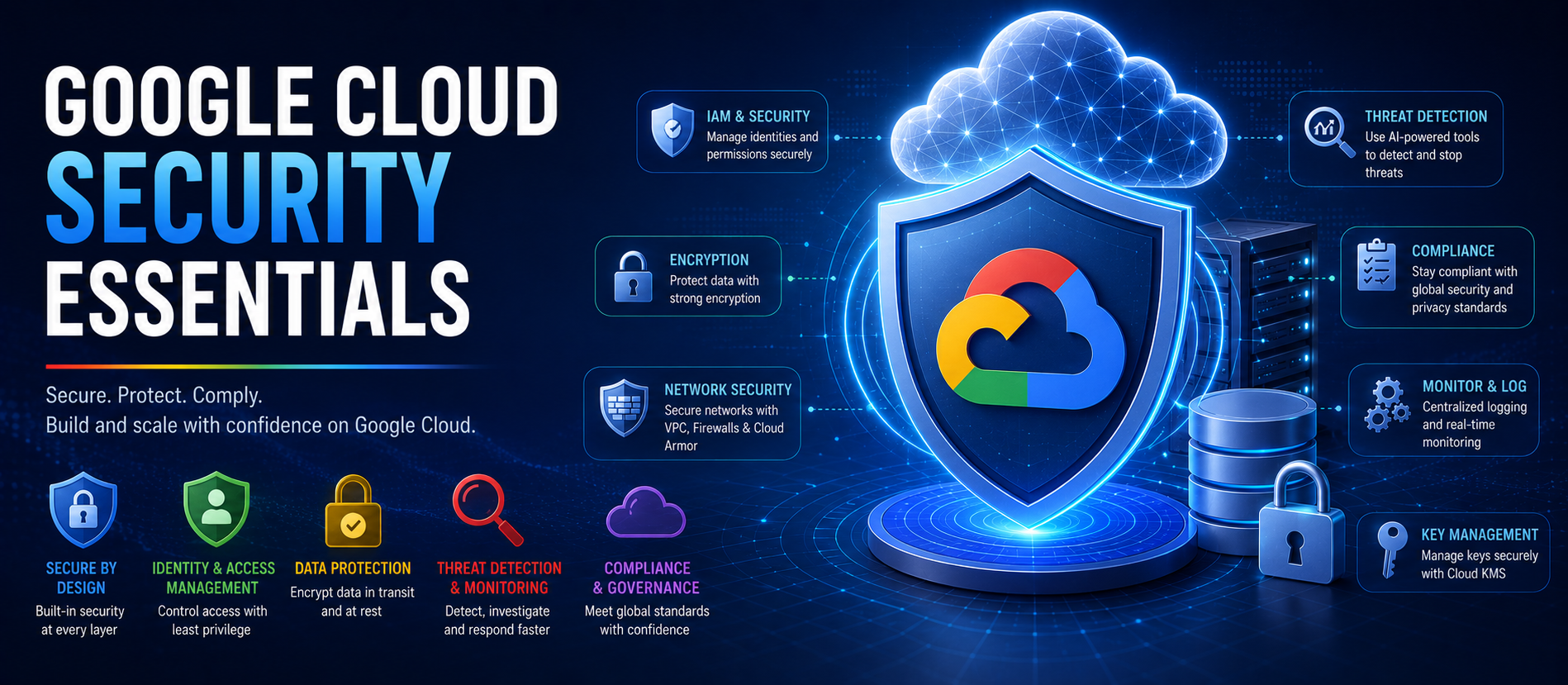
Cloud services do not eliminate the CIA Triad. They change how responsibilities are distributed. Organizations must understand which security responsibilities belong to the cloud provider and which remain with the customer.
Confidentiality may involve identity management, encryption, permissions, and secure configuration. Integrity may involve controlled deployments, logging, versioning, and change management. Availability may involve architecture, backups, redundancy, recovery plans, and provider resilience.
10. The CIA Triad in Application Security
Application developers should consider the triad throughout the software lifecycle. Authentication and authorization support confidentiality. Input validation, secure coding, transaction controls, and change management support integrity. Resilient architecture, performance testing, monitoring, and recovery mechanisms support availability.
Security should be integrated into design, development, testing, deployment, and maintenance rather than added only at the end.
11. CIA Triad and Risk Management
The triad should be applied according to the importance of each asset and the consequences of failure. Not every system requires the same level of confidentiality, integrity, and availability.
A public marketing page may have relatively low confidentiality requirements but significant availability requirements. A payroll database may require strong confidentiality and integrity. A hospital or industrial control system may place extremely high importance on availability and integrity.
NIST emphasizes security protections appropriate to the risk and magnitude of potential harm. citeturn0search6
12. How to Apply the CIA Triad in an Organization
💡 Key Insight
Start by identifying important information and systems. Classify data according to sensitivity and business importance. Determine who needs access, what could happen if information were changed, and how long systems can remain unavailable.
Then select controls that address the identified risks. Test controls through monitoring, audits, and incident exercises. Security should be treated as an ongoing risk-management process.
13. Common Mistakes When Using the CIA Triad
- Focusing only on confidentiality while ignoring availability.
- Assuming backups automatically guarantee recovery.
- Giving users excessive privileges.
- Ignoring data integrity and unauthorized changes.
- Failing to test disaster-recovery procedures.
- Using identical controls for every system regardless of risk.
- Ignoring third-party and cloud-provider dependencies.
- Failing to monitor security events after controls are deployed.
14. CIA Triad and Security Frameworks
The CIA objectives can support broader cybersecurity frameworks and control programs. NIST SP 800-53, for example, provides a catalog of security and privacy controls that organizations can tailor to mission and business needs. citeturn0search8 The triad provides security objectives, while frameworks and control catalogs help organizations determine how those objectives can be implemented and assessed.
15. Practical CIA Triad Checklist
- Identify sensitive and mission-critical information.
- Define who is authorized to access each data type.
- Use strong authentication and appropriate access controls.
- Encrypt sensitive data where appropriate.
- Monitor important data and system changes.
- Maintain reliable backups and test restoration.
- Prepare incident-response and recovery procedures.
- Review cloud and third-party dependencies.
- Test security controls regularly.
- Update controls as business risks change.
SEO, AEO, GEO and AI Search Optimization
SEO content about the CIA Triad should target searches such as “CIA Triad in cyber security,” “confidentiality integrity availability,” “CIA Triad explained,” and “CIA Triad examples.”
AEO should directly answer questions such as “What is the CIA Triad?”, “What are the three principles of the CIA Triad?”, and “Why is the CIA Triad important?”
GEO and AI Search optimization can be improved through clear definitions, authoritative references, structured headings, concise answers, real-world examples, FAQs, and terminology aligned with recognized cybersecurity guidance.
Frequently Asked Questions About the CIA Triad
What is the CIA Triad in cyber security?
The CIA Triad is a foundational information-security model based on confidentiality, integrity, and availability. It helps organizations define and evaluate protection requirements for information and systems. citeturn0search4turn0search3
What is confidentiality?
Confidentiality means preventing unauthorized access or disclosure of information. Access controls, authentication, authorization, and encryption are common ways to support it.
What is integrity?
Integrity means protecting information from unauthorized or improper modification and maintaining its accuracy and completeness.
What is availability?
Availability means ensuring authorized users can access information and systems when required. Backups, redundancy, monitoring, disaster recovery, and business continuity can support availability.
Is the CIA Triad still relevant?
Yes. The three objectives remain foundational to information security and continue to appear in NIST and other cybersecurity guidance. Modern security programs may also consider authenticity, accountability, privacy, safety, and resilience depending on the environment. citeturn0search1turn0search27
Conclusion
The CIA Triad provides a simple but powerful framework for cyber security: keep information confidential, preserve its integrity, and make it available to authorized users. These principles apply to websites, applications, cloud platforms, databases, networks, endpoints, business systems, and critical infrastructure.
Effective security programs do not treat confidentiality, integrity, and availability as isolated goals. They balance them according to business requirements and risk. NIST's 2026 small-business cybersecurity guidance also identifies confidentiality, integrity, and availability as foundational cybersecurity goals. citeturn0search27
For businesses seeking modern websites, cybersecurity-focused content, automation, SEO, AEO, GEO, and AI Search optimization, Digiifrog can help. Visit www.digiifrog.com.
Quick Answer: What Are the Three Principles of the CIA Triad?
The three principles are Confidentiality, Integrity, and Availability. Confidentiality protects information from unauthorized disclosure, Integrity protects information from unauthorized or improper modification, and Availability ensures authorized users can access information and systems when needed. Together, these principles provide a foundational way to define and evaluate information-security requirements.
Important Note
This article is educational content and is not a substitute for a professional cybersecurity assessment. Security controls should be selected according to an organization's systems, threat environment, regulatory obligations, business requirements, and risk tolerance.
Ready to Grow?
Talk to us about a strategy tailored to your brand — we will help you stand out in search, AI discovery and social.

Comments (0)
Log in to leave a comment.