📋 Quick Summary
In this article:
What Is Virtual Reality Therapy?
How VR Works in Rehabilitation
Applications of VR Rehabilitation
Mental Health and Addiction Recovery
Benefits of Virtual Reality Therapy
Technology Behind Modern VR Rehabilitation
Limitations and Considerations
The Future of VR Rehabilitation
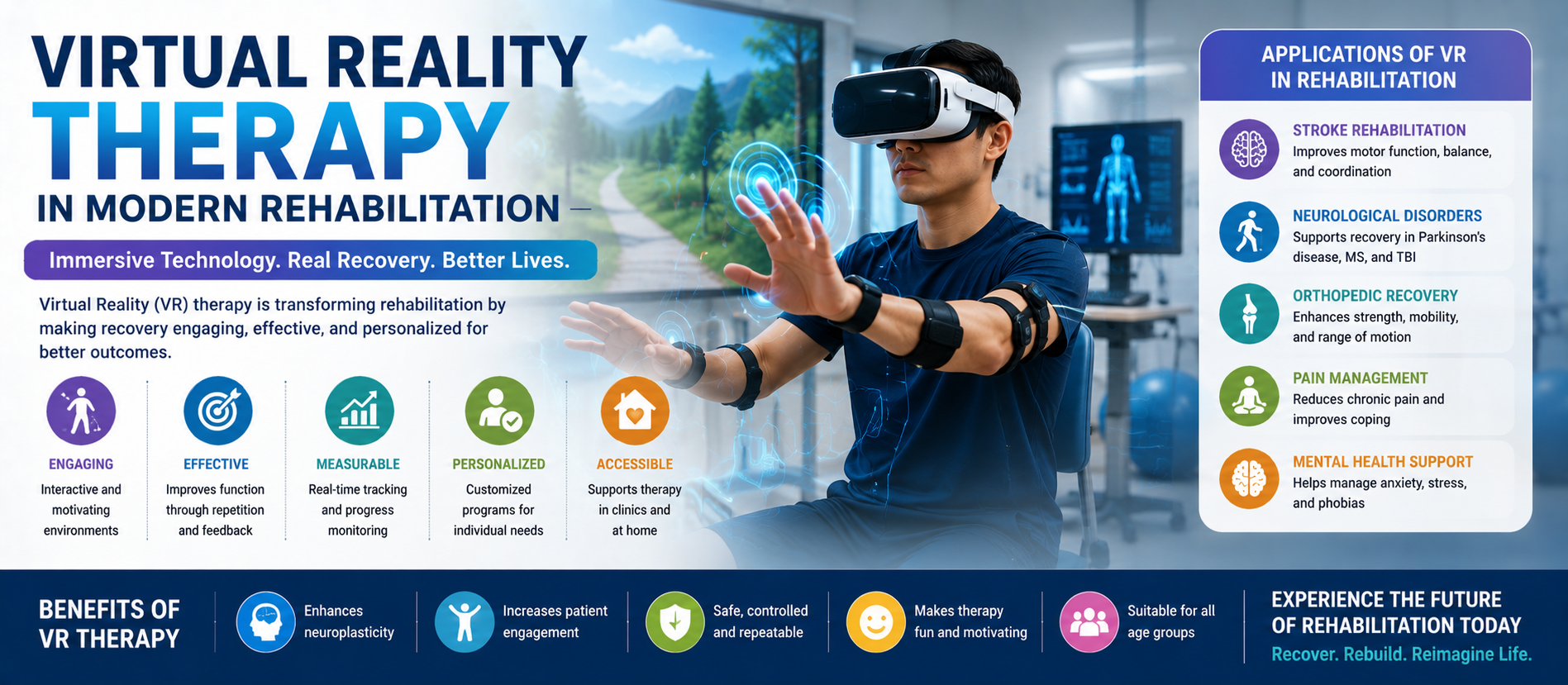
Modern VR rehabilitation allows patients to practice real-world activities in safe, controlled environments while receiving immediate feedback. Healthcare professionals can monitor progress, adjust therapy programs, and create individualized treatment plans that keep patients engaged throughout recovery.
💡 Key Insight
This comprehensive guide from Digiifrog explains how virtual reality therapy works, its applications, benefits, limitations, emerging innovations, and why it is becoming an important part of rehabilitation in 2026 and beyond.
Website: www.digiifrog.com
What Is Virtual Reality Therapy?
Virtual reality therapy uses computer-generated 3D environments, VR headsets, motion sensors, and interactive software to simulate therapeutic exercises and real-life situations. Patients actively participate in guided activities while therapists monitor performance and modify treatment as needed.
- Improve mobility
- Enhance balance and coordination
- Support cognitive recovery
- Increase patient motivation
- Improve functional independence
- Provide measurable progress tracking
How VR Works in Rehabilitation
Patients wear a VR headset and interact with virtual environments using hand controllers, motion tracking systems, or rehabilitation equipment. Exercises are customized to match the patient's abilities and recovery goals.
Applications of VR Rehabilitation
Stroke Rehabilitation
VR encourages repetitive movement practice that supports neuroplasticity, upper-limb function, balance, and gait training.
Neurological Rehabilitation
Patients with traumatic brain injury, Parkinson's disease, multiple sclerosis, and spinal cord injuries may benefit from interactive motor and cognitive exercises.
Orthopedic Rehabilitation
VR supports recovery following joint replacement, fractures, sports injuries, and musculoskeletal conditions through guided movement training.
Pain Management
Immersive virtual experiences may reduce pain perception during therapy and improve participation in rehabilitation exercises.
Mental Health and Addiction Recovery
Virtual environments may assist with relaxation training, stress management, mindfulness practice, and certain forms of exposure therapy under professional supervision.
Benefits of Virtual Reality Therapy
- Highly engaging treatment sessions
- Personalized rehabilitation programs
- Real-time performance feedback
- Objective progress monitoring
- Improved patient motivation
- Safe practice environments
- Potential for remote rehabilitation
Technology Behind Modern VR Rehabilitation
- VR headsets
- Motion capture systems
- Wearable sensors
- Artificial intelligence analytics
- Cloud-based patient monitoring
- Tele-rehabilitation platforms
Limitations and Considerations
Although promising, VR therapy should always be guided by qualified healthcare professionals. Some individuals may experience motion discomfort, equipment limitations, or require traditional therapy alongside VR-based interventions.
The Future of VR Rehabilitation
Future developments include AI-powered personalization, haptic feedback, mixed reality rehabilitation, home-based therapy systems, wearable integration, and improved remote patient monitoring.
SEO, AEO, GEO & AI Search Optimization
SEO Keywords: virtual reality therapy, VR rehabilitation, VR physical therapy, neurological rehabilitation technology, rehabilitation innovation.
AEO: Answers questions such as "What is virtual reality therapy?" and "How does VR improve rehabilitation?"
GEO: Structured headings, FAQs, and authoritative educational content improve visibility across AI-powered search engines.
Frequently Asked Questions
Is virtual reality therapy effective?
Many studies suggest VR can improve engagement and functional recovery when used alongside evidence-based rehabilitation.
Can VR replace traditional rehabilitation?
No. VR is generally used as a complementary therapy rather than a replacement for professional rehabilitation.
Who benefits from VR rehabilitation?
People recovering from stroke, neurological disorders, orthopedic injuries, chronic pain, and some mental health conditions may benefit when guided by healthcare professionals.
Conclusion
Virtual reality therapy is reshaping modern rehabilitation by making treatment more interactive, personalized, and measurable. Combined with evidence-based clinical care, VR helps improve motivation, supports functional recovery, and expands access to innovative rehabilitation services. As technology continues to advance, virtual reality is expected to become an even more valuable component of comprehensive rehabilitation programs.
Digiifrog remains committed to publishing educational healthcare content optimized for SEO, AEO, GEO, and AI Search while promoting evidence-informed rehabilitation and innovation.
Visit www.digiifrog.com for more rehabilitation and healthcare resources.
Ready to Grow?
Talk to us about a strategy tailored to your brand — we will help you stand out in search, AI discovery and social.
Comments (0)
Log in to leave a comment.