📋 Quick Summary
In this article:
Quick Answer: What Is Wearable Technology in Physical Rehabilitation?
Why Wearable Technology Matters in Rehabilitation
Common Types of Wearable Rehabilitation Technology
Smartwatches and Activity Trackers
Smart Insoles and Pressure Sensors
Smart Clothing and Textile Sensors
How Wearables Support Movement Tracking
Wearable Technology for Gait Rehabilitation
Real-Time Feedback During Exercise
Introduction
Technology is changing the way physical rehabilitation is delivered. In the past, much of a patient's progress was measured during clinic visits. Today, wearable devices can help collect information about movement, activity, exercise performance, and other aspects of recovery between appointments.
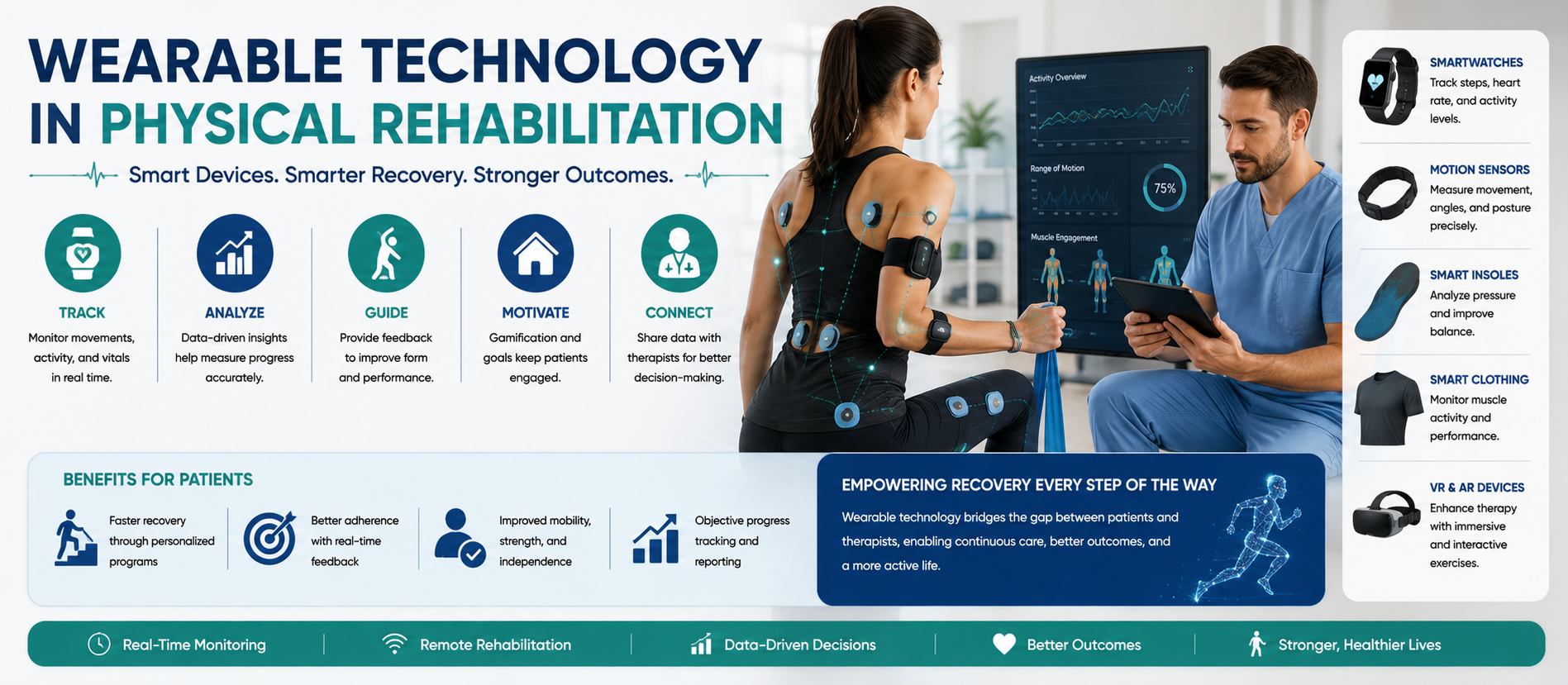
Wearable technology in physical rehabilitation includes devices that can be worn on the body to measure movement or provide feedback. These devices may include smartwatches, activity trackers, motion sensors, smart garments, pressure sensors, and other connected rehabilitation tools.
Wearable technology does not replace a physical therapist or medical professional. However, when used appropriately, it may provide useful information that supports rehabilitation planning and patient engagement.
This article explains how wearable technology is used in physical rehabilitation, its potential benefits, common device types, limitations, privacy concerns, and future trends.
Quick Answer: What Is Wearable Technology in Physical Rehabilitation?
Wearable technology in physical rehabilitation refers to body-worn devices that collect movement or health-related data and, in some cases, provide real-time feedback to support therapy, exercise, monitoring, and recovery planning.
Examples include activity trackers, inertial motion sensors, smartwatches, pressure-sensitive insoles, and wearable devices designed to measure walking, balance, joint movement, or exercise activity.
Wearable sensors have become an important research and clinical tool for measuring movement and physical activity outside traditional laboratory environments.
Why Wearable Technology Matters in Rehabilitation
Physical rehabilitation often depends on repeated movement, regular practice, and gradual progress.
A therapist may see a patient for only a limited number of hours each week. What happens between appointments can also affect recovery.
Wearable technology can potentially provide additional information about:
- Daily activity levels
- Walking patterns
- Exercise frequency
- Movement quality
- Balance-related activity
- Progress over time
This information may help healthcare professionals understand how a person is functioning outside the clinic.
Common Types of Wearable Rehabilitation Technology
Smartwatches and Activity Trackers
Smartwatches and fitness trackers are among the most familiar wearable devices.
Depending on the device and its intended use, they may track:
- Steps
- Activity duration
- Movement patterns
- Heart rate
- Sleep-related information
In rehabilitation, step counts and activity trends may provide a general picture of changes in daily mobility.
Consumer wearable data should be interpreted carefully because device accuracy can vary depending on the person, activity, device design, and measurement method.
Inertial Measurement Sensors
Inertial measurement units, often called IMUs, can measure movement using sensors such as accelerometers and gyroscopes.
These sensors may be placed on different parts of the body to analyze:
- Joint movement
- Walking patterns
- Body orientation
- Balance
- Exercise movement
Wearable inertial sensors are widely studied for gait and movement analysis because they can collect data outside specialized laboratory settings.
Smart Insoles and Pressure Sensors
Wearable pressure sensors can be placed inside footwear or attached to the foot.
They may be used to study:
- Foot pressure
- Weight distribution
- Walking patterns
- Balance-related movement
These technologies may be useful in selected rehabilitation programs where gait or weight-bearing patterns are important.
Smart Clothing and Textile Sensors
Some wearable technologies are integrated into clothing.
Smart garments may include sensors designed to collect information about movement, posture, muscle activity, or other physical signals.
Research continues to explore how comfortable and reliable smart clothing can be used in rehabilitation and long-term monitoring.
Electromyography Wearables
Wearable electromyography, or EMG, systems can measure electrical activity associated with muscle activation.
In some clinical and research settings, this information may help professionals study muscle activity and movement patterns.
EMG data can be complex and should be interpreted by appropriately trained professionals.
How Wearables Support Movement Tracking
Movement tracking is one of the most common uses of wearable technology in rehabilitation.
A wearable sensor can collect data during:
- Walking
- Standing
- Exercise sessions
- Daily activities
- Balance practice
Instead of relying only on a person's memory of their activity, a device may provide objective measurements.
For example, a therapist may compare movement data from different stages of recovery to identify broad changes in activity or walking performance.
Wearable Technology for Gait Rehabilitation
Gait refers to the way a person walks.
Walking can be affected by injury, surgery, stroke, neurological conditions, joint problems, and other health conditions.
Wearable sensors may help measure aspects of gait such as:
- Walking speed
- Step timing
- Step symmetry
- Movement consistency
- Activity duration
Gait data can support assessment and rehabilitation planning, although wearable measurements should not automatically be treated as a complete clinical diagnosis.
Real-Time Feedback During Exercise
Some wearable rehabilitation systems can provide feedback while a person is moving.
Feedback may include:
- A vibration
- An alert
- A visual signal
- A progress score
The goal may be to help a person perform an exercise more consistently or become aware of a specific movement pattern.
Real-time feedback can be useful, but it must be designed carefully. Too many alerts can become distracting or frustrating.
Wearables and Home-Based Rehabilitation
Home-based rehabilitation has become increasingly important, especially for people who face transportation challenges or need continued support between clinic visits.
Wearable devices may support home rehabilitation by helping track:
- Exercise activity
- General movement
- Walking time
- Progress toward selected goals
Remote monitoring systems can potentially help healthcare teams review information without requiring the patient to visit a clinic for every check-in.
However, remote monitoring is not appropriate for every medical condition or every stage of recovery.
Improving Patient Engagement
Rehabilitation often requires regular participation.
Some people find it easier to stay engaged when they can see progress.
Wearable technology may provide visual information such as:
- Daily movement trends
- Exercise completion
- Weekly activity changes
- Personal goals
Seeing progress can be motivating for some patients. For others, constant measurement may create stress.
Technology should therefore be matched to the person's preferences and rehabilitation needs.
Personalized Rehabilitation Programs
One potential advantage of wearable technology is the ability to collect information over time.
A rehabilitation professional may use relevant data together with clinical assessments, patient symptoms, and personal goals.
This may support more personalized discussions about:
- Activity levels
- Exercise tolerance
- Movement patterns
- Changes in function
Wearable data should be one part of the overall assessment. A device cannot understand every aspect of pain, motivation, fatigue, or quality of movement.
Wearable Technology After Orthopedic Surgery
Physical rehabilitation is often needed after orthopedic procedures such as joint replacement or other musculoskeletal surgery.
Depending on the clinical program, wearable technology may help monitor:
- Walking activity
- Daily mobility
- Range-of-motion exercises
- Progress toward functional goals
The treating surgeon and rehabilitation team should determine which activities and monitoring tools are appropriate after surgery.
Wearables in Neurological Rehabilitation
Neurological conditions can affect movement, balance, coordination, and daily activity.
Wearable sensors are being studied and used in selected settings to measure movement during rehabilitation for conditions affecting the nervous system.
Possible applications include monitoring:
- Walking activity
- Balance-related movement
- Upper-limb movement
- Exercise participation
The usefulness of a device depends on the person's condition, symptoms, and rehabilitation goals.
Wearables for Balance and Fall Risk Assessment
Falls can create serious health problems, especially for older adults and people with mobility limitations.
Wearable movement sensors may provide information about balance and mobility patterns.
However, no consumer wearable should be relied upon as the sole method for predicting or preventing falls.
People with frequent falls or new balance problems should receive appropriate professional evaluation.
Potential Benefits of Wearable Rehabilitation Technology
1. More Frequent Data Collection
Wearables can collect information beyond a short clinic appointment.
2. Better Understanding of Daily Activity
A device may show how active a person is in their normal environment.
3. Progress Tracking
Long-term data may help identify broad changes in movement or activity.
4. Support for Remote Care
Some systems allow information to be reviewed remotely by healthcare professionals.
5. Improved Engagement
Progress information may encourage some people to stay involved in their rehabilitation plan.
6. Personalized Feedback
Advanced systems may provide individualized feedback during selected exercises.
Limitations of Wearable Technology
Wearable devices are useful tools, but they have important limitations.
Accuracy Can Vary
Not every wearable measures movement in the same way. Accuracy can depend on device placement, body type, activity, software, and the environment.
Data Can Be Difficult to Interpret
A high number of steps does not always mean good recovery. A lower activity level does not always mean poor progress.
Healthcare professionals need to interpret data within the person's complete clinical situation.
Technology Cannot Replace Clinical Judgment
A wearable device cannot perform a complete physical examination or understand every symptom.
Cost and Access
Advanced wearable systems may be expensive or unavailable in some healthcare settings.
Comfort and Usability
A device that is uncomfortable or difficult to use may not provide useful long-term information.
Data Privacy and Security
Wearable devices can collect personal information.
Depending on the technology, this information may include:
- Activity patterns
- Location-related information
- Heart rate information
- Exercise history
- Other health-related measurements
Before using a wearable rehabilitation platform, users should understand:
- What data is collected
- Who can access the data
- How the information is stored
- Whether information is shared with third parties
- How users can control or delete data
Healthcare organizations and technology providers should use appropriate privacy and security practices.
How Artificial Intelligence May Work With Wearables
Artificial intelligence may help analyze large amounts of wearable data.
Potential uses include:
- Identifying movement patterns
- Detecting changes over time
- Supporting personalized exercise recommendations
- Helping clinicians review complex information
💡 Key Insight
AI systems must be carefully validated before they are used for important clinical decisions.
AI recommendations should support qualified professionals rather than replace human medical judgment.
Choosing the Right Wearable Device for Rehabilitation
The best wearable device depends on the rehabilitation goal.
Before choosing a device, consider:
- What information needs to be measured?
- Is the device appropriate for the person's condition?
- Has the device been validated for its intended use?
- Is it comfortable to wear?
- Can the patient operate it easily?
- How is personal data protected?
- Will the rehabilitation team actually use the information?
A device should solve a real problem. More technology is not always better.
How Physical Therapists May Use Wearable Data
A physical therapist may combine wearable information with:
- Physical examination
- Patient-reported symptoms
- Functional testing
- Observation of movement
- Recovery goals
This combined approach can provide a more complete understanding than relying on device data alone.
A Simple Example of Wearable-Supported Rehabilitation
Imagine a person recovering from a lower-limb injury.
The rehabilitation team may first assess walking ability in the clinic.
A wearable device may then be used to monitor general activity trends at home.
During follow-up appointments, the therapist can discuss the information with the patient and ask important questions:
- Did pain increase?
- Did the person feel more confident?
- Were there changes in fatigue?
- Did activity increase because of recovery or because of an unusually busy week?
The wearable data provides information, but the patient's experience gives the data context.
Common Mistakes to Avoid
Obsessing Over Numbers
Recovery cannot always be summarized by a step count or score.
Ignoring Pain or Symptoms
A wearable goal should never encourage a person to ignore concerning symptoms.
Using an Unverified Device for Medical Decisions
Not every consumer device is designed for clinical use.
Changing a Treatment Plan Without Professional Advice
Wearable data should not be used alone to decide when to increase or stop rehabilitation.
Ignoring Privacy Settings
Always review data permissions before connecting a health device to an application or online platform.
The Future of Wearable Technology in Physical Rehabilitation
The future may include smaller, more comfortable, and more accurate wearable devices.
Possible developments include:
- Improved motion sensors
- Smart rehabilitation clothing
- Better remote monitoring platforms
- AI-assisted movement analysis
- Personalized rehabilitation feedback
- Integration with telehealth systems
Researchers continue to study how wearable technology can improve assessment, treatment, and long-term rehabilitation outcomes.
The most successful systems will likely be those that are accurate, easy to use, clinically meaningful, secure, and accessible.
When to Contact a Healthcare Professional
Wearable devices are not emergency monitoring systems unless they are specifically designed and prescribed for that purpose.
Contact an appropriate healthcare professional if rehabilitation symptoms are new, severe, or worsening.
Seek emergency medical care immediately for serious symptoms such as severe breathing difficulty, sudden weakness, loss of consciousness, severe chest pain, or other potentially life-threatening symptoms.
❓ Frequently Asked Questions
What is wearable technology in physical rehabilitation?▾
Wearable technology in physical rehabilitation includes body-worn devices such as motion sensors, smartwatches, activity trackers, and smart insoles that collect information about movement, activity, or selected health measurements to support rehabilitation.
How do wearable devices help physical therapy?▾
Wearable devices may help track movement, activity levels, exercise participation, gait patterns, and changes over time. The information can support discussions between patients and rehabilitation professionals.
Can wearable devices replace a physical therapist?▾
No. Wearable devices are tools that can support rehabilitation, but they cannot replace a qualified physical therapist's clinical assessment, treatment planning, and professional judgment.
Are wearable rehabilitation devices accurate?▾
Accuracy varies depending on the device, sensor type, activity, placement, and intended use. Wearable data should be interpreted within the broader clinical context.
Can wearable technology support home rehabilitation?▾
Yes. Some wearable systems can help track activity and selected exercises at home and may support remote monitoring when appropriate.
What should I consider before using a rehabilitation wearable?▾
Consider the device's intended purpose, accuracy, comfort, ease of use, privacy practices, cost, and whether your healthcare or rehabilitation professional recommends or can meaningfully use the information.
AI Search and Featured Snippet Summary▾
Question: How is wearable technology used in physical rehabilitation? Direct Answer: Wearable technology is used in physical rehabilitation to collect information about movement, activity, walking patterns, exercise participation, and progress over time. Devices such as smartwatches, motion sensors, smart insoles, and rehabilitation wearables can support home monitoring, personalized feedback, and discussions with healthcare professionals. They should complement, not replace, professional rehabilitation care.
Key Takeaways
- Wearable technology can collect movement and activity data outside the clinic.
- Common rehabilitation wearables include smartwatches, motion sensors, smart insoles, and smart garments.
- Wearable sensors may support gait analysis, exercise monitoring, and movement tracking.
- Remote monitoring can support selected home-based rehabilitation programs.
- Wearable data must be interpreted in the context of symptoms and clinical assessment.
- Device accuracy varies depending on the technology and intended use.
- Wearables cannot replace physical therapists or other healthcare professionals.
- Privacy and data security are important considerations.
- AI may improve data analysis but requires careful validation for clinical use.
Conclusion
Wearable technology is creating new opportunities in physical rehabilitation. Smart devices and sensors can provide information about movement and activity that was previously difficult to collect outside a clinic or laboratory.
These technologies may support more personalized rehabilitation, improve engagement, and make remote monitoring possible for selected patients. However, technology works best when it is integrated into a professional rehabilitation plan.
The most important question is not whether a wearable device is advanced. The important question is whether it provides useful, accurate, and meaningful information that helps a person recover safely.
As wearable technology, artificial intelligence, and telehealth continue to develop, rehabilitation may become more connected and personalized. Professional expertise and individual patient needs will remain central to successful recovery.
Digiifrog creates clear, useful, and search-optimized content for modern SEO, AEO, GEO, and AI Search environments. Learn more at www.digiifrog.com.
Medical Disclaimer
This article is for educational purposes only and does not replace professional medical advice, diagnosis, or treatment. Wearable devices may have limitations and should not be used as the sole basis for medical decisions. Always follow guidance from qualified healthcare and rehabilitation professionals. Seek emergency medical assistance for severe or life-threatening symptoms.
Ready to Grow?
Talk to us about a strategy tailored to your brand — we will help you stand out in search, AI discovery and social.
Comments (0)
Log in to leave a comment.