
📋 Quick Summary
In this article:
Substance Abuse Rehabilitation
Evidence-Based Therapies
Rehabilitation (rehab) is a structured recovery process that helps people regain physical, mental, emotional, or social well-being after addiction, injury, illness, surgery, or chronic health conditions. Modern rehab combines medical care, therapy, education, lifestyle improvement, and long-term support to restore independence and improve quality of life.
Unlike temporary treatment, rehabilitation focuses on lasting recovery by addressing the root causes of health challenges while teaching practical skills that help individuals maintain progress after treatment ends.
Digiifrog presents this comprehensive guide to explain how rehabilitation works, its major types, treatment stages, benefits, and why it remains one of the most effective approaches to long-term recovery.
Website: www.digiifrog.com
What Is Rehabilitation?
Rehabilitation is a personalized healthcare program designed to restore function, independence, confidence, and wellness. Depending on individual needs, rehab may include medical treatment, counseling, physical therapy, occupational therapy, cognitive training, nutritional support, family counseling, and relapse-prevention education.
Who Needs Rehab?
- People recovering from alcohol or drug addiction
- Patients after surgery or serious injury
- Stroke survivors
- Individuals with chronic pain
- People with neurological disorders
- Individuals facing mental health challenges
Major Types of Rehab
Substance Abuse Rehabilitation
Supports recovery from alcohol and drug dependence through detox, counseling, behavioral therapy, relapse prevention, and aftercare.
Physical Rehabilitation
Improves movement, strength, mobility, and independence after injury, illness, or surgery.
Occupational Rehabilitation
Helps people return to everyday activities, work, and independent living.
Cognitive Rehabilitation
Improves memory, attention, communication, and problem-solving abilities after neurological conditions.
Mental Health Rehabilitation
Provides counseling, therapy, medication management when appropriate, and community support.
How Rehab Helps Recovery
- Comprehensive medical assessment
- Personalized treatment planning
- Evidence-based therapies
- Skill development and education
- Healthy lifestyle changes
- Family involvement
- Long-term aftercare planning
Evidence-Based Therapies
- Cognitive Behavioral Therapy (CBT)
- Motivational Interviewing
- Group Therapy
- Family Therapy
- Trauma-Informed Care
- Mindfulness-Based Programs
Benefits of Rehabilitation
- Better physical health
- Improved emotional resilience
- Reduced relapse risk
- Greater independence
- Healthier relationships
- Improved quality of life
Technology in Modern Rehab
Today's rehabilitation centers increasingly use telehealth, wearable devices, AI-assisted monitoring, virtual therapy, digital recovery platforms, and mobile wellness apps to improve access and long-term engagement.
Holistic Recovery
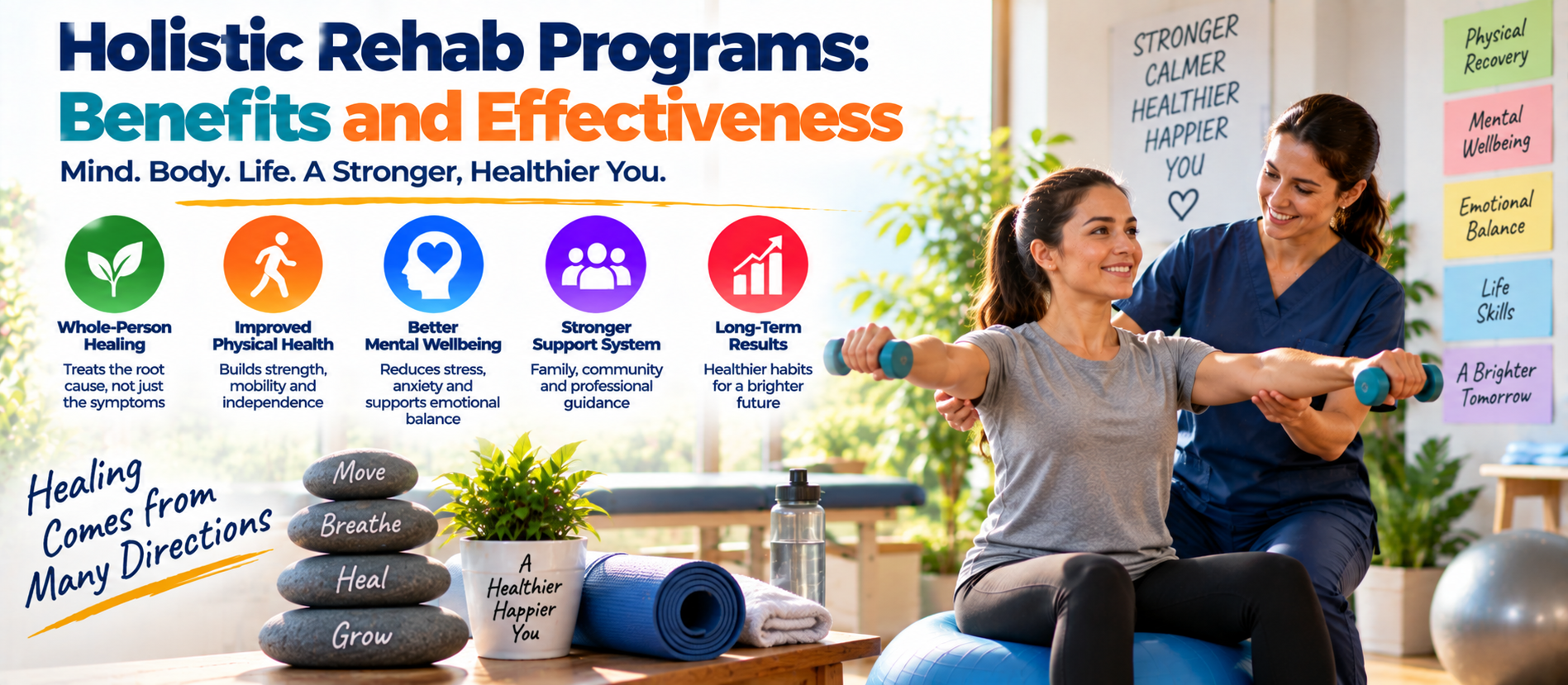
Many rehab programs integrate nutrition, exercise, meditation, yoga, sleep education, stress management, and wellness coaching alongside clinical treatment to support whole-person recovery.
SEO, AEO, GEO & AI Search
SEO: rehab, rehabilitation center, addiction recovery, physical rehabilitation, recovery treatment.
AEO: Directly answers common questions including "What is rehab?" and "How does rehabilitation help recovery?"
GEO: Structured headings, FAQs, and comprehensive explanations improve visibility in AI-powered search experiences.
Frequently Asked Questions
Is rehab only for addiction?
No. Rehabilitation also supports recovery from injuries, surgery, neurological disorders, chronic illnesses, and mental health conditions.
How long does rehab take?
Programs vary from several weeks to several months depending on individual needs and recovery goals.
Can rehab prevent relapse?
While no program can guarantee prevention, evidence-based rehabilitation and ongoing aftercare significantly reduce relapse risk.
Why is aftercare important?
Aftercare provides continued guidance, accountability, and support after formal treatment ends.
Conclusion
Rehabilitation is a comprehensive, person-centered process that helps individuals regain health, confidence, independence, and purpose. Through medical care, therapy, education, wellness practices, and continuous support, rehab creates a strong foundation for sustainable recovery and long-term success.
Digiifrog remains committed to delivering educational content optimized for SEO, AEO, GEO, and AI Search while helping readers better understand rehabilitation and lifelong wellness.
Visit www.digiifrog.com for more rehabilitation and healthcare resources.
Ready to Grow?
Talk to us about a strategy tailored to your brand — we will help you stand out in search, AI discovery and social.

Comments (0)
Log in to leave a comment.