
📋 Quick Summary
In this article:
Does an Old Electrical Panel Automatically Need Replacement?
Top Signs You May Need an Electrical Panel Upgrade
1. Your Circuit Breaker Trips Frequently
2. Lights Flicker or Dim When Appliances Start
3. The Panel Feels Hot
4. You Hear Buzzing, Crackling, or Sizzling
5. You Smell Burning Near the Panel
6. Your Home Still Uses an Older Fuse System
7. You Need More Circuits for New Appliances
When New Appliances May Require an Electrical Upgrade
Electrical Panel Upgrade vs. Electrical Service Upgrade
How Much Electrical Capacity Does Your Home Need?
When should you upgrade your electrical panel? It is a common question for homeowners with older houses, growing electrical demand, frequent breaker trips, or plans for major electrical upgrades. The answer is not simply based on the age of the panel. A panel may need attention because it is damaged, overloaded, poorly configured, outdated for the home's needs, or unable to safely support new equipment.
Your electrical panel is the central distribution point for electricity in your home. It sends power to lights, outlets, appliances, heating and cooling equipment, and other circuits. Circuit breakers protect those circuits by interrupting power when current exceeds safe limits.
Modern homes often use more electricity than older homes were designed to handle. Air conditioners, induction cooktops, electric water heaters, heat pumps, EV chargers, home offices, large entertainment systems, and other equipment can add significant electrical demand.
This does not mean every older panel needs to be replaced. In many cases, a qualified electrician can solve a problem by adding a circuit, repairing wiring, replacing a defective breaker, improving protection, or making another targeted change. A proper inspection is the best way to determine what your home actually needs.
💡 Key Insight
In this guide, Digiifrog explains the most important signs that your electrical panel may need an upgrade, when replacement makes sense, what a panel upgrade involves, how new appliances affect electrical capacity, and what questions to ask an electrician.
An electrical panel, also called a service panel or breaker panel, is the main distribution point for electrical circuits in a home. Electricity enters the property through the electrical service and is distributed through individual circuits. Circuit breakers help protect those circuits from excessive current.
Older homes may use fuse-based systems, while many modern homes use circuit breakers. The panel may be located in a garage, basement, utility room, hallway, or another accessible location.
A panel does more than provide a place for switches. It is part of a larger electrical system that includes the utility service, meter, main disconnect, feeder conductors, branch circuits, grounding and bonding, wiring, outlets, switches, and protective devices.
Because these components work together, simply installing a larger breaker is not a safe way to create more electrical capacity. The panel, wiring, service conductors, and other components must be appropriately rated and installed.
Does an Old Electrical Panel Automatically Need Replacement?
No. Age alone does not prove that a panel needs replacement. However, an older electrical system deserves closer inspection, especially if the home has never had a major electrical evaluation.
ESFI recommends electrical inspections for homes that are 40 years or older, previously owned homes, homes that have undergone major renovations, and homes where major new appliances have been added.
The important question is not only “How old is my panel?” It is also:
- Is the panel in good physical condition?
- Is the electrical service large enough for the home's current load?
- Are the breakers correctly matched to the circuits?
- Are there signs of overheating or damage?
- Are circuits frequently overloaded?
- Does the system have appropriate protective devices?
- Are there enough circuits for current and planned appliances?
- Does the installation meet applicable local electrical requirements?
Top Signs You May Need an Electrical Panel Upgrade
Several warning signs can indicate that your electrical system needs professional attention. Some signs may point directly to the panel. Others may indicate a broader wiring or circuit problem.
1. Your Circuit Breaker Trips Frequently
An occasional breaker trip can happen when a circuit is overloaded or when a protective device responds to a fault. Frequent trips are different. If the same breaker repeatedly trips, do not simply reset it again and again.
Frequent trips can indicate an overloaded circuit, faulty appliance, wiring problem, defective breaker, or another electrical issue. ESFI recommends having frequent breaker trips investigated by a qualified electrician.
The solution may be a new circuit rather than a complete panel replacement. A professional inspection can determine the cause.
2. Lights Flicker or Dim When Appliances Start
Flickering or dimming lights can be a warning sign that should not be ignored, particularly when the change happens repeatedly when high-demand equipment starts.
⚠ Watch Out
ESFI identifies flickering or dimming lights as a warning sign of potential electrical overload or wiring problems.
The cause may be a circuit issue, loose connection, service problem, or another electrical fault. Do not assume the panel is automatically the cause.
3. The Panel Feels Hot
An electrical panel should not be treated as a normal heat source. If the panel cover feels unusually hot, there is a burning smell, or you notice signs of heat damage, arrange an urgent professional inspection.
Heat can indicate excessive electrical current, loose connections, damaged components, or another problem. ESFI lists warm or discolored outlets and switches, burning odors, and other overheating signs as reasons to contact a qualified electrician.
4. You Hear Buzzing, Crackling, or Sizzling
Unusual electrical sounds can indicate a serious problem. Buzzing, sizzling, crackling, or arcing sounds should not be treated as normal household noise.
Turn off equipment if you can do so safely and contact a qualified electrician. Do not open the panel cover or attempt internal repairs yourself.
5. You Smell Burning Near the Panel
A burning or hot-insulation smell near an electrical panel is a significant warning sign. If you smell burning, see smoke, or notice visible scorching, treat it as an electrical safety emergency.
If there is smoke or fire, leave the property and contact emergency services. Do not take risks trying to diagnose the panel yourself.
6. Your Home Still Uses an Older Fuse System
Some older homes still use fuse-based electrical systems. A fuse system is not automatically unsafe simply because it is old, but older electrical systems deserve professional evaluation.
Never replace a fuse with a higher-amperage fuse to stop repeated failures. ESFI warns that using an oversized fuse is a serious fire hazard because the circuit wiring may not be designed for the higher current.
An electrician can determine whether modernization, additional circuits, protective-device upgrades, or a full panel replacement is appropriate.
7. You Need More Circuits for New Appliances
Modern appliances often require dedicated circuits. If your home has too few circuits, you may be tempted to rely heavily on extension cords and power strips.
That is a warning sign that your electrical system may need improvement. ESFI notes that heavy reliance on extension cords can indicate that a home has too few outlets or circuits for current needs.
A qualified electrician can determine whether you need additional branch circuits, a panel upgrade, a service upgrade, or another solution.
When New Appliances May Require an Electrical Upgrade
A major electrical upgrade often becomes necessary when homeowners add high-demand equipment. The panel must be evaluated as part of the entire electrical system.
Examples include:
- Electric vehicle chargers
- Heat pumps
- Electric furnaces
- Electric water heaters
- Induction cooktops
- Electric ranges
- Large air-conditioning systems
- Swimming pool equipment
- Hot tubs
- Workshop equipment
- Large home-office or server equipment
- Battery storage systems
- Solar-related electrical equipment
The U.S. Department of Energy notes that an electrical panel or circuit upgrade may be needed when adding equipment such as an electric heat pump, and similar planning can apply when considering other major electrification projects.
However, adding one large appliance does not automatically mean the entire panel must be replaced. A load assessment can show whether the existing system has adequate capacity.
Electrical Panel Upgrade vs. Electrical Service Upgrade
These terms are sometimes used interchangeably, but they can describe different work.
An electrical panel upgrade may involve replacing or improving the panel while keeping other parts of the electrical service appropriate for the home's capacity.
An electrical service upgrade can involve increasing the capacity of the service supplied to the home. This may require changes to the meter, service entrance equipment, conductors, disconnects, panel, and utility connection.
The exact requirements depend on the property's electrical design, utility, local rules, and equipment.
Ask your electrician to explain whether the project is a panel replacement, service upgrade, circuit expansion, or combination of work.
How Much Electrical Capacity Does Your Home Need?
There is no universal panel size that is correct for every home. A small home with gas appliances may have very different electrical demand from a large all-electric home with multiple high-load systems.
An electrician can evaluate the home's expected electrical load and determine whether the existing service and panel can support it.
The calculation should consider existing equipment and planned additions. Simply looking at the number printed on the main breaker does not tell the entire story.
Factors That Affect Electrical Demand
- Home size
- Heating system
- Cooling system
- Water heater type
- Cooking equipment
- EV charging requirements
- Laundry appliances
- Pool or spa equipment
- Workshop tools
- Solar and battery equipment
- Number of occupants
- Future renovation plans
When a Panel Upgrade May Be Better Than Adding One Circuit
If the existing panel has adequate space, capacity, and condition, adding a properly designed circuit may be enough. But there are situations where a broader upgrade makes more sense.
A panel upgrade may be appropriate when:
- The existing panel is damaged.
- The panel is obsolete or difficult to service.
- There is insufficient breaker space.
- The service capacity is inadequate for planned loads.
- The panel has repeated overheating or fault problems.
- The electrical system needs improved protection.
- A major renovation is changing the home's electrical requirements.
- New electrification equipment requires more capacity.
- The existing installation cannot reasonably support planned expansion.
ESFI also recommends inspection when an older home undergoes major renovation or receives major new appliances.
Electrical Panel Upgrade for Home Renovation
A renovation is a good time to review the electrical system because walls may already be open and new circuits may be planned.
Kitchen remodeling can add ovens, induction cooktops, dishwashers, refrigerators, lighting, outlets, and other loads. Bathroom remodeling may add ventilation, heating, lighting, and improved GFCI protection. A home addition can require several new circuits.
Instead of upgrading electrical equipment only after problems appear, discuss the complete renovation plan with a qualified electrician before work begins.
This can help avoid expensive changes later and make it easier to plan future equipment.
Should You Upgrade Your Panel for an EV Charger?
An EV charger can add a substantial electrical load to a home. Whether the existing panel needs to be upgraded depends on the charger's requirements, existing electrical demand, available capacity, service rating, and local requirements.
Do not install a high-power EV charging circuit based only on the size of the main breaker. Have a qualified electrician assess the service and proposed charger.
Possible solutions may include a dedicated circuit, load management, a panel upgrade, or a service upgrade. The best option depends on the property.
Should You Upgrade Your Panel for a Heat Pump?
Heat pumps are an important part of home electrification. In some homes, installing a heat pump may require electrical changes because the new equipment adds electrical demand.
The U.S. Department of Energy specifically identifies panel or circuit upgrades as a consideration when adding electric heat pumps.
Again, the correct answer depends on the home's existing load and equipment. An electrician should evaluate the system before installation.
What Are AFCI and GFCI Devices?
Panel modernization is not only about adding more breaker spaces. Electrical protection also matters.
AFCI stands for Arc-Fault Circuit Interrupter. AFCIs are designed to detect dangerous arcing conditions and interrupt power. ESFI describes AFCI protection as an important part of modern electrical fire protection.
GFCI stands for Ground-Fault Circuit Interrupter. GFCIs are designed to reduce the risk of electric shock by interrupting power when they detect a ground-fault condition. They are especially important in locations where electricity may come into contact with water.
Applicable requirements vary by jurisdiction and installation. Your electrician should determine what protection is required for your project.
Does a New Panel Make a Home Safer?
A properly designed and installed panel can improve the electrical system, but a new panel does not automatically make every part of a home's wiring safe.
The panel is only one component. Old wiring, damaged branch circuits, poor connections, inadequate grounding, overloaded circuits, or other problems may remain even after the panel is replaced.
This is why a complete electrical evaluation is often more useful than simply replacing the panel because it looks old.
What Happens During an Electrical Panel Upgrade?
The exact process varies by property, but a typical project may include several stages.
1. Electrical Inspection
The electrician examines the existing panel, service equipment, wiring, breakers, grounding, available spaces, and current electrical loads.
2. Load Assessment
The electrician evaluates current and planned electrical demand. This helps determine whether additional capacity is necessary.
3. Project Planning
The electrician identifies the equipment and work required. This may include panel replacement, new breakers, new circuits, service changes, grounding or bonding work, or protective-device upgrades.
4. Permits and Utility Coordination
Depending on local requirements, permits, inspections, and utility coordination may be necessary. Requirements vary by location.
5. Installation
The existing equipment is safely disconnected and the new equipment is installed according to applicable electrical requirements.
6. Testing and Labeling
Circuits should be tested and the panel should be clearly labeled so homeowners can identify circuits during future maintenance or emergencies.
ESFI recommends properly labeling electrical panels so circuits can be identified quickly. citeturn0search4
How Long Does an Electrical Panel Upgrade Take?
The time required varies with the complexity of the project. A straightforward panel replacement may take much less time than a project involving service changes, new circuits, rewiring, utility coordination, or difficult access.
Ask the electrician what work is included before scheduling the project. If the project requires a utility disconnect or inspection, the overall schedule may depend on outside parties.
How Much Does an Electrical Panel Upgrade Cost?
Electrical panel upgrade cost varies significantly by location, equipment, panel size, labor, accessibility, wiring condition, permit requirements, and whether the project also requires a service upgrade.
A basic panel replacement and a complete electrical service upgrade are very different projects. Do not compare quotes without comparing the scope of work.
When requesting estimates, ask each electrician to list:
- Panel equipment
- Breaker types
- Labor
- New circuits
- Service changes
- Grounding or bonding work
- Permits and inspections
- Utility coordination
- Removal of old equipment
- Warranty information
Common Mistakes Homeowners Make
Choosing a Bigger Panel Without a Load Assessment
A larger panel is not automatically the right solution. The electrical system must be designed around actual and expected loads.
Replacing the Panel but Ignoring Old Wiring
A new panel cannot correct every wiring problem. If the branch circuits are damaged or inadequate, they also need attention.
Installing Oversized Breakers
Breakers must match the circuit design and wiring. Increasing breaker size simply to stop nuisance trips can create a dangerous condition. ESFI warns against improper breaker or fuse sizing.
Using Extension Cords as Permanent Wiring
Extension cords can be useful temporarily, but heavy or permanent reliance may indicate that the home lacks enough properly installed outlets or circuits.
Hiring Based Only on the Lowest Price
Electrical work is safety-critical. Compare qualifications, scope, permits, equipment, warranty, and experience rather than choosing solely on price.
How to Choose an Electrical Panel Upgrade Contractor
When searching for an electrician near me or an electrical panel upgrade service, look for a qualified professional who can inspect the complete system and explain the recommended work.
Ask these questions:
- Are you licensed or otherwise properly qualified for this work?
- Will you inspect the existing wiring?
- Will you calculate the expected electrical load?
- Does the project require a service upgrade?
- Which breakers and protective devices will be installed?
- Will permits or inspections be required?
- Will the panel be clearly labeled?
- What parts of the existing system will remain?
- What happens if damaged wiring is discovered?
- What warranty is included?
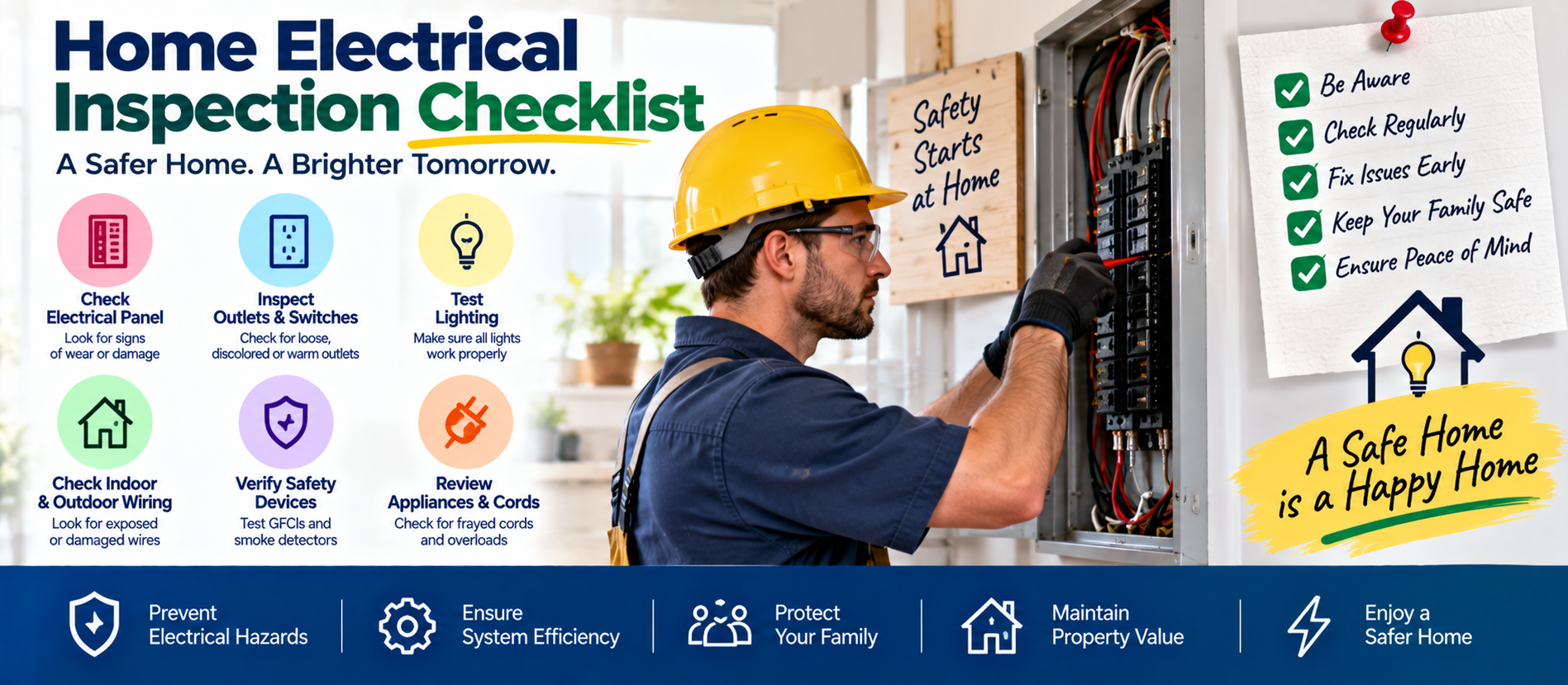
Electrical Panel Upgrade Checklist
Use this checklist before making a decision:
- Check for frequent breaker trips.
- Watch for flickering or dimming lights.
- Look for burning smells or visible heat damage.
- Listen for buzzing, sizzling, or crackling.
- Check for warm or discolored electrical equipment.
- Identify whether the home still uses fuses.
- Consider the home's age and electrical history.
- List major appliances already installed.
- List major appliances you plan to add.
- Consider EV charging, heat pumps, solar, or battery storage.
- Ask for a professional load assessment.
- Compare written quotes based on the same scope.
- Confirm permit and inspection requirements.
When Should You Upgrade Your Electrical Panel? Quick Answer
You should consider an electrical panel upgrade when the existing system cannot safely or practically support your home's current or planned electrical needs, or when the panel itself is damaged, obsolete, overloaded, or otherwise unsuitable.
Warning signs such as frequent breaker trips, flickering lights, overheating, burning smells, buzzing, damaged components, and insufficient circuits should prompt a professional inspection.
If you are adding major electrical equipment, such as an EV charger or heat pump, have the system evaluated before installation. A panel upgrade may be necessary, but a targeted circuit upgrade or load-management solution may sometimes be enough.
Frequently Asked Questions About Electrical Panel Upgrades
How do I know if my electrical panel needs to be upgraded?
Look for frequent breaker trips, flickering lights, overheating, burning smells, buzzing or crackling, insufficient circuits, physical damage, or an inability to support planned electrical equipment. A qualified electrician should inspect the system before you decide on replacement.
How old should an electrical panel be before replacement?
There is no universal replacement age. Condition, capacity, safety, electrical demand, and applicable requirements matter more than age alone. Older homes should receive professional electrical evaluation, especially after major renovations or appliance additions.
Can I upgrade my electrical panel myself?
No. Panel work involves dangerous electrical energy and should be performed by a properly qualified electrician in accordance with applicable local requirements.
Does a panel upgrade increase home value?
A modern, properly installed electrical system can improve functionality, safety, and buyer confidence. However, the financial return varies by property and local market. Do not upgrade solely because you expect a specific increase in resale value.
Can I add more breakers to my existing panel?
Sometimes. The panel must have suitable space and capacity, and the electrical system must support the additional circuits. An electrician should verify whether adding breakers is safe and permitted.
Why does my breaker keep tripping?
A tripping breaker may be responding to an overload or electrical fault. Repeated trips should be investigated rather than repeatedly reset. The cause could be the appliance, circuit, wiring, breaker, or broader electrical system.
Do EV chargers require a new electrical panel?
Not always. The requirement depends on the charger, existing electrical load, available capacity, service size, and installation requirements. Have a qualified electrician evaluate the system before installation.
Does a heat pump require a panel upgrade?
It may. Some homes need additional electrical capacity for a heat pump. The U.S. Department of Energy identifies panel or circuit upgrades as a consideration for some heat-pump installations.
What is the difference between AFCI and GFCI?
AFCI protection is designed to detect dangerous arcing conditions and reduce electrical fire risk. GFCI protection is designed to reduce electric shock risk from ground faults.
Should I replace my panel during a home renovation?
It can be a good time to have the system evaluated because renovations may add circuits, appliances, lighting, HVAC equipment, or other electrical loads. A professional can determine whether a panel or service upgrade is actually necessary.
How often should an electrical panel be inspected?
There is no single schedule that applies to every home. Consider a professional inspection when the home is older, after a major renovation, when adding major appliances, or whenever you notice electrical warning signs.
Final Thoughts
An electrical panel upgrade should be based on safety, condition, capacity, and future electrical needs—not simply on the age of the panel. If breakers trip repeatedly, lights flicker, electrical equipment becomes hot, you smell burning, or you hear unusual electrical sounds, arrange a professional inspection.
It is also smart to review the electrical system before adding major equipment. EV chargers, heat pumps, electric water heaters, induction cooking, large HVAC systems, solar and battery equipment can all affect electrical planning.
Remember that a new panel is not a complete solution for every electrical problem. The panel, service, branch circuits, wiring, grounding, breakers, and protective devices must work together. Sometimes a new circuit is enough. Sometimes a panel replacement is appropriate. In other cases, the project may require a larger service upgrade.
The safest approach is to have a qualified electrician assess the existing system, calculate current and planned electrical demand, explain the options, and complete the work according to applicable local requirements.
At Digiifrog, our goal is to make home-service information easy to understand. Use this guide to recognize warning signs, prepare for a professional inspection, and ask better questions before investing in an electrical panel upgrade.
Brand: Digiifrog
Website: www.digiifrog.com
Ready to Grow?
Talk to us about a strategy tailored to your brand — we will help you stand out in search, AI discovery and social.

Comments (0)
Log in to leave a comment.