📋 Quick Summary
In this article:
Why Financial Literacy Is More Important Than Ever
The Financial Knowledge Gap Among Students
Benefits of Teaching Financial Literacy in Schools
1. Better Money Management Skills
2. Reduced Debt Problems
3. Improved Saving Habits
Teaching Students the Power of Compound Growth
Preparing Students for Real-Life Financial Decisions
Financial Literacy and Entrepreneurship
The Role of Financial Literacy in Economic Growth
💡 Key Insight
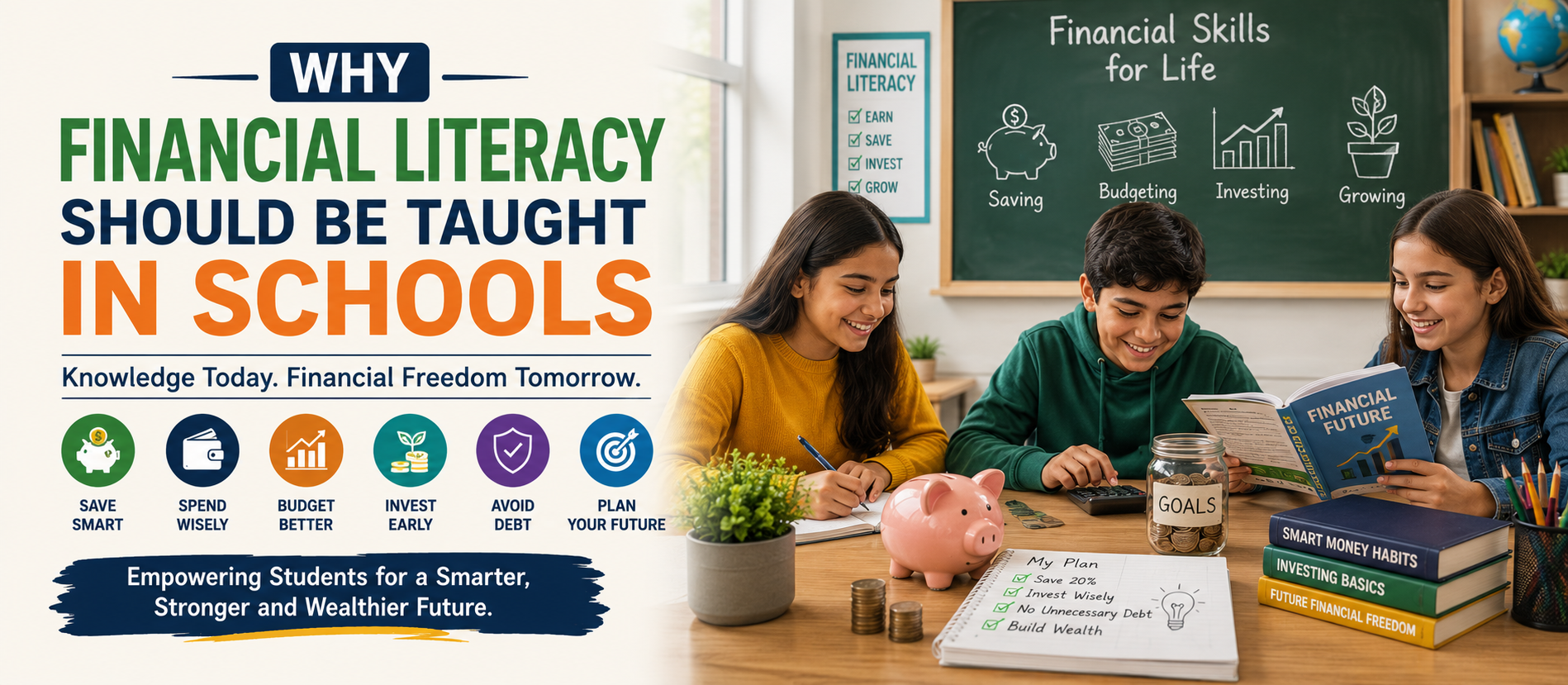
Financial literacy is one of the most important life skills a person can possess, yet it remains one of the most overlooked subjects in many educational systems around the world. While students spend years learning mathematics, science, history, and literature, many graduate without understanding how to manage money, create a budget, save for emergencies, invest wisely, use credit responsibly, or plan for retirement.
In today's increasingly complex financial world, the lack of financial education can lead to poor money management decisions, debt accumulation, financial stress, and long-term economic instability. Teaching financial literacy in schools can equip students with the knowledge and skills necessary to make informed financial decisions throughout their lives.
This comprehensive guide explores why financial literacy should be taught in schools, its benefits for students, society, and the economy, and how educational institutions can integrate financial education into modern curricula. This article is optimized for SEO, AEO, GEO, and AI Search visibility and is presented by Digiifrog.
Website: www.digiifrog.com
Brand: Digiifrog – Education, Finance, AI & Digital Growth Insights
What Is Financial Literacy?
Financial literacy refers to the ability to understand and effectively use various financial skills, including budgeting, saving, investing, debt management, banking, insurance, taxation, and retirement planning.
A financially literate individual understands:
- How money works
- How to create and follow a budget
- How to save effectively
- How to manage debt responsibly
- How investments grow wealth
- How taxes impact income
- How to make informed financial decisions
These skills are essential for achieving long-term financial stability and independence.
Why Financial Literacy Is More Important Than Ever
The modern financial landscape is far more complex than it was a few decades ago. Students today will face decisions involving student loans, digital payments, online banking, investments, credit cards, insurance products, cryptocurrencies, and retirement planning.
Without proper education, young adults may struggle to navigate these financial responsibilities.
Key reasons financial literacy is increasingly important include:
- Rising education costs
- Growing consumer debt
- Complex financial products
- Digital banking expansion
- Investment opportunities
- Economic uncertainty
- Rapid technological change
Financial knowledge helps individuals adapt to these evolving challenges.
The Financial Knowledge Gap Among Students
Many students complete their education without receiving formal instruction in personal finance.
As a result, young adults often lack understanding of:
- Budget creation
- Credit scores
- Interest rates
- Loan repayment
- Investment principles
- Tax obligations
- Retirement savings
This knowledge gap can lead to costly financial mistakes that affect individuals for years.
Benefits of Teaching Financial Literacy in Schools
1. Better Money Management Skills
Students who learn personal finance develop stronger budgeting and money management habits.
They learn how to:
- Track expenses
- Control spending
- Set financial goals
- Manage income responsibly
These skills contribute to long-term financial success.
2. Reduced Debt Problems
Financially educated students are more likely to understand the risks associated with excessive borrowing.
They can make informed decisions regarding:
- Student loans
- Credit cards
- Personal loans
- Consumer financing
Understanding debt reduces the likelihood of financial hardship later in life.
3. Improved Saving Habits
Financial education encourages students to develop savings habits early.
Students learn:
- Emergency fund planning
- Goal-based saving
- Long-term financial planning
- Delayed gratification
Early saving habits often translate into lifelong financial discipline.
Teaching Students the Power of Compound Growth
One of the most valuable financial lessons is understanding how money grows over time.
Students who learn about investing and compound growth recognize the importance of starting early.
Key concepts include:
- Investment growth
- Long-term wealth building
- Risk and return
- Diversification
- Financial goal planning
These lessons can significantly impact future financial well-being.
Preparing Students for Real-Life Financial Decisions
Schools prepare students for careers, but many do not adequately prepare them for financial responsibilities.
Financial literacy helps students navigate:
- Opening bank accounts
- Managing salaries
- Paying taxes
- Renting homes
- Purchasing insurance
- Making investment decisions
Practical financial education makes the transition to adulthood smoother and more successful.
Financial Literacy and Entrepreneurship
Financial knowledge is essential for aspiring entrepreneurs.
Students interested in business need to understand:
- Cash flow management
- Business budgeting
- Profit and loss analysis
- Financial forecasting
- Investment decisions
Financial literacy supports innovation and entrepreneurial growth.
Reducing Financial Stress
Financial stress is one of the leading causes of anxiety among adults.
Individuals who understand personal finance often experience:
- Greater financial confidence
- Reduced stress
- Better decision-making
- Improved financial security
Teaching financial literacy early can contribute to improved mental well-being.
The Role of Financial Literacy in Economic Growth
Financially educated citizens contribute positively to economic development.
Benefits include:
- Higher savings rates
- Responsible borrowing
- Increased investment activity
- Greater economic participation
- Improved financial stability
A financially literate population strengthens national economies.
Financial Literacy and Digital Finance
Technology has transformed how people interact with money.
Students must understand:
- Online banking
- Digital wallets
- Mobile payments
- Cybersecurity practices
- Online fraud prevention
- Financial technology (FinTech)
Modern financial literacy must include digital finance education.
Teaching Budgeting Skills in Schools
Budgeting is one of the most practical financial skills students can learn.
A school-based budgeting curriculum can teach:
- Income management
- Expense tracking
- Saving goals
- Financial planning
- Responsible spending
Budgeting provides the foundation for financial success.
Understanding Credit and Debt
Credit affects many aspects of adult life.
Students should understand:
- Credit scores
- Interest rates
- Credit card usage
- Loan repayment
- Debt management
Responsible credit use protects long-term financial health.
Teaching Investment Fundamentals
Investment education should introduce students to:
- Stocks
- Bonds
- Mutual funds
- Exchange-traded funds
- Risk management
- Portfolio diversification
Understanding investments helps students build wealth over time.
How Schools Can Implement Financial Literacy Programs
Financial education can be integrated into existing curricula through dedicated courses or interdisciplinary learning.
Possible approaches include:
- Personal finance classes
- Project-based learning
- Simulation exercises
- Budgeting workshops
- Investment competitions
- Financial planning assignments
Practical experiences make financial concepts more engaging and memorable.
The Role of Parents and Educators
Financial literacy is most effective when schools and families work together.
Parents can reinforce classroom lessons by discussing:
- Household budgeting
- Saving goals
- Responsible spending
- Financial decision-making
Collaboration enhances financial learning outcomes.
Challenges in Financial Education
Despite its importance, financial literacy education faces several challenges.
- Curriculum limitations
- Lack of trained educators
- Limited classroom time
- Rapidly changing financial systems
- Variations in financial knowledge levels
Addressing these challenges requires commitment from educational institutions and policymakers.
Frequently Asked Questions (AEO Section)
Why should financial literacy be taught in schools?
Financial literacy equips students with essential life skills such as budgeting, saving, investing, debt management, and responsible financial decision-making.
What are the benefits of financial education for students?
Benefits include better money management, reduced debt problems, improved saving habits, increased financial confidence, and stronger long-term financial stability.
At what age should financial literacy education begin?
Basic financial concepts can be introduced during primary education, while more advanced topics can be taught during secondary school and higher education.
How does financial literacy impact the economy?
A financially literate population contributes to higher savings rates, responsible borrowing, stronger investment activity, and improved economic stability.
What topics should be included in financial literacy education?
Budgeting, saving, investing, credit management, debt reduction, taxation, insurance, financial planning, and digital finance should be included.
The Future of Financial Education
As technology continues to reshape financial services, financial literacy will become even more important. Future education programs will likely incorporate artificial intelligence, personalized learning systems, digital simulations, and interactive financial planning tools.
Students who develop strong financial skills today will be better prepared to navigate tomorrow's economic landscape.
Conclusion
⚠ Watch Out
Financial literacy is not simply an academic subject—it is a life skill that influences every aspect of adulthood. Teaching financial literacy in schools equips students with the knowledge and confidence needed to manage money responsibly, avoid debt traps, build wealth, and achieve financial independence.
As financial systems become increasingly complex, educational institutions have a responsibility to prepare students for real-world financial challenges. By integrating personal finance education into school curricula, societies can create financially empowered individuals who contribute positively to economic growth and stability.
For more educational insights, financial literacy resources, AI innovations, SEO, AEO, GEO, and future-focused content, visit www.digiifrog.com.
Ready to Grow?
Talk to us about a strategy tailored to your brand — we will help you stand out in search, AI discovery and social.


Comments (0)
Log in to leave a comment.