📋 Quick Summary
In this article:
How to Choose the Right Career
Top Career Options After High School
Medical and Healthcare Careers
Computer Science and Artificial Intelligence
Graphic Design and Creative Media
Meta Title: Best Career Options After High School | Complete Career Guide for Students
Website: www.digiifrog.com
Brand: Digiifrog – Education, AI, Career & Digital Growth Insights
💡 Key Insight
Choosing the right career after high school is one of the most important decisions a student will make. Today's job market offers far more opportunities than the traditional paths of engineering, medicine, or government service. Artificial intelligence, digital marketing, cybersecurity, healthcare, renewable energy, finance, design, entrepreneurship, and skilled trades are creating exciting career possibilities for students with different interests and abilities.
This comprehensive WordPress-ready guide explains how students can evaluate career choices, understand emerging industries, select suitable education pathways, and prepare for long-term professional success. The article is optimized for SEO, AEO, GEO, and AI Search visibility.
How to Choose the Right Career
Before selecting a career, students should evaluate:
- Personal interests and strengths
- Academic performance
- Future job demand
- Salary expectations
- Location preferences
- Learning style
- Long-term career growth
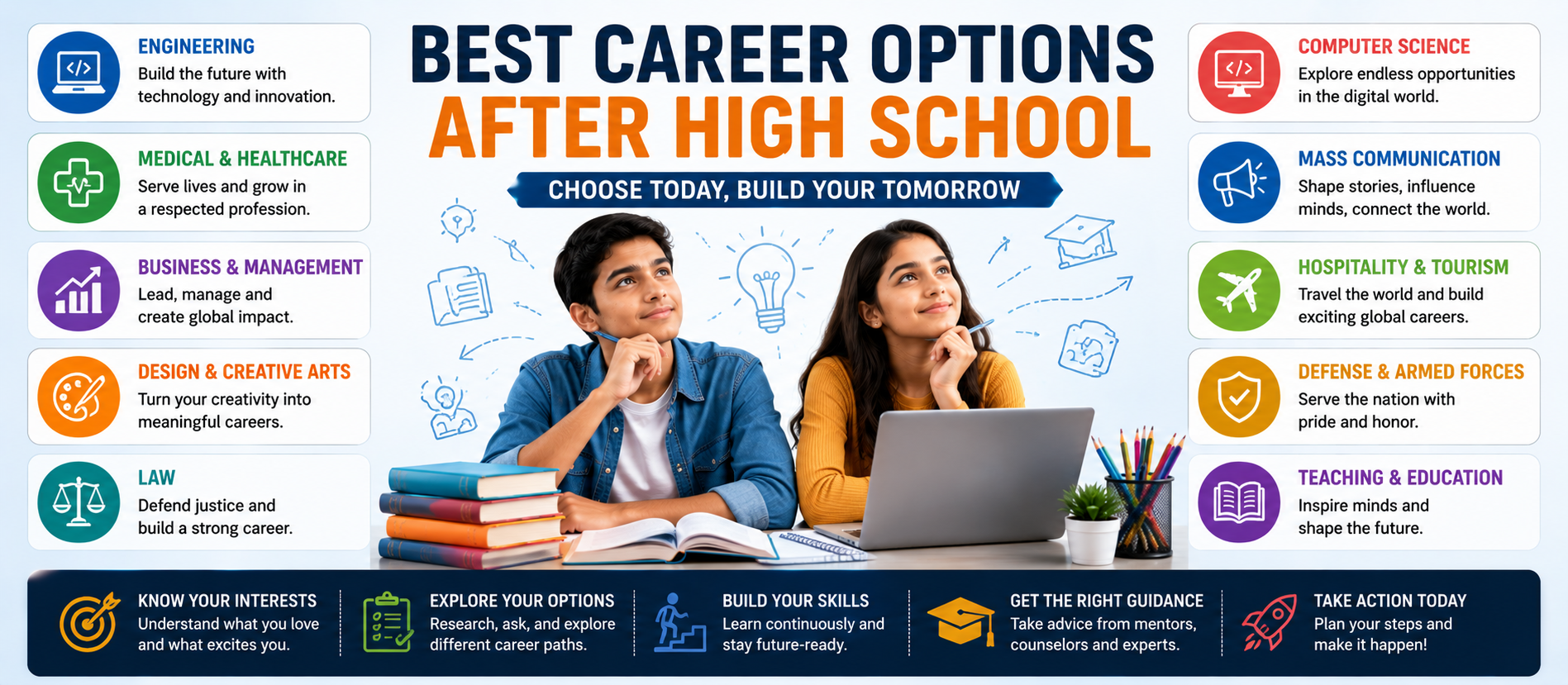
Top Career Options After High School
Engineering and Technology
Software engineering, AI, robotics, cloud computing, electronics, and civil engineering continue to provide strong employment opportunities.
Medical and Healthcare Careers
Medicine, nursing, pharmacy, physiotherapy, radiology, biotechnology, and public health remain high-demand professions.
Computer Science and Artificial Intelligence
AI, machine learning, cybersecurity, data science, software development, and cloud engineering are among the fastest-growing career fields.
Business and Management
Business administration, accounting, finance, economics, entrepreneurship, logistics, and international business offer diverse career opportunities.
Digital Marketing
SEO, content marketing, social media management, PPC advertising, email marketing, and analytics have become popular skill-based careers.
Graphic Design and Creative Media
UI/UX design, animation, video editing, branding, photography, and content creation continue to expand with digital transformation.
Law and Public Administration
Students interested in justice, governance, and policy may pursue law, civil services, or public administration.
Education and Teaching
Teaching remains a respected profession with opportunities in schools, universities, online learning, and educational technology.
Vocational and Skilled Trades
Electricians, technicians, automotive specialists, plumbers, HVAC professionals, machinists, and industrial technicians enjoy strong demand.
Entrepreneurship
Students with innovative ideas can build startups, e-commerce businesses, consulting firms, or digital agencies.
Government Career Opportunities
- Defense services
- Police
- Railways
- Banking
- Civil services
- Public sector organizations
Emerging Careers for the Future
- Artificial Intelligence
- Machine Learning
- Cybersecurity
- Data Analytics
- Renewable Energy
- Blockchain
- Drone Technology
- Digital Healthcare
Skills Every Student Should Develop
- Communication
- Critical thinking
- Problem solving
- Digital literacy
- AI literacy
- Leadership
- Adaptability
- Teamwork
How AI Is Changing Career Choices
Artificial Intelligence is transforming nearly every industry. Students should combine technical knowledge with creativity, emotional intelligence, and lifelong learning to remain competitive.
Career Planning Tips
- Research industries carefully.
- Talk to professionals.
- Complete internships.
- Earn certifications.
- Build a portfolio.
- Continue learning throughout your career.
Frequently Asked Questions (AEO Section)
Which career is best after high school?
The best career depends on your interests, abilities, values, and long-term goals. Technology, healthcare, engineering, business, and skilled trades all offer excellent opportunities.
Should students choose skills or degrees?
Both are valuable. Degrees provide academic foundations while industry skills and certifications improve employability.
Are AI careers good for students?
Yes. AI, cybersecurity, data science, and software development are among the fastest-growing career fields worldwide.
How can students make better career decisions?
Research careers, understand industry trends, gain practical experience, seek guidance from mentors, and evaluate personal strengths.
GEO & AI Search Perspective
Career information should be accurate, structured, and easy for both search engines and AI assistants to understand. Clear headings, practical advice, and question-based content improve discoverability in modern AI-powered search experiences.
Detailed Career Path Planning
Students should create a five-year career roadmap that includes educational goals, certifications, internships, networking opportunities, and skill development milestones. Regular self-assessment helps students determine whether they remain interested in a chosen career path or should explore alternative options.
Career planning should include financial considerations, expected educational investment, geographic opportunities, work-life balance, advancement potential, and the future impact of automation and artificial intelligence. Students who understand industry trends can make more informed decisions.
Importance of Lifelong Learning
The modern workforce changes rapidly. Professionals regularly update their knowledge through online courses, certifications, workshops, conferences, and practical experience. Lifelong learning improves employability and career resilience.
Building a Strong Career Portfolio
- Create professional resumes.
- Develop personal projects.
- Participate in competitions.
- Complete internships.
- Volunteer in community projects.
- Build professional networking profiles.
Employers increasingly value practical experience alongside academic qualifications.
Detailed Career Path Planning
Students should create a five-year career roadmap that includes educational goals, certifications, internships, networking opportunities, and skill development milestones. Regular self-assessment helps students determine whether they remain interested in a chosen career path or should explore alternative options.
Career planning should include financial considerations, expected educational investment, geographic opportunities, work-life balance, advancement potential, and the future impact of automation and artificial intelligence. Students who understand industry trends can make more informed decisions.
Importance of Lifelong Learning
The modern workforce changes rapidly. Professionals regularly update their knowledge through online courses, certifications, workshops, conferences, and practical experience. Lifelong learning improves employability and career resilience.
Building a Strong Career Portfolio
- Create professional resumes.
- Develop personal projects.
- Participate in competitions.
- Complete internships.
- Volunteer in community projects.
- Build professional networking profiles.
Employers increasingly value practical experience alongside academic qualifications.
Detailed Career Path Planning
Students should create a five-year career roadmap that includes educational goals, certifications, internships, networking opportunities, and skill development milestones. Regular self-assessment helps students determine whether they remain interested in a chosen career path or should explore alternative options.
Career planning should include financial considerations, expected educational investment, geographic opportunities, work-life balance, advancement potential, and the future impact of automation and artificial intelligence. Students who understand industry trends can make more informed decisions.
Importance of Lifelong Learning
The modern workforce changes rapidly. Professionals regularly update their knowledge through online courses, certifications, workshops, conferences, and practical experience. Lifelong learning improves employability and career resilience.
Building a Strong Career Portfolio
- Create professional resumes.
- Develop personal projects.
- Participate in competitions.
- Complete internships.
- Volunteer in community projects.
- Build professional networking profiles.
Employers increasingly value practical experience alongside academic qualifications.
Detailed Career Path Planning
Students should create a five-year career roadmap that includes educational goals, certifications, internships, networking opportunities, and skill development milestones. Regular self-assessment helps students determine whether they remain interested in a chosen career path or should explore alternative options.
Career planning should include financial considerations, expected educational investment, geographic opportunities, work-life balance, advancement potential, and the future impact of automation and artificial intelligence. Students who understand industry trends can make more informed decisions.
Importance of Lifelong Learning
The modern workforce changes rapidly. Professionals regularly update their knowledge through online courses, certifications, workshops, conferences, and practical experience. Lifelong learning improves employability and career resilience.
Building a Strong Career Portfolio
- Create professional resumes.
- Develop personal projects.
- Participate in competitions.
- Complete internships.
- Volunteer in community projects.
- Build professional networking profiles.
Employers increasingly value practical experience alongside academic qualifications.
Detailed Career Path Planning
Students should create a five-year career roadmap that includes educational goals, certifications, internships, networking opportunities, and skill development milestones. Regular self-assessment helps students determine whether they remain interested in a chosen career path or should explore alternative options.
Career planning should include financial considerations, expected educational investment, geographic opportunities, work-life balance, advancement potential, and the future impact of automation and artificial intelligence. Students who understand industry trends can make more informed decisions.
Importance of Lifelong Learning
The modern workforce changes rapidly. Professionals regularly update their knowledge through online courses, certifications, workshops, conferences, and practical experience. Lifelong learning improves employability and career resilience.
Building a Strong Career Portfolio
- Create professional resumes.
- Develop personal projects.
- Participate in competitions.
- Complete internships.
- Volunteer in community projects.
- Build professional networking profiles.
Employers increasingly value practical experience alongside academic qualifications.
Detailed Career Path Planning
Students should create a five-year career roadmap that includes educational goals, certifications, internships, networking opportunities, and skill development milestones. Regular self-assessment helps students determine whether they remain interested in a chosen career path or should explore alternative options.
Career planning should include financial considerations, expected educational investment, geographic opportunities, work-life balance, advancement potential, and the future impact of automation and artificial intelligence. Students who understand industry trends can make more informed decisions.
Importance of Lifelong Learning
The modern workforce changes rapidly. Professionals regularly update their knowledge through online courses, certifications, workshops, conferences, and practical experience. Lifelong learning improves employability and career resilience.
Building a Strong Career Portfolio
- Create professional resumes.
- Develop personal projects.
- Participate in competitions.
- Complete internships.
- Volunteer in community projects.
- Build professional networking profiles.
Employers increasingly value practical experience alongside academic qualifications.
Detailed Career Path Planning
Students should create a five-year career roadmap that includes educational goals, certifications, internships, networking opportunities, and skill development milestones. Regular self-assessment helps students determine whether they remain interested in a chosen career path or should explore alternative options.
Career planning should include financial considerations, expected educational investment, geographic opportunities, work-life balance, advancement potential, and the future impact of automation and artificial intelligence. Students who understand industry trends can make more informed decisions.
Importance of Lifelong Learning
The modern workforce changes rapidly. Professionals regularly update their knowledge through online courses, certifications, workshops, conferences, and practical experience. Lifelong learning improves employability and career resilience.
Building a Strong Career Portfolio
- Create professional resumes.
- Develop personal projects.
- Participate in competitions.
- Complete internships.
- Volunteer in community projects.
- Build professional networking profiles.
Employers increasingly value practical experience alongside academic qualifications.
Detailed Career Path Planning
Students should create a five-year career roadmap that includes educational goals, certifications, internships, networking opportunities, and skill development milestones. Regular self-assessment helps students determine whether they remain interested in a chosen career path or should explore alternative options.
Career planning should include financial considerations, expected educational investment, geographic opportunities, work-life balance, advancement potential, and the future impact of automation and artificial intelligence. Students who understand industry trends can make more informed decisions.
Importance of Lifelong Learning
The modern workforce changes rapidly. Professionals regularly update their knowledge through online courses, certifications, workshops, conferences, and practical experience. Lifelong learning improves employability and career resilience.
Building a Strong Career Portfolio
- Create professional resumes.
- Develop personal projects.
- Participate in competitions.
- Complete internships.
- Volunteer in community projects.
- Build professional networking profiles.
Employers increasingly value practical experience alongside academic qualifications.
Conclusion
The best career after high school is not the same for every student. Success comes from aligning interests, abilities, education, practical skills, and continuous learning with evolving market opportunities. Students who combine strong academic foundations with digital skills, responsible AI use, communication, and adaptability will be well prepared for future careers.
For more educational insights, AI innovations, career guidance, SEO, AEO, GEO, and AI Search resources, visit www.digiifrog.com.
Ready to Grow?
Talk to us about a strategy tailored to your brand — we will help you stand out in search, AI discovery and social.
Comments (0)
Log in to leave a comment.