📋 Quick Summary
In this article:
Why Workplace Harassment Is a Serious Legal Issue
Understanding Workplace Harassment Laws
Hostile Work Environment Explained
Employer Responsibilities Under Workplace Harassment Laws
How Employees Should Respond to Workplace Harassment
Workplace harassment remains one of the most serious challenges facing modern organizations. Despite increased awareness, stronger compliance requirements, and evolving employment laws, millions of employees worldwide continue to experience harassment, discrimination, intimidation, and hostile work environments.
Workplace harassment can negatively affect mental health, job performance, career growth, and organizational productivity. In severe cases, it can result in legal action, financial penalties, reputational damage, and employee turnover.
💡 Key Insight
Understanding workplace harassment laws and legal remedies is essential for both employees and employers. Employees must know their rights and available protections, while employers need to understand their legal obligations to maintain safe and respectful workplaces.
This comprehensive guide explores workplace harassment laws, common forms of harassment, legal protections, reporting procedures, employer responsibilities, and available remedies for victims.
What Is Workplace Harassment?
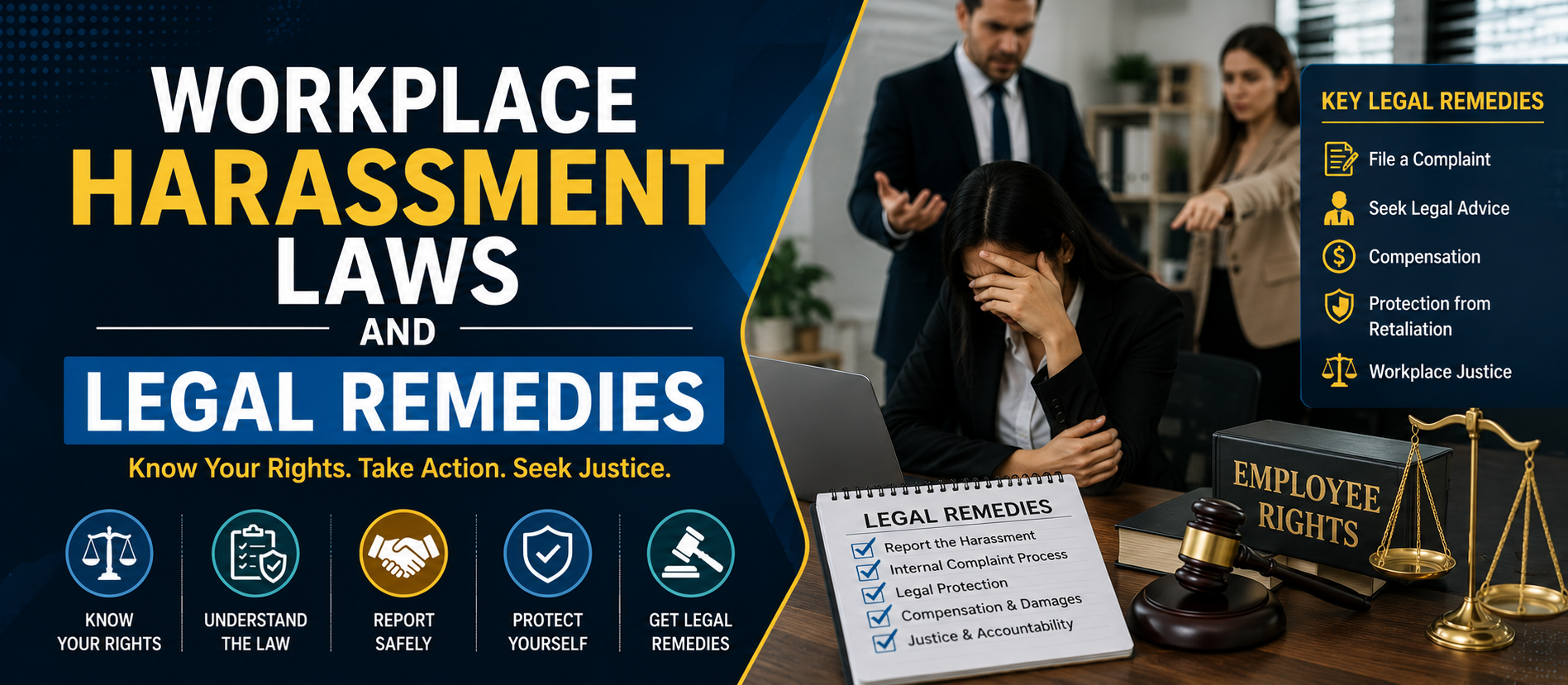
Workplace harassment refers to unwelcome conduct that creates an intimidating, offensive, hostile, or abusive work environment. Harassment may be verbal, physical, written, visual, psychological, or digital.
The conduct becomes unlawful when it interferes with an employee's ability to perform their job or creates an environment that a reasonable person would find intimidating or hostile.
- Verbal abuse
- Offensive jokes
- Threats and intimidation
- Sexual advances
- Discriminatory comments
- Cyber harassment
- Bullying behavior
- Retaliation
Modern workplace laws increasingly recognize both in-person and online forms of harassment.
Why Workplace Harassment Is a Serious Legal Issue
Harassment affects individuals, organizations, and society as a whole. Victims often experience stress, anxiety, depression, reduced productivity, and long-term career setbacks.
For employers, workplace harassment can result in:
- Legal liability
- Employee turnover
- Reduced morale
- Lower productivity
- Financial penalties
- Negative publicity
- Loss of business reputation
⚠ Watch Out
Organizations that fail to address harassment may face significant legal consequences.
Types of Workplace Harassment
Sexual Harassment
Sexual harassment is one of the most recognized forms of workplace misconduct.
- Unwanted advances
- Sexual comments
- Inappropriate touching
- Requests for sexual favors
- Sharing explicit materials
- Sex-based discrimination
Sexual harassment can occur between supervisors, coworkers, clients, vendors, or customers.
Discriminatory Harassment
This type of harassment targets protected characteristics.
- Race
- Gender
- Age
- Religion
- Nationality
- Disability
- Pregnancy status
- Marital status
Discriminatory harassment often violates employment discrimination laws.
Psychological Harassment
Psychological harassment may involve repeated actions intended to undermine confidence or emotional well-being.
- Humiliation
- Manipulation
- Isolation
- Threats
- Persistent criticism
- Public embarrassment
Physical Harassment
Physical harassment includes unwanted physical contact or threats of violence.
- Pushing
- Hitting
- Blocking movement
- Threatening gestures
- Physical intimidation
These actions may also involve criminal liability.
Cyber Harassment
Remote work has increased the prevalence of digital harassment.
- Abusive emails
- Offensive messages
- Cyberstalking
- Online threats
- Social media harassment
- Video conference misconduct
Workplace harassment laws increasingly cover digital interactions.
Understanding Workplace Harassment Laws
Most jurisdictions have employment laws designed to protect workers from unlawful harassment and discrimination.
While specific regulations vary by country, workplace harassment laws generally require employers to:
- Prevent harassment
- Investigate complaints
- Take corrective action
- Protect employees from retaliation
- Provide safe working conditions
Failure to comply may result in lawsuits, government investigations, and financial penalties.
Hostile Work Environment Explained
A hostile work environment exists when workplace conduct becomes so severe or pervasive that it interferes with an employee's ability to perform their job.
Factors often considered include:
- Frequency of conduct
- Severity of actions
- Impact on the victim
- Physical threats
- Humiliation
- Interference with work performance
Courts generally evaluate the totality of circumstances.
Employer Responsibilities Under Workplace Harassment Laws
Employers play a critical role in preventing workplace harassment.
Key responsibilities include:
- Creating anti-harassment policies
- Providing employee training
- Establishing reporting channels
- Investigating complaints promptly
- Maintaining confidentiality
- Taking disciplinary action when necessary
- Preventing retaliation
Strong compliance programs reduce legal risks and foster healthier workplaces.
How Employees Should Respond to Workplace Harassment
If you experience workplace harassment, taking appropriate action is important.
Document Everything
Maintain detailed records including:
- Dates and times
- Witnesses
- Locations
- Emails and messages
- Descriptions of incidents
Documentation often becomes critical evidence.
Review Company Policies
Most organizations have internal complaint procedures outlined in employee handbooks or HR policies.
Understanding these procedures helps ensure compliance with reporting requirements.
Report the Harassment
Report incidents through designated channels such as:
- Human Resources
- Supervisors
- Compliance officers
- Ethics hotlines
Prompt reporting often improves resolution outcomes.
What Happens During a Workplace Investigation?
When a complaint is filed, employers typically conduct an investigation.
This process may include:
- Interviewing parties involved
- Reviewing documents
- Examining communications
- Interviewing witnesses
- Assessing policy violations
Investigations should be impartial, confidential, and timely.
Legal Remedies Available to Victims
Victims of workplace harassment may have access to various legal remedies.
- Compensation for lost wages
- Emotional distress damages
- Medical expense reimbursement
- Job reinstatement
- Promotion restoration
- Punitive damages
- Attorney fee recovery
Available remedies depend on applicable laws and case circumstances.
Retaliation Protections for Employees
Many employees fear reporting harassment because of potential retaliation.
Retaliation may include:
- Termination
- Demotion
- Pay reductions
- Unfair evaluations
- Exclusion from opportunities
- Hostile treatment
Most employment laws prohibit retaliation against individuals who report workplace misconduct in good faith.
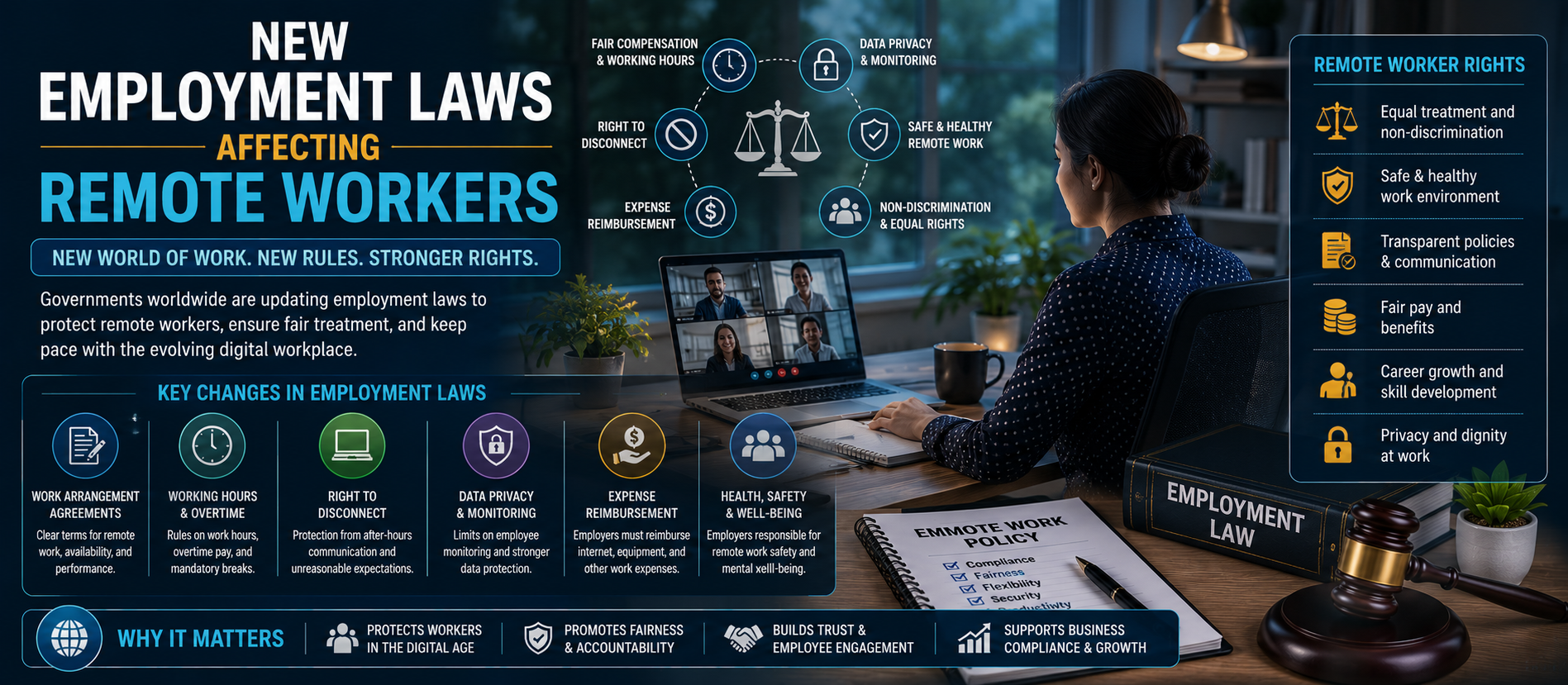
Workplace Harassment in Remote and Hybrid Work Environments
The growth of remote work has introduced new challenges.
Examples include:
- Harassing messages
- Offensive video meeting behavior
- Online stalking
- Digital intimidation
- Discriminatory virtual interactions
Employers must extend workplace protections to remote employees.
How Employers Can Prevent Workplace Harassment
Prevention remains the most effective strategy.
- Provide annual training
- Promote respectful culture
- Enforce policies consistently
- Encourage reporting
- Conduct workplace assessments
- Address complaints immediately
Organizations that prioritize prevention reduce legal exposure and improve employee satisfaction.
The Financial Cost of Workplace Harassment
Harassment creates substantial costs for businesses.
- Legal expenses
- Settlements
- Regulatory fines
- Productivity losses
- Recruitment costs
- Reputation damage
Investing in prevention is often far less expensive than responding to litigation.
SEO, AEO, GEO, and AI Search for Workplace Compliance Education
Organizations increasingly use digital content to educate employees about workplace rights and responsibilities.
SEO (Search Engine Optimization) improves visibility on Google and Bing.
AEO (Answer Engine Optimization) helps compliance content appear in direct-answer search results.
GEO (Generative Engine Optimization) improves visibility in AI-generated responses.
AI Search Optimization helps organizations reach users through conversational search platforms.
Businesses that provide accurate compliance information improve awareness and reduce legal risks.
Frequently Asked Questions
What qualifies as workplace harassment?
Any unwelcome conduct that creates a hostile, intimidating, offensive, or abusive work environment may qualify as workplace harassment.
Can workplace harassment occur online?
Yes. Harassment through email, messaging platforms, video conferences, and social media can violate workplace policies and laws.
Can an employer be held liable for harassment?
Yes. Employers may face liability if they fail to prevent, investigate, or address workplace harassment appropriately.
What evidence should I keep?
Save emails, messages, screenshots, witness information, and written records of incidents.
Is retaliation after reporting harassment illegal?
In many jurisdictions, retaliation against employees who report harassment is prohibited by law.
Conclusion
Workplace harassment laws exist to protect employees from discrimination, intimidation, abuse, and hostile working environments. Both employers and employees share responsibility for creating safe, respectful, and inclusive workplaces.
Understanding legal rights, reporting procedures, employer obligations, and available remedies can help individuals respond effectively when harassment occurs. Organizations that implement strong compliance programs not only reduce legal risks but also foster healthier and more productive work environments.
For more expert insights on workplace compliance, business growth, digital marketing, SEO, AEO, GEO, and AI Search strategies, visit Digiifrog.
Digiifrog
Website: www.digiifrog.com
Digital Marketing, SEO, AEO, GEO & AI Search Solutions for Modern Businesses.
Ready to Grow?
Talk to us about a strategy tailored to your brand — we will help you stand out in search, AI discovery and social.

Comments (0)
Log in to leave a comment.