📋 Quick Summary
In this article:
What Is Cloud-Based Business Software?
Why Businesses Are Adopting Cloud Software
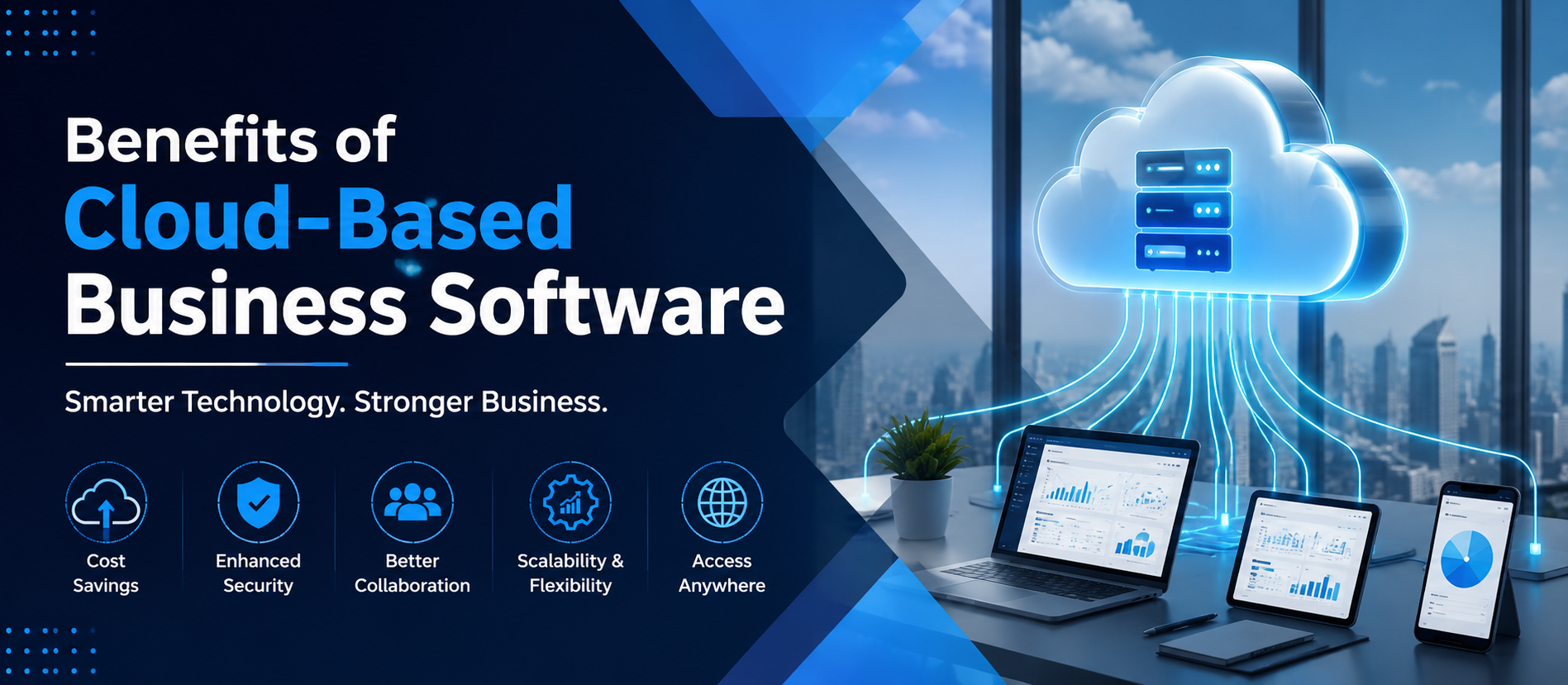
1. Significant Cost Savings
2. Access from Anywhere
3. Improved Collaboration and Communication
4. Automatic Software Updates
5. Enhanced Data Security
Security Features Commonly Include:
6. Scalability for Growing Businesses
In today’s digital-first economy, businesses of every size are looking for smarter ways to improve productivity, reduce costs, and remain competitive. One of the most significant technological shifts of the last decade has been the adoption of cloud-based business software. From startups and small businesses to multinational enterprises, organizations are increasingly replacing traditional on-premise systems with cloud-powered solutions.
Cloud-based software enables companies to access applications, data, and business tools through the internet rather than relying on locally installed systems. This transformation has reshaped how teams collaborate, manage information, serve customers, and scale operations.
As digital transformation continues to accelerate, cloud technology is becoming a critical foundation for growth, innovation, and operational efficiency. Businesses that embrace cloud solutions often experience improved flexibility, enhanced security, reduced infrastructure costs, and greater access to real-time information.
What Is Cloud-Based Business Software?
Cloud-based business software refers to applications that are hosted on remote servers and accessed through the internet. Instead of purchasing, installing, and maintaining software on individual computers or company servers, businesses subscribe to cloud services and use them online.
Common examples include:
- Customer Relationship Management (CRM) platforms
- Accounting and financial software
- Project management tools
- Human Resource Management Systems (HRMS)
- Collaboration and communication platforms
- Inventory management software
- Marketing automation solutions
- Enterprise Resource Planning (ERP) systems
These solutions are typically delivered through the Software-as-a-Service (SaaS) model, allowing businesses to access powerful tools without major upfront investments.
Why Businesses Are Adopting Cloud Software
The business world is evolving rapidly. Remote work, digital collaboration, global markets, and AI-driven processes demand flexible technologies capable of adapting to changing requirements.
Cloud software offers a modern solution by providing:
- Accessibility from anywhere
- Scalable infrastructure
- Automatic updates
- Lower maintenance costs
- Enhanced collaboration capabilities
- Advanced security features
💡 Key Insight
These advantages have made cloud adoption one of the most important technology trends across industries.
1. Significant Cost Savings
One of the biggest benefits of cloud-based business software is cost efficiency.
Traditional software often requires substantial investments in servers, networking equipment, licensing fees, maintenance contracts, and IT personnel. Cloud software eliminates many of these expenses.
Organizations typically pay a predictable subscription fee based on usage, making budgeting easier and reducing capital expenditure.
Cost Benefits Include:
- No expensive server purchases
- Reduced hardware maintenance costs
- Lower energy consumption
- Fewer IT infrastructure expenses
- Flexible subscription pricing
- Reduced software upgrade costs
This affordability makes advanced business technology accessible even to small and medium-sized enterprises.
2. Access from Anywhere
Cloud software allows employees to access applications and business data from virtually any location with an internet connection.
This flexibility supports:
- Remote work
- Hybrid work environments
- Business travel productivity
- Global workforce management
- Multi-location operations
Whether employees are working from home, client sites, branch offices, or international locations, cloud platforms ensure seamless access to important business resources.
3. Improved Collaboration and Communication
Modern organizations rely heavily on teamwork and collaboration.
Cloud-based business software enables multiple users to work simultaneously on documents, projects, and workflows while maintaining real-time synchronization.
Collaboration Advantages:
- Real-time document editing
- Shared workspaces
- Centralized information storage
- Instant updates
- Team communication integration
- Faster decision-making
Improved collaboration reduces delays and increases overall organizational efficiency.
4. Automatic Software Updates
Keeping software updated is essential for security, performance, and functionality.
Traditional software often requires manual upgrades that consume time and resources. Cloud providers automatically deploy updates, ensuring users always have access to the latest features and security improvements.
This reduces downtime while improving operational reliability.
5. Enhanced Data Security
Many business owners initially worry about storing data in the cloud. However, leading cloud providers often deliver security capabilities that exceed what many organizations can implement independently.
Security Features Commonly Include:
- Data encryption
- Multi-factor authentication
- Continuous monitoring
- Intrusion detection systems
- Regular security audits
- Disaster recovery mechanisms
- Backup and restoration services
These protections help businesses safeguard sensitive information and maintain customer trust.
6. Scalability for Growing Businesses
Business growth often creates new technology demands.
Cloud-based software makes scaling simple. Organizations can increase storage, add users, activate new features, or expand system capacity without purchasing additional infrastructure.
This flexibility allows businesses to grow efficiently while avoiding unnecessary investments.
Scalability Benefits:
- Rapid user expansion
- Flexible storage options
- On-demand resources
- Support for seasonal demand
- Global business expansion
7. Better Disaster Recovery and Business Continuity
Unexpected events such as hardware failures, cyberattacks, power outages, or natural disasters can disrupt operations.
Cloud solutions provide robust backup and disaster recovery capabilities that help businesses maintain continuity during emergencies.
⚠ Watch Out
Data stored in the cloud is typically replicated across multiple locations, reducing the risk of permanent data loss.
8. Increased Productivity
Cloud software streamlines workflows and reduces manual processes.
Employees spend less time managing technology issues and more time focusing on strategic business activities.
Features such as automation, integration, and centralized information access contribute to significant productivity improvements.
Productivity Enhancements:
- Automated workflows
- Real-time reporting
- Faster approvals
- Simplified communication
- Reduced administrative work
9. Real-Time Data and Analytics
Modern businesses depend on accurate information to make informed decisions.
Cloud-based systems provide real-time dashboards, analytics, and reporting tools that offer valuable insights into performance, customer behavior, sales trends, and operational efficiency.
Decision-makers can monitor business metrics instantly and respond quickly to changing market conditions.
10. Easier Integration with Other Business Tools
Today's organizations often use multiple software platforms.
Cloud applications are designed to integrate seamlessly with CRM systems, accounting software, marketing tools, customer support platforms, and productivity applications.
Integration eliminates data silos and creates a more connected business environment.
11. Competitive Advantage
Businesses using cloud technology can often innovate faster than competitors relying on outdated infrastructure.
Cloud platforms provide access to advanced technologies such as:
- Artificial Intelligence (AI)
- Machine Learning
- Business Intelligence
- Predictive Analytics
- Automation Tools
- Customer Experience Platforms
These capabilities enable organizations to improve efficiency, enhance customer experiences, and adapt quickly to market changes.
12. Environmental Sustainability
Cloud computing can contribute to sustainability initiatives by reducing the need for extensive on-site hardware and improving resource utilization.
Large cloud providers often operate highly efficient data centers that optimize energy consumption.
Businesses seeking environmentally responsible technology strategies can benefit from cloud adoption.
Cloud Software for Small Businesses
Small businesses often have limited budgets and technical resources. Cloud-based software levels the playing field by providing enterprise-grade capabilities at affordable subscription rates.
Small organizations can access sophisticated tools previously available only to large corporations.
This democratization of technology supports innovation, growth, and competitiveness.
Cloud Software for Large Enterprises
Large organizations also gain significant advantages from cloud solutions.
- Global accessibility
- Advanced security frameworks
- Large-scale collaboration
- Enterprise integrations
- Data-driven decision making
- Operational standardization
Cloud platforms support complex organizational structures while maintaining flexibility and efficiency.
Challenges Businesses Should Consider
Although cloud software offers many benefits, organizations should evaluate potential challenges.
- Internet dependency
- Vendor selection considerations
- Compliance requirements
- Data migration planning
- User training needs
- Integration complexity
Proper planning and provider selection help minimize these challenges and maximize long-term success.
Future Trends in Cloud-Based Business Software
The future of cloud technology continues to evolve rapidly.
Key Trends Include:
- AI-powered cloud applications
- Industry-specific SaaS solutions
- Hybrid cloud environments
- Edge computing integration
- Enhanced cybersecurity capabilities
- Low-code and no-code development platforms
- Advanced automation technologies
Businesses that embrace these innovations will be better positioned for future growth and digital transformation.
SEO, AEO, GEO, and AI Search Considerations
Organizations adopting cloud-based business software can improve their digital presence by integrating modern search optimization strategies.
SEO (Search Engine Optimization) helps businesses improve visibility on search engines.
AEO (Answer Engine Optimization) focuses on delivering direct answers for voice search and AI assistants.
GEO (Generative Engine Optimization) ensures content is discoverable and referenced by AI-powered search platforms.
Cloud software supports these strategies through better data management, analytics, content collaboration, and automation.
Why Digiifrog Recommends Cloud-Based Business Software
At Digiifrog, we believe cloud technology is one of the most impactful investments modern organizations can make. Businesses seeking sustainable growth, improved customer experiences, operational efficiency, and future-ready infrastructure should strongly consider cloud-based software solutions.
Cloud technology empowers organizations to remain agile, scalable, and competitive in an increasingly digital marketplace.
Website: www.digiifrog.com
Conclusion
The benefits of cloud-based business software extend far beyond simple cost savings. From enhanced collaboration and improved security to scalability, productivity, analytics, and business continuity, cloud solutions have become essential tools for modern organizations.
As technology continues to evolve, businesses that embrace cloud platforms will be better positioned to adapt, innovate, and thrive. Whether you are a startup, small business, or large enterprise, cloud-based software offers a powerful foundation for long-term success in the digital era.
Ready to Grow?
Talk to us about a strategy tailored to your brand — we will help you stand out in search, AI discovery and social.

Comments (0)
Log in to leave a comment.