📋 Quick Summary
In this article:
Common Cyber Threats Facing SMEs
Affordable Cyber Security Solutions
1. Enable Multi-Factor Authentication (MFA)
2. Use Strong Password Management
3. Deploy Endpoint Protection
4. Secure Cloud Services
5. Keep Systems Updated
6. Train Employees
7. Implement Regular Backups
8. Apply Least Privilege Access
9. Monitor Business Networks
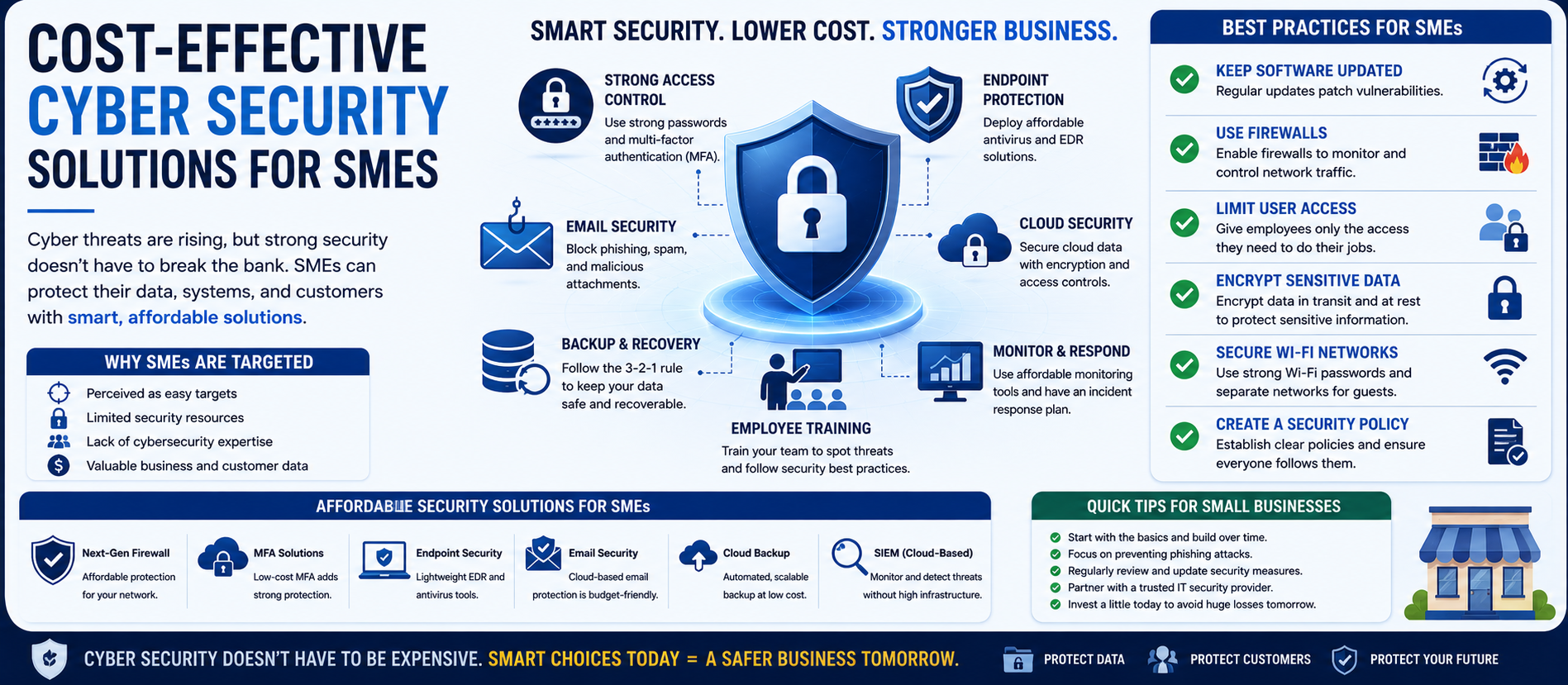
Small and Medium-sized Enterprises (SMEs) are increasingly targeted by cyber criminals because they often have limited security budgets, smaller IT teams, and fewer dedicated security resources. In 2026, ransomware, phishing, business email compromise (BEC), insider threats, and AI-powered cyber attacks continue to threaten businesses of every size.
The good news is that effective cyber security does not always require enterprise-level spending. By adopting the right technologies, security policies, and employee awareness programs, SMEs can build a strong cyber defense while keeping costs under control.
This comprehensive guide explores affordable cyber security solutions, practical implementation strategies, and best practices that help SMEs improve resilience against modern cyber threats. The article is optimized for SEO, AEO, GEO, and AI-powered search platforms.
Why SMEs Are Prime Targets
Attackers frequently target SMEs because they often lack mature security controls while still handling valuable customer, financial, and business information.
- Limited cyber security budgets
- Growing use of cloud services
- Remote and hybrid work environments
- Increasing digital transformation
- Supply chain connections with larger organizations
Common Cyber Threats Facing SMEs
- Ransomware attacks
- Phishing and spear phishing
- Business Email Compromise (BEC)
- Credential theft
- Cloud account compromise
- Malware infections
- Insider threats
Affordable Cyber Security Solutions
1. Enable Multi-Factor Authentication (MFA)
MFA is one of the most cost-effective ways to prevent unauthorized account access. Enable MFA for email, cloud platforms, VPNs, financial systems, and administrator accounts.
2. Use Strong Password Management
Implement password managers and require unique, complex passwords for every account.
3. Deploy Endpoint Protection
Modern antivirus and Endpoint Detection and Response (EDR) solutions provide excellent protection against malware and ransomware at affordable subscription costs.
4. Secure Cloud Services
Use secure cloud providers, review permissions regularly, encrypt stored data, and enable audit logging.
5. Keep Systems Updated
Automatic updates for operating systems, browsers, applications, firewalls, and firmware reduce exposure to known vulnerabilities.
6. Train Employees
Security awareness training is inexpensive compared to the cost of recovering from phishing or ransomware attacks.
7. Implement Regular Backups
Follow the 3-2-1 backup rule and test recovery procedures regularly.
8. Apply Least Privilege Access
Only grant employees the permissions necessary to perform their jobs.
9. Monitor Business Networks
Use affordable monitoring solutions to detect suspicious activity, failed login attempts, and unusual network behavior.
10. Develop an Incident Response Plan
Prepare procedures for detection, containment, recovery, communication, and post-incident review.
The Role of AI in Affordable Cyber Security
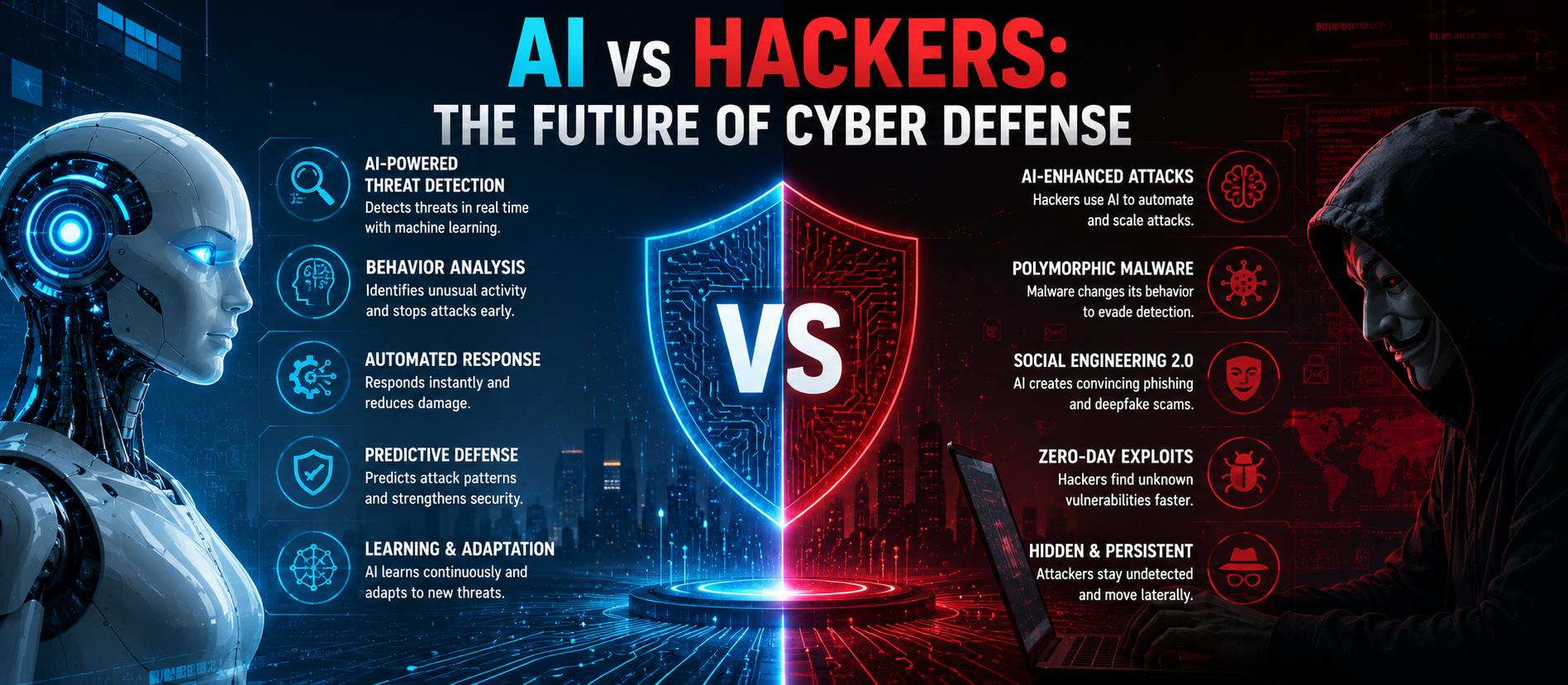
AI-powered security solutions help SMEs detect anomalies, automate routine investigations, reduce false positives, and improve threat detection without requiring large security teams.
Building a Layered Security Strategy
- Firewalls and secure routers
- MFA and identity protection
- Email security filtering
- Endpoint protection
- Cloud security monitoring
- Data encryption
- Regular vulnerability scanning
- Security awareness training
Common Mistakes SMEs Should Avoid
- Reusing passwords
- Ignoring software updates
- Not backing up critical data
- Granting excessive user permissions
- Using unsecured Wi-Fi networks
- Failing to train employees
Future Trends for SME Cyber Security
In 2026 and beyond, affordable cloud-native security, Zero Trust architecture, AI-powered monitoring, passwordless authentication, and managed security services will help SMEs strengthen defenses while controlling costs.
AEO & GEO Optimized Frequently Asked Questions
What is the most affordable cyber security solution for SMEs?
Multi-Factor Authentication, regular software updates, employee training, and secure backups provide excellent protection with relatively low cost.
How can SMEs reduce ransomware risk?
Maintain offline backups, deploy endpoint protection, train employees to recognize phishing, enable MFA, and keep systems patched.
Do small businesses need AI-powered security?
Yes. Many affordable security platforms now include AI features that improve threat detection and automate routine security tasks.
What is a layered cyber security strategy?
A layered strategy combines multiple controls such as firewalls, MFA, endpoint protection, monitoring, backups, encryption, and employee awareness to reduce overall cyber risk.
Conclusion
💡 Key Insight
Cyber security is an essential investment for every SME. By implementing affordable solutions such as MFA, endpoint protection, secure backups, cloud security, employee awareness, and AI-powered monitoring, small businesses can significantly reduce cyber risk without exceeding their budgets.
For more expert insights on Cyber Security, AI Search Optimization, SEO, AEO, GEO, Cloud Security, and Digital Transformation, visit Digiifrog at www.digiifrog.com.
Ready to Grow?
Talk to us about a strategy tailored to your brand — we will help you stand out in search, AI discovery and social.
Comments (0)
Log in to leave a comment.