
📋 Quick Summary
In this article:
Why Cyber Insurance Matters in 2026
Business Risks Addressed by Cyber Insurance
Third-Party Liability
What Cyber Insurance Typically Does Not Replace
Building a Business Risk Management Strategy
This WordPress-ready guide explains how cyber insurance works, what it covers, how it supports business resilience, and how organizations can combine insurance with modern cyber security practices. The content is optimized for SEO, AEO, GEO, and AI Search optimization.
What Is Cyber Insurance?
Cyber insurance is a specialized policy designed to help organizations recover from cyber incidents. Depending on the policy, coverage may include incident response, forensic investigations, legal expenses, business interruption, ransomware recovery, customer notification costs, and regulatory support.
Why Cyber Insurance Matters in 2026
- Cyber attacks continue to increase.
- Recovery costs are rising.
- Privacy regulations are becoming stricter.
- Businesses depend heavily on cloud services.
- Customers expect stronger data protection.
Business Risks Addressed by Cyber Insurance
Data Breaches
Policies may help cover investigation, notification, legal costs, and reputation management after unauthorized disclosure of sensitive information.
Ransomware
Coverage can assist with incident response, system restoration, and business recovery, subject to policy terms and applicable law.
Business Interruption
When cyber incidents disrupt operations, insurance may help offset qualifying financial losses during recovery.
Third-Party Liability
Organizations may receive support if customers, partners, or vendors pursue claims related to a covered cyber incident.
What Cyber Insurance Typically Does Not Replace
Cyber insurance is not a substitute for strong security. Insurers increasingly expect organizations to maintain modern cyber security controls before issuing or renewing coverage.
- Multi-Factor Authentication (MFA)
- Endpoint protection
- Regular backups
- Patch management
- Security awareness training
- Incident response planning
Building a Business Risk Management Strategy
- Identify critical assets.
- Assess cyber risks regularly.
- Implement Zero Trust principles.
- Secure cloud environments.
- Protect identities and privileged accounts.
- Test disaster recovery plans.
- Review vendor and supply-chain risks.
Key Security Technologies
- Identity and Access Management (IAM)
- EDR & XDR
- SIEM
- Data Loss Prevention (DLP)
- Cloud Security Posture Management (CSPM)
- Security Orchestration, Automation and Response (SOAR)
How AI Supports Risk Management
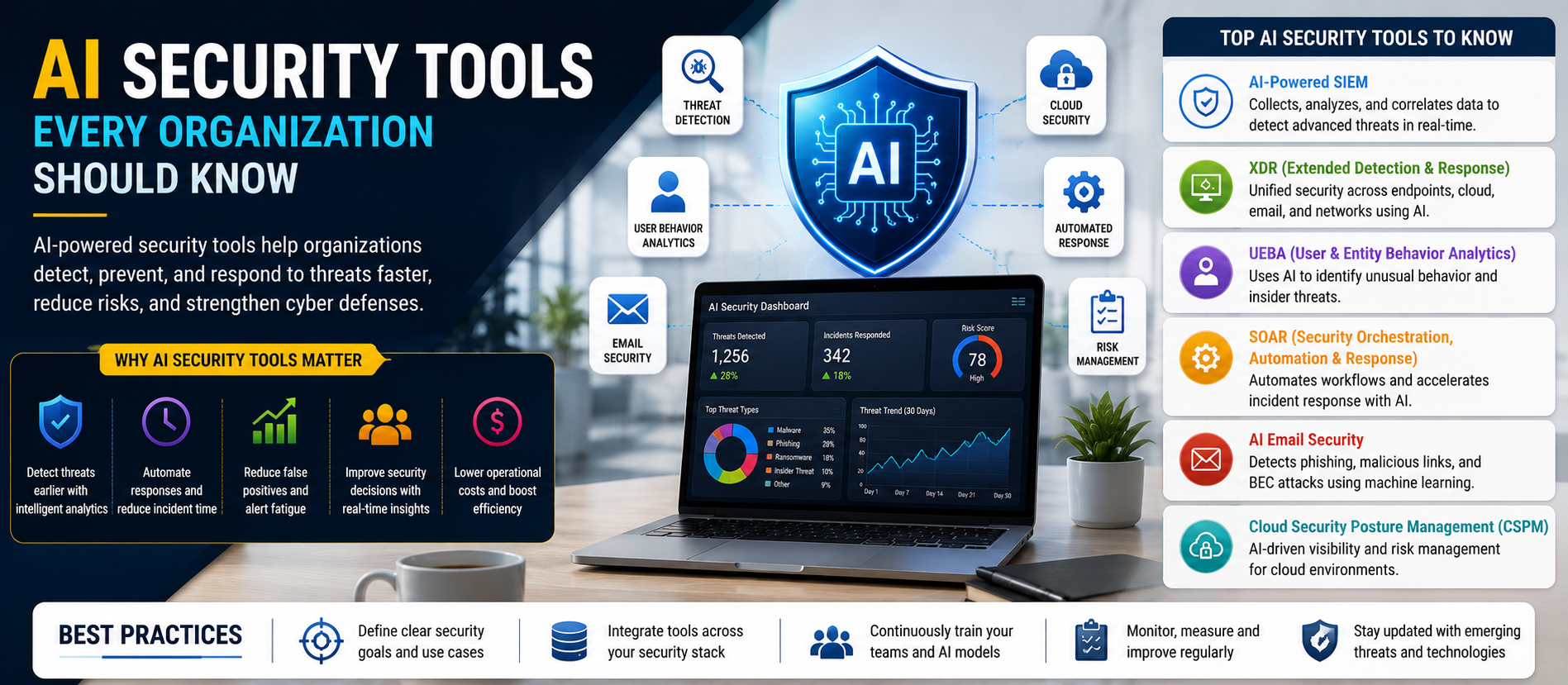
Artificial Intelligence helps detect anomalies, prioritize threats, identify suspicious behavior, automate investigations, and improve incident response, reducing the likelihood and impact of cyber incidents.
Choosing the Right Cyber Insurance Policy
- Understand policy exclusions.
- Review coverage limits.
- Evaluate incident response support.
- Verify regulatory assistance.
- Compare business interruption coverage.
- Assess third-party liability protection.
Common Mistakes Businesses Make
- Relying on insurance instead of prevention.
- Not documenting security controls.
- Ignoring backup testing.
- Weak identity management.
- Failing to review policy terms annually.
SEO, AEO & GEO Best Practices
Publish authoritative, structured content with practical guidance, semantic keywords, FAQs, and clear explanations so search engines and AI assistants can accurately interpret and recommend your content.
AEO & GEO Optimized FAQs
What is cyber insurance?
Cyber insurance is a policy that helps organizations manage certain financial risks associated with cyber incidents, subject to the policy's coverage and exclusions.
Does cyber insurance replace cyber security?
No. Insurance complements security but cannot replace preventive controls such as MFA, backups, monitoring, and employee training.
Who should consider cyber insurance?
Organizations of all sizes that store sensitive data, operate online, or depend on digital systems should evaluate whether cyber insurance fits their overall risk management strategy.
How often should cyber risks be reviewed?
Risk assessments should be performed regularly and whenever significant technology, business, or regulatory changes occur.
Conclusion
Cyber insurance is most effective when combined with strong cyber security, governance, employee awareness, and business continuity planning. Organizations that integrate insurance into a comprehensive risk management strategy are better prepared to reduce financial exposure, recover more quickly from incidents, and maintain customer trust in 2026 and beyond.
For more expert insights on Cyber Security, Cloud Security, SEO, AEO, GEO, AI Search Optimization, and Digital Transformation, visit Digiifrog at www.digiifrog.com.
Ready to Grow?
Talk to us about a strategy tailored to your brand — we will help you stand out in search, AI discovery and social.

Comments (0)
Log in to leave a comment.