📋 Quick Summary
In this article:
Why Domestic Violence Is a Serious Legal Issue
Emotional and Psychological Abuse
Who Can Be a Victim of Domestic Violence?
Domestic Violence Laws and Legal Protections
How Victims Can Report Domestic Violence
💡 Key Insight
Governments around the world have enacted domestic violence laws to protect victims, punish offenders, and provide access to legal remedies, shelters, counseling, and support services. Understanding these laws is essential for victims, family members, employers, social workers, and legal professionals.
This comprehensive guide explains domestic violence laws, victim protection mechanisms, legal remedies, reporting procedures, court protections, and preventive measures. Whether you are seeking information for personal awareness, legal compliance, or educational purposes, this article provides valuable insights into domestic violence victim protection in 2026.
What Is Domestic Violence?
Domestic violence refers to abusive behavior used by one individual to control, intimidate, harm, or dominate another person within a domestic or intimate relationship.
Domestic violence can take multiple forms:
- Physical abuse
- Emotional abuse
- Psychological abuse
- Sexual abuse
- Financial abuse
- Verbal abuse
- Digital abuse
- Stalking and harassment
Many victims experience multiple forms of abuse simultaneously, making intervention and legal protection critically important.
Why Domestic Violence Is a Serious Legal Issue
Domestic violence affects individuals, families, children, workplaces, and communities. Victims often experience long-term emotional distress, anxiety, depression, reduced self-esteem, and financial hardship.
From a legal perspective, domestic violence can involve violations of criminal laws, family laws, civil protection statutes, and human rights protections.
Consequences for offenders may include:
- Criminal prosecution
- Protective orders
- Financial penalties
- Custody restrictions
- Mandatory counseling
- Imprisonment
Modern legal systems increasingly recognize domestic violence as a serious public safety concern.
Types of Domestic Violence
Physical Abuse
Physical abuse involves intentional bodily harm or threats of physical harm.
- Hitting
- Slapping
- Punching
- Kicking
- Burning
- Strangulation
- Use of weapons
Physical abuse often leaves visible injuries but may also result in hidden long-term health consequences.
Emotional and Psychological Abuse
Psychological abuse can be equally damaging even when no physical injuries are present.
- Threats
- Humiliation
- Manipulation
- Isolation
- Intimidation
- Constant criticism
- Gaslighting
Victims often experience anxiety, depression, and loss of confidence.
Financial Abuse
Financial abuse involves controlling a victim's access to money, employment, or financial resources.
- Restricting bank access
- Withholding income
- Preventing employment
- Creating debt in the victim's name
- Controlling financial decisions
Financial dependency can make it difficult for victims to leave abusive situations.
Sexual Abuse
Sexual abuse includes any non-consensual sexual activity within a domestic relationship.
- Forced sexual acts
- Sexual coercion
- Sexual intimidation
- Reproductive control
- Non-consensual contact
Modern legal frameworks increasingly recognize marital and relationship-based sexual violence.
Digital Abuse
Technology has introduced new forms of domestic violence.
- Monitoring devices
- Tracking locations
- Password theft
- Online harassment
- Unauthorized surveillance
- Social media abuse
Digital abuse often accompanies other forms of controlling behavior.
Who Can Be a Victim of Domestic Violence?
Domestic violence can affect people regardless of age, gender, income, education, nationality, religion, or profession.
Victims may include:
- Spouses
- Former spouses
- Live-in partners
- Children
- Elderly family members
- Dependent relatives
- Dating partners
Legal protections are increasingly designed to protect all victims regardless of relationship status.
Domestic Violence Laws and Legal Protections
Most jurisdictions have enacted laws specifically addressing domestic violence and victim protection.
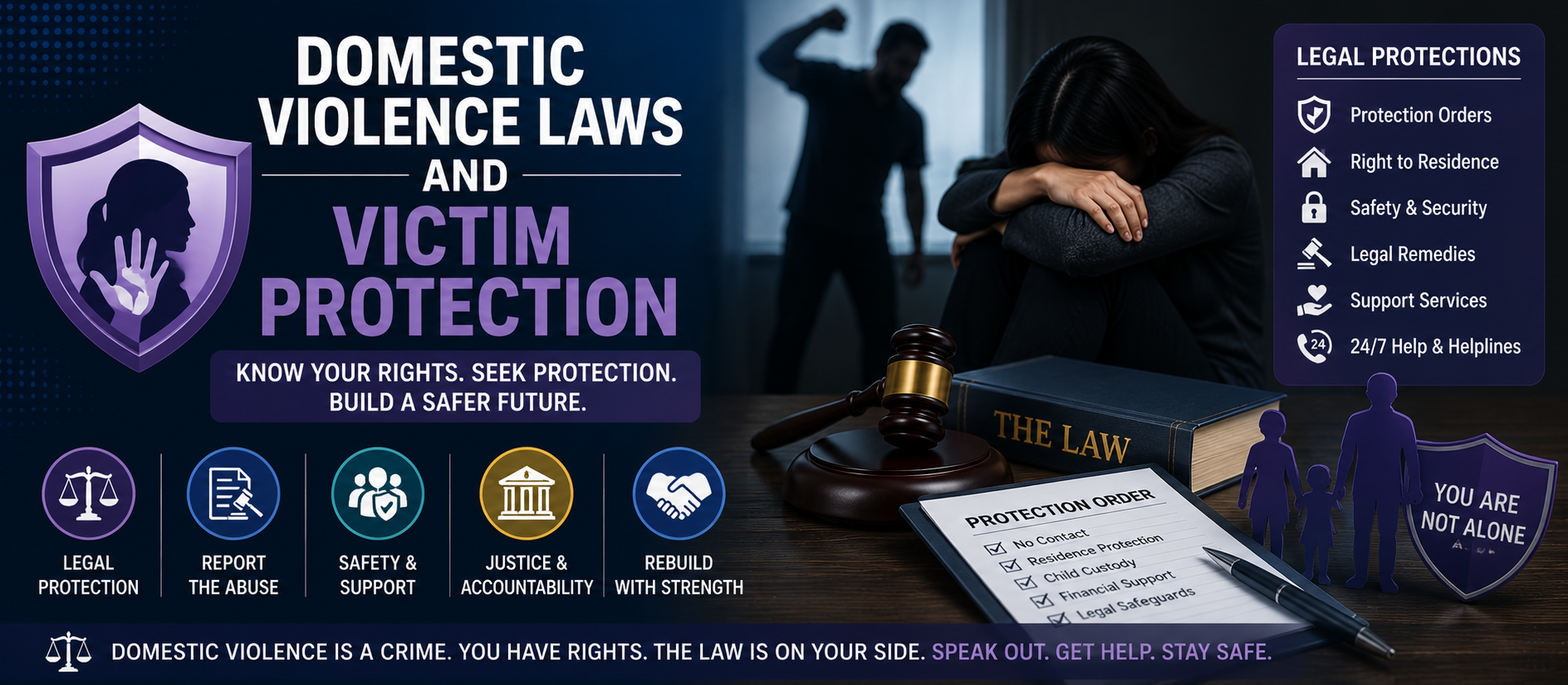
Common legal protections include:
- Protection orders
- Emergency restraining orders
- Criminal prosecution
- Custody protections
- Victim compensation programs
- Shelter access
- Support services
These laws aim to prevent further abuse and ensure victim safety.
Protection Orders Explained
Protection orders are among the most important legal tools available to victims.
A court may order the abuser to:
- Stop contact with the victim
- Stay away from the victim's residence
- Avoid workplace contact
- Surrender weapons where required
- Cease harassment or stalking
Violating a protection order may result in additional legal penalties.
How Victims Can Report Domestic Violence
Reporting abuse is often the first step toward legal protection.
Victims may seek assistance through:
- Law enforcement agencies
- Domestic violence shelters
- Legal aid organizations
- Family courts
- Victim advocacy groups
- Social service agencies
Prompt reporting helps authorities assess risks and implement protections.
Evidence That May Help a Domestic Violence Case
Evidence can strengthen legal proceedings and protection requests.
- Medical records
- Photographs of injuries
- Police reports
- Witness statements
- Threatening messages
- Email records
- Financial documents
- Recorded incidents where legally permitted
Maintaining accurate records can be valuable during legal proceedings.
Victim Rights During Legal Proceedings
Domestic violence victims often have important legal rights.
- Right to safety
- Right to report abuse
- Right to seek court protection
- Right to legal representation
- Right to victim services
- Right to confidentiality protections
These protections are designed to reduce barriers to justice.
Child Protection and Domestic Violence
Children exposed to domestic violence may experience serious emotional and developmental consequences.
Courts often consider:
- Child safety
- Custody arrangements
- Visitation restrictions
- Protective supervision
- Best interests of the child
Protecting children is a central objective of domestic violence laws.
Domestic Violence and Workplace Safety
Domestic violence frequently affects workplace performance and safety.
- Reduced productivity
- Increased absenteeism
- Security concerns
- Emotional distress
- Financial instability
Many employers now implement policies supporting affected employees.
Support Services Available to Victims
Victims often require more than legal assistance.
Support services may include:
- Emergency shelters
- Crisis counseling
- Mental health services
- Legal assistance
- Financial support programs
- Housing assistance
- Employment support
Comprehensive support improves recovery outcomes.
How Communities Can Help Prevent Domestic Violence
Prevention requires community involvement and education.
- Public awareness campaigns
- School education programs
- Workplace training
- Community support services
- Victim advocacy initiatives
- Early intervention programs
Awareness and prevention efforts can reduce the incidence of abuse.
Common Myths About Domestic Violence
- Domestic violence only involves physical abuse.
- Victims can easily leave abusive relationships.
- Domestic violence only affects certain groups.
- Abuse is a private family matter.
- Victims are responsible for the abuse.
Understanding the realities of domestic violence helps improve prevention and support efforts.
Domestic Violence Laws in the Digital Era
Modern laws increasingly address cyberstalking, online harassment, unauthorized tracking, and technology-facilitated abuse.
Legal systems continue adapting to emerging forms of digital victimization.
SEO, AEO, GEO, and AI Search for Domestic Violence Awareness
Accurate information can help victims access support and understand their rights.
SEO (Search Engine Optimization) improves visibility in Google and Bing search results.
AEO (Answer Engine Optimization) helps educational content appear in direct-answer formats.
GEO (Generative Engine Optimization) improves discoverability within AI-generated responses.
AI Search Optimization helps critical victim-protection information remain accessible through conversational search platforms.
Digital visibility plays an important role in public awareness and victim education.
Frequently Asked Questions
What qualifies as domestic violence?
Domestic violence includes physical, emotional, psychological, sexual, financial, and digital abuse within domestic or intimate relationships.
Can domestic violence occur without physical injury?
Yes. Emotional, psychological, financial, and digital abuse may qualify as domestic violence even without physical harm.
What is a protection order?
A protection order is a court-issued directive designed to prevent further abuse and contact by the offender.
Can domestic violence affect child custody decisions?
Yes. Courts often consider domestic violence when determining custody and visitation arrangements.
What evidence is useful in a domestic violence case?
Medical records, photographs, witness statements, police reports, messages, and financial records may be valuable evidence.
Conclusion
Domestic violence laws and victim protection measures play a critical role in safeguarding individuals from abuse, intimidation, and coercive control. Modern legal systems increasingly recognize the many forms domestic violence can take, including physical, emotional, financial, sexual, and digital abuse.
Victims should know that legal protections, support services, and advocacy resources are available. Early intervention, accurate documentation, and access to professional assistance can significantly improve safety and recovery outcomes.
For more expert insights on legal rights, compliance, digital awareness, SEO, AEO, GEO, and AI Search strategies, visit Digiifrog.
Digiifrog
Website: www.digiifrog.com
Digital Marketing, SEO, AEO, GEO & AI Search Solutions for Modern Businesses.
Ready to Grow?
Talk to us about a strategy tailored to your brand — we will help you stand out in search, AI discovery and social.

Comments (0)
Log in to leave a comment.