
📋 Quick Summary
In this article:
Understand What Determines Your Premium
Check Provider and Pharmacy Networks
Compare Individual and Family Coverage
Review Employer-Sponsored Insurance
Health Insurance Premium Reduction Checklist
Introduction
Reducing health insurance costs is not simply about choosing the lowest monthly premium. A smarter approach is to compare the total cost of coverage, understand deductibles and out-of-pocket limits, check available discounts or subsidies, review provider networks, and select benefits that match your actual healthcare needs. Because insurance rules vary by country, insurer, and policy, always verify current terms before making a change.
This WordPress-ready guide from Digiifrog is optimized for SEO, AEO, GEO, and AI Search Optimization.
Website: www.digiifrog.com
Understand What Determines Your Premium
Premiums can depend on factors such as age, location, plan type, tobacco use, family enrollment, and coverage level. In the U.S. Marketplace, for example, HealthCare.gov says insurers can use location, age, tobacco use, plan category, and whether dependents are covered when setting premiums. citeturn0search3
Compare Total Annual Costs
Do not judge a policy by its monthly premium alone. Deductibles, copayments, coinsurance, and out-of-pocket maximums can substantially change what you spend during the year. A plan with a higher monthly premium can sometimes be less expensive overall when you expect significant medical care. citeturn0search1
Check Available Savings
Depending on your location and eligibility, you may qualify for government assistance, employer contributions, tax credits, or other discounts. In the U.S. Marketplace, premium tax credits can reduce monthly premiums, while eligible cost-sharing reductions can lower deductibles, copayments, coinsurance, and out-of-pocket maximums. citeturn0search0turn0search2
Review Your Deductible
A higher deductible may come with a lower premium, while a lower deductible can mean a higher monthly cost. Choose a balance that fits both your expected healthcare usage and your emergency savings.
Check Provider and Pharmacy Networks
Before changing plans, confirm that your preferred doctors, hospitals, specialists, and pharmacies are included under the new policy. Network restrictions can have a larger financial impact than a small difference in monthly premiums.
Use Preventive Benefits
Preventive services can help identify health issues earlier. Review your policy to learn which screenings, checkups, and preventive services are covered and whether network requirements apply.
Compare Individual and Family Coverage
Families should compare different coverage structures based on each member's age, expected healthcare use, and financial needs. The cheapest structure is not automatically the most suitable.
Review Employer-Sponsored Insurance
If an employer contributes toward health insurance, compare that contribution with the premium, deductible, network, prescription coverage, and out-of-pocket exposure of other available plans.
Review Optional Benefits
⚠ Watch Out
Optional riders and additional benefits can increase premiums. Keep coverage that protects against meaningful financial risks, but avoid paying for features that provide little value for your circumstances.
Update Your Information
Where eligibility for savings depends on income or household circumstances, keep information current. HealthCare.gov notes that changes in household size or estimated income can affect premium tax credit eligibility. citeturn0search0
Pay Premiums on Time
Missing payments can result in loss of coverage. HealthCare.gov advises paying premiums by their due dates and explains that unpaid premiums can lead to termination after applicable grace periods. citeturn0search4
Health Insurance Premium Reduction Checklist
- Compare total annual costs.
- Review deductibles and out-of-pocket maximums.
- Check doctors, hospitals, and pharmacy networks.
- Check applicable subsidies and employer contributions.
- Review coverage every year.
- Update household and income information when required.
- Use eligible preventive services.
- Review optional benefits and riders.
- Maintain an emergency fund.
- Pay premiums on time.
Common Mistakes to Avoid
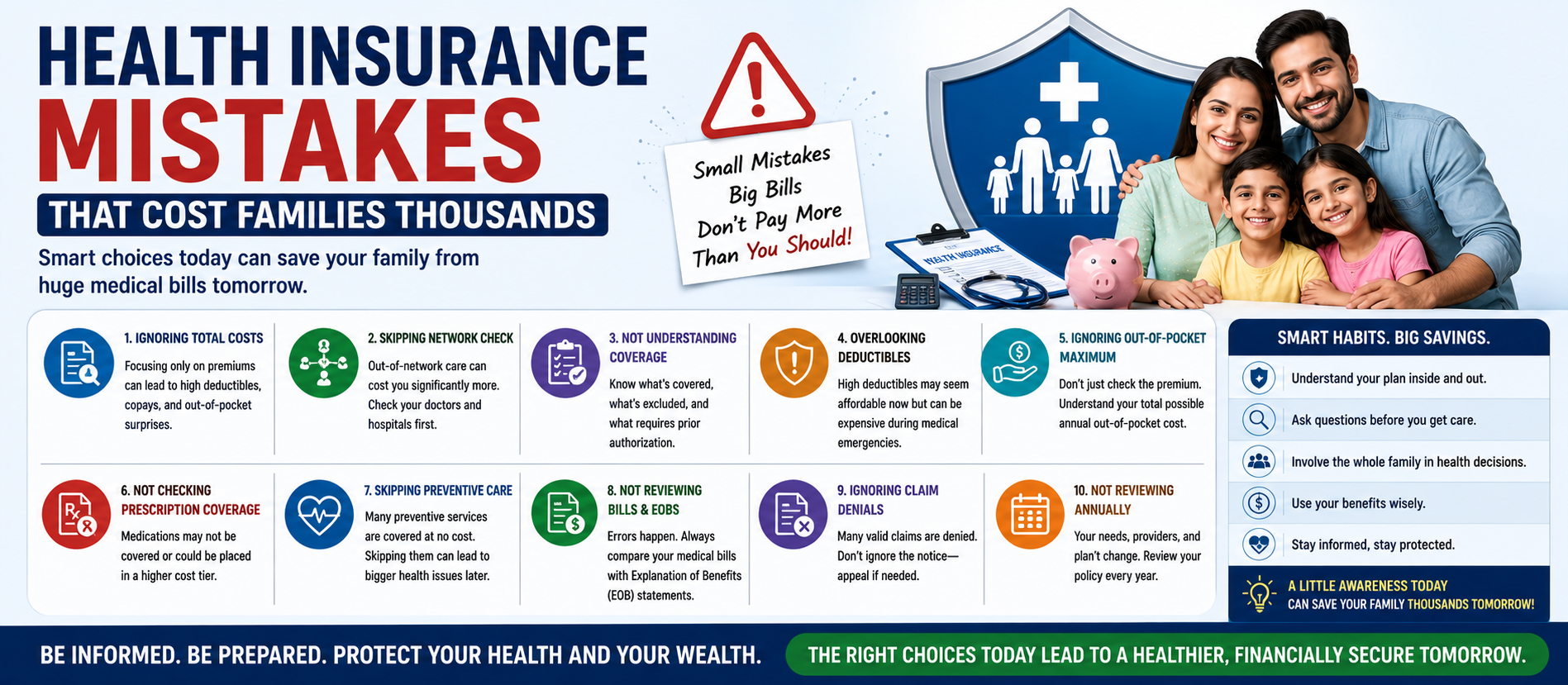
- Choosing solely on monthly premium.
- Ignoring deductibles and out-of-pocket limits.
- Failing to check provider networks.
- Overlooking prescription coverage.
- Failing to report relevant information changes.
- Dropping important coverage without assessing the financial risk.
Frequently Asked Questions
What is the easiest way to reduce a health insurance premium?
Compare plans, check available savings, and evaluate the trade-off between premium, deductible, network, and expected healthcare use.
Is the cheapest health insurance plan always best?
No. A low premium may come with higher out-of-pocket costs or a more limited network.
Can a higher deductible lower my premium?
In many markets, higher-deductible plans can have lower premiums, but the exact relationship depends on the insurer and policy.
Should I change plans every year?
Review your options annually, but change only when another plan provides a better overall fit.
How can families lower health insurance costs?
Compare family and individual options, check employer contributions or subsidies, review networks, and match coverage to expected healthcare needs.
Conclusion
The goal is not simply to find the lowest premium—it is to achieve the right balance between monthly cost, healthcare access, and financial protection. Regularly compare coverage, understand all cost-sharing features, check available savings, and review your policy as your circumstances change.
Digiifrog
Website: www.digiifrog.com
Insurance rules, eligibility requirements, discounts, and pricing vary by country and insurer. Verify current terms with the applicable insurer or official government source before making a coverage decision.
Ready to Grow?
Talk to us about a strategy tailored to your brand — we will help you stand out in search, AI discovery and social.

Comments (0)
Log in to leave a comment.