📋 Quick Summary
In this article:
The Growing Role of Social Media in Education
Positive Impact of Social Media on Student Learning
1. Easy Access to Educational Resources
2. Enhanced Collaboration
3. Improved Communication Skills
4. Exposure to Diverse Perspectives
5. Career Development Opportunities
6. Support for Self-Directed Learning
Negative Impact of Social Media on Student Learning
1. Distraction and Reduced Concentration
2. Time Management Problems
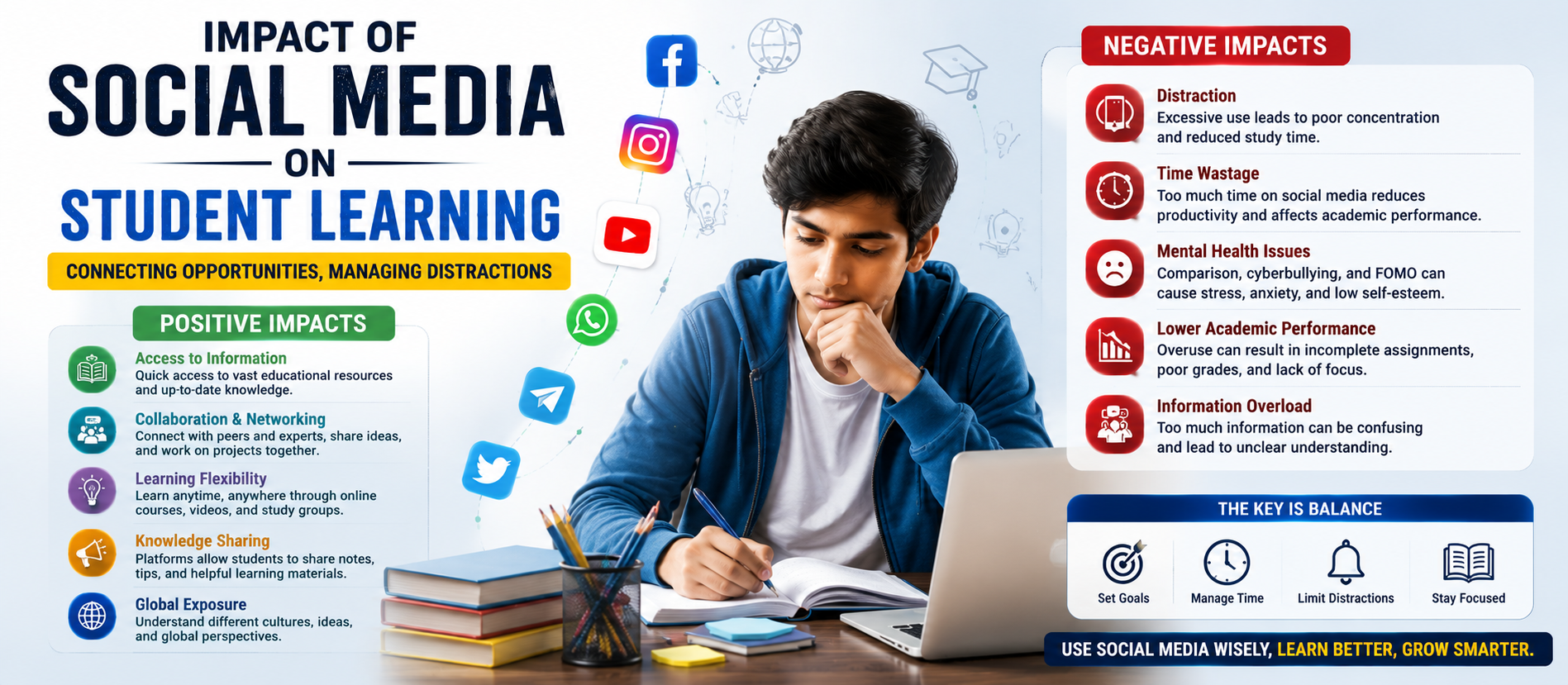
Social media has become an integral part of modern life, especially for students. Platforms such as Facebook, Instagram, YouTube, LinkedIn, X (formerly Twitter), TikTok, and educational communities have transformed the way students communicate, access information, collaborate, and learn. While social media offers numerous educational opportunities, it also presents challenges that can affect academic performance, concentration, and mental well-being.
The impact of social media on student learning is a topic of growing interest among educators, parents, policymakers, and researchers. Understanding both the positive and negative aspects of social media can help students use these platforms more effectively for educational success.
This comprehensive guide explores the influence of social media on student learning, its advantages, disadvantages, future trends, and best practices. The article is optimized for SEO, AEO, GEO, and AI Search visibility and is presented by Digiifrog.
Website: www.digiifrog.com
Brand: Digiifrog – Education, AI, Career & Digital Growth Insights
What Is Social Media?
Social media refers to digital platforms that allow users to create, share, and interact with content while connecting with others online.
Popular platforms include:
- YouTube
- TikTok
- X (Twitter)
- Reddit communities
- Educational discussion forums
Students use these platforms for communication, entertainment, collaboration, research, and learning.
The Growing Role of Social Media in Education
Educational institutions increasingly incorporate social media into learning environments. Teachers, universities, training providers, and educational organizations use social platforms to distribute resources, engage learners, and facilitate collaboration.
💡 Key Insight
Social media has become an important extension of modern classrooms.
Positive Impact of Social Media on Student Learning
1. Easy Access to Educational Resources
Students can access vast amounts of information through educational channels, online communities, tutorials, webinars, and expert content.
- Video lectures
- Tutorials
- Research discussions
- Educational podcasts
- Industry insights
2. Enhanced Collaboration
Social media enables students to collaborate beyond geographical boundaries.
Benefits include:
- Group discussions
- Project collaboration
- Peer learning
- Knowledge sharing
- Study groups
3. Improved Communication Skills
Online interactions help students develop digital communication abilities that are increasingly valuable in modern workplaces.
4. Exposure to Diverse Perspectives
Students can connect with individuals from different cultures, countries, and academic backgrounds, expanding their understanding of global issues.
5. Career Development Opportunities
Professional networking platforms such as LinkedIn help students build professional connections, explore career opportunities, and learn about industry trends.
6. Support for Self-Directed Learning
Social media empowers students to explore topics independently and pursue personal interests beyond traditional curricula.
Negative Impact of Social Media on Student Learning
1. Distraction and Reduced Concentration
One of the most significant challenges is distraction. Constant notifications, entertainment content, and social interactions can reduce focus during study sessions.
2. Time Management Problems
Excessive social media usage may consume valuable study time and contribute to procrastination.
3. Information Overload
The abundance of information can overwhelm students and make it difficult to identify reliable sources.
4. Misinformation and Fake Content
Not all information shared on social media is accurate. Students must learn how to evaluate sources critically.
5. Academic Performance Concerns
Studies suggest excessive social media use may negatively affect grades when it interferes with study habits and sleep schedules.
6. Mental Health Challenges
Social comparison, cyberbullying, and excessive screen time may contribute to stress, anxiety, and reduced self-esteem.
How Social Media Supports Modern Learning
When used responsibly, social media can complement traditional educational methods.
Students can:
- Follow educational influencers
- Join academic communities
- Participate in webinars
- Access expert opinions
- Discover learning opportunities
These experiences enrich formal education.
The Role of YouTube in Education
YouTube has become one of the world's largest educational resources.
Students use YouTube for:
- Subject tutorials
- Exam preparation
- Skill development
- Programming lessons
- Language learning
- Professional training
Educational video content often makes complex concepts easier to understand.
Social Media and Collaborative Learning
Collaborative learning is one of the strongest educational benefits of social platforms.
Students can:
- Share resources
- Exchange ideas
- Discuss assignments
- Solve problems together
- Support peer learning
Collaboration promotes engagement and deeper understanding.
AI, Social Media, and Personalized Learning
Artificial Intelligence is increasingly integrated into social media platforms.
AI technologies help:
- Recommend educational content
- Personalize learning experiences
- Deliver targeted resources
- Enhance accessibility
Future educational ecosystems will likely combine AI and social learning more extensively.
Digital Literacy and Responsible Social Media Use
Students need strong digital literacy skills to navigate online environments effectively.
Important competencies include:
- Evaluating sources
- Identifying misinformation
- Protecting privacy
- Maintaining digital etiquette
- Managing screen time
Digital literacy is becoming a core educational requirement.
Best Practices for Students
- Use social media for learning purposes
- Follow credible educational sources
- Limit distractions during study sessions
- Verify information before using it
- Maintain healthy screen-time habits
- Participate in educational communities
- Protect personal information
The Future of Social Media in Education
Social media will continue evolving as a learning tool. Future developments may include:
- AI-powered learning communities
- Virtual reality classrooms
- Immersive educational experiences
- Personalized content delivery
- Global collaborative learning networks
These innovations could further transform how students learn and interact.
Frequently Asked Questions (AEO Section)
How does social media affect student learning?
Social media can support learning through collaboration, access to resources, and knowledge sharing, but excessive use may cause distractions and reduce productivity.
Is social media beneficial for students?
Yes, when used responsibly. It can provide educational resources, networking opportunities, and collaborative learning experiences.
Can social media improve academic performance?
It can improve performance when students use educational content effectively and manage distractions appropriately.
What are the biggest risks of social media for students?
Distractions, misinformation, excessive screen time, cyberbullying, and reduced concentration are among the most common risks.
How can students use social media responsibly?
By following educational content, managing screen time, verifying information, and maintaining healthy digital habits.
Conclusion
Social media has significantly influenced student learning by creating new opportunities for collaboration, knowledge sharing, communication, and self-directed education. At the same time, it presents challenges related to distraction, misinformation, and mental well-being.
The key to maximizing the educational value of social media lies in responsible use. Students who develop strong digital literacy skills and maintain balanced online habits can leverage social media as a powerful learning tool.
As technology continues to evolve, social media will likely play an even greater role in shaping the future of education.
For more educational insights, AI innovations, SEO, AEO, GEO, and future-focused content, visit www.digiifrog.com.
Ready to Grow?
Talk to us about a strategy tailored to your brand — we will help you stand out in search, AI discovery and social.


Comments (0)
Log in to leave a comment.