📋 Quick Summary
In this article:
Top Education Technology Trends
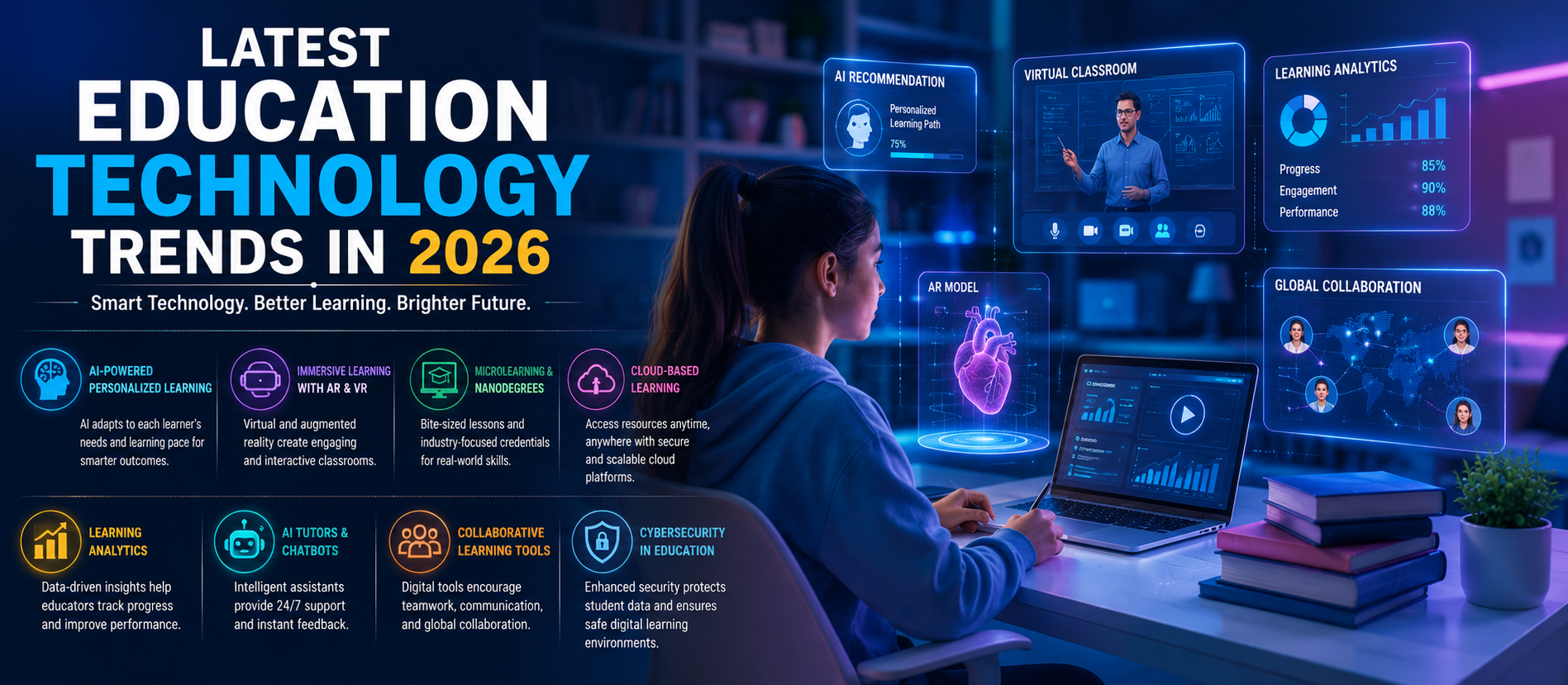
1. AI-Powered Personalized Learning
2. AI Teaching Assistants
3. Immersive VR & AR Classrooms
4. Cloud-Based Learning Platforms
5. Learning Analytics
6. Gamification
7. Microlearning
8. Cybersecurity Awareness
Education technology continues to evolve rapidly in 2026, reshaping how students learn, teachers teach, and institutions deliver education. Artificial Intelligence, cloud computing, immersive learning, learning analytics, and digital collaboration tools are transforming classrooms into smarter, more personalized environments. Schools, universities, and corporate training providers are investing in innovative technologies to improve engagement, accessibility, and learning outcomes.
Website: www.digiifrog.com
Brand: Digiifrog – Education, AI, Technology & Digital Growth Insights
Why EdTech Matters in 2026
- Personalized learning experiences.
- Greater accessibility.
- Improved student engagement.
- Data-driven teaching decisions.
- Preparation for future careers.
Top Education Technology Trends
1. AI-Powered Personalized Learning
Adaptive learning systems analyze student performance and recommend customized lessons, quizzes, and learning paths.
2. AI Teaching Assistants
Virtual assistants answer routine questions, automate grading, and support teachers with administrative tasks.
3. Immersive VR & AR Classrooms
Virtual Reality and Augmented Reality create interactive learning experiences for science, engineering, medicine, and history.
4. Cloud-Based Learning Platforms
Cloud technology enables secure access to lessons, assignments, and collaboration tools from anywhere.
5. Learning Analytics
Institutions use real-time data to identify learning gaps and improve student success.
6. Gamification
Badges, leaderboards, and interactive challenges increase motivation and participation.
7. Microlearning
Short, focused learning modules help students retain information more effectively.
8. Cybersecurity Awareness
Protecting educational data and digital identities remains a major priority.
Benefits
- Flexible online learning.
- Higher engagement.
- Improved collaboration.
- Reduced administrative workload.
- Better learning outcomes.
Challenges
- Digital divide.
- Privacy concerns.
- Teacher training.
- Technology costs.
- Responsible AI adoption.
Frequently Asked Questions (AEO Section)
What are the biggest education technology trends in 2026?
AI-powered learning, immersive VR/AR, cloud classrooms, learning analytics, and gamified education are among the leading trends.
How is AI changing education?
AI personalizes learning, automates routine tasks, provides intelligent tutoring, and supports data-driven teaching.
Why is cloud technology important in education?
Cloud platforms enable secure, flexible access to educational resources and collaborative learning.
Conclusion
Education technology in 2026 is creating smarter, more inclusive, and highly personalized learning environments. Institutions that combine innovative technologies with effective teaching practices will be best positioned to prepare learners for the future.
For more education, AI, SEO, AEO, GEO, and technology insights, visit www.digiifrog.com.
Ready to Grow?
Talk to us about a strategy tailored to your brand — we will help you stand out in search, AI discovery and social.

Comments (0)
Log in to leave a comment.