📋 Quick Summary
In this article:
Understanding Alcohol Use Disorder
1. Initial Evaluation
2. Stabilization
3. Transition Planning
Many people mistakenly believe that detoxification alone is enough to overcome alcohol dependence. While detox is a critical first step, it addresses only the physical aspect of addiction. Alcohol rehabilitation goes much further by helping individuals understand the causes of addiction, develop coping mechanisms, and build a sustainable recovery plan.
In this comprehensive guide, Digiifrog explores the key differences between medical detox and alcohol rehab, their benefits, treatment processes, and how they work together to support long-term recovery.
Website: www.digiifrog.com
Understanding Alcohol Use Disorder
Alcohol Use Disorder (AUD) is a chronic condition characterized by an inability to control alcohol consumption despite negative consequences. It affects physical health, mental well-being, relationships, careers, and financial stability.
Over time, regular alcohol consumption changes brain chemistry, making it increasingly difficult to stop drinking without professional support. Individuals may experience withdrawal symptoms, cravings, and psychological dependence that require structured treatment.
- Loss of control over drinking habits
- Strong cravings for alcohol
- Tolerance requiring larger amounts of alcohol
- Withdrawal symptoms when alcohol use stops
- Continued drinking despite serious consequences
Because addiction affects both body and mind, effective recovery often involves multiple stages of care.
What Is Medical Detox?
Medical detox is the supervised process of removing alcohol from the body while managing withdrawal symptoms safely. It is usually the first phase of professional addiction treatment.
When someone who has been drinking heavily for a prolonged period suddenly stops, the body reacts because it has become dependent on alcohol. Withdrawal symptoms can range from mild discomfort to severe medical emergencies.
The primary goal of medical detox is to help patients safely navigate withdrawal under medical supervision.
Objectives of Medical Detox
- Remove alcohol from the body safely
- Monitor withdrawal symptoms
- Reduce health risks
- Provide medical stabilization
- Prepare patients for ongoing treatment
Common Withdrawal Symptoms
- Anxiety and nervousness
- Tremors or shaking
- Sweating
- Nausea and vomiting
- Insomnia
- Rapid heart rate
- High blood pressure
- Hallucinations
- Seizures
- Delirium Tremens (DTs)
In severe cases, alcohol withdrawal can be life-threatening, which is why professional medical supervision is highly recommended.
How Medical Detox Works
The medical detox process typically begins with a thorough assessment conducted by healthcare professionals.
1. Initial Evaluation
Medical staff evaluate:
- Drinking history
- Current health condition
- Mental health status
- Medication use
- Risk factors for severe withdrawal
2. Stabilization
Patients receive medical support to manage symptoms and ensure safety throughout withdrawal.
Medications may be administered to:
- Prevent seizures
- Reduce anxiety
- Control blood pressure
- Improve sleep quality
- Prevent complications
3. Transition Planning
After detox, patients are encouraged to continue treatment through rehabilitation programs that address the underlying causes of addiction.
What Is Alcohol Rehab?
Alcohol rehabilitation, commonly known as alcohol rehab, is a structured treatment program designed to help individuals overcome alcohol addiction and maintain long-term sobriety.
Unlike detox, which focuses on physical stabilization, rehab addresses the psychological, emotional, behavioral, and social aspects of addiction.
The goal of alcohol rehab is to help individuals build a foundation for lasting recovery.
Core Goals of Alcohol Rehab
- Understand addiction triggers
- Develop healthy coping skills
- Address mental health issues
- Improve relationships
- Prevent relapse
- Promote long-term recovery
Types of Alcohol Rehab Programs
Inpatient Rehab
Patients live at the treatment facility and receive intensive care in a structured environment.
Benefits include:
- 24/7 support
- Reduced exposure to triggers
- Comprehensive treatment
- Strong recovery community
Outpatient Rehab
Patients attend scheduled therapy sessions while continuing to live at home.
Benefits include:
- Flexibility
- Lower costs
- Ability to maintain work and family responsibilities
- Continued community involvement
Intensive Outpatient Programs (IOPs)
These programs provide a higher level of care than traditional outpatient treatment while allowing patients to remain at home.
Therapies Used in Alcohol Rehab
Effective rehabilitation involves evidence-based therapies that address the root causes of addiction.
Cognitive Behavioral Therapy (CBT)
CBT helps patients identify negative thought patterns and replace them with healthier behaviors.
Motivational Interviewing
This approach helps individuals strengthen their motivation for change.
Group Therapy
Group sessions create opportunities for peer support, accountability, and shared learning.
Family Therapy
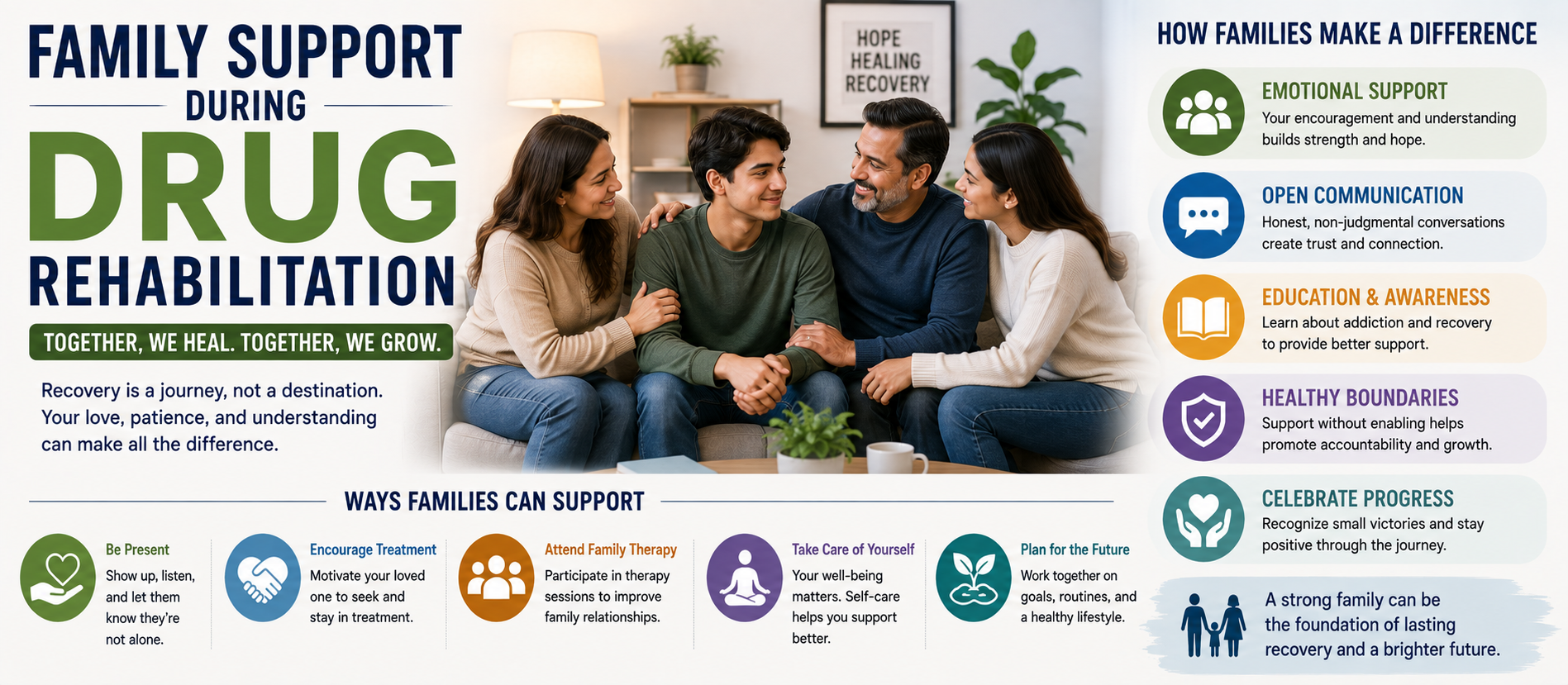
Addiction affects entire families. Family therapy helps repair relationships and improve communication.
Trauma-Informed Therapy
Many individuals struggling with addiction have experienced trauma. Specialized therapy helps address these underlying issues.
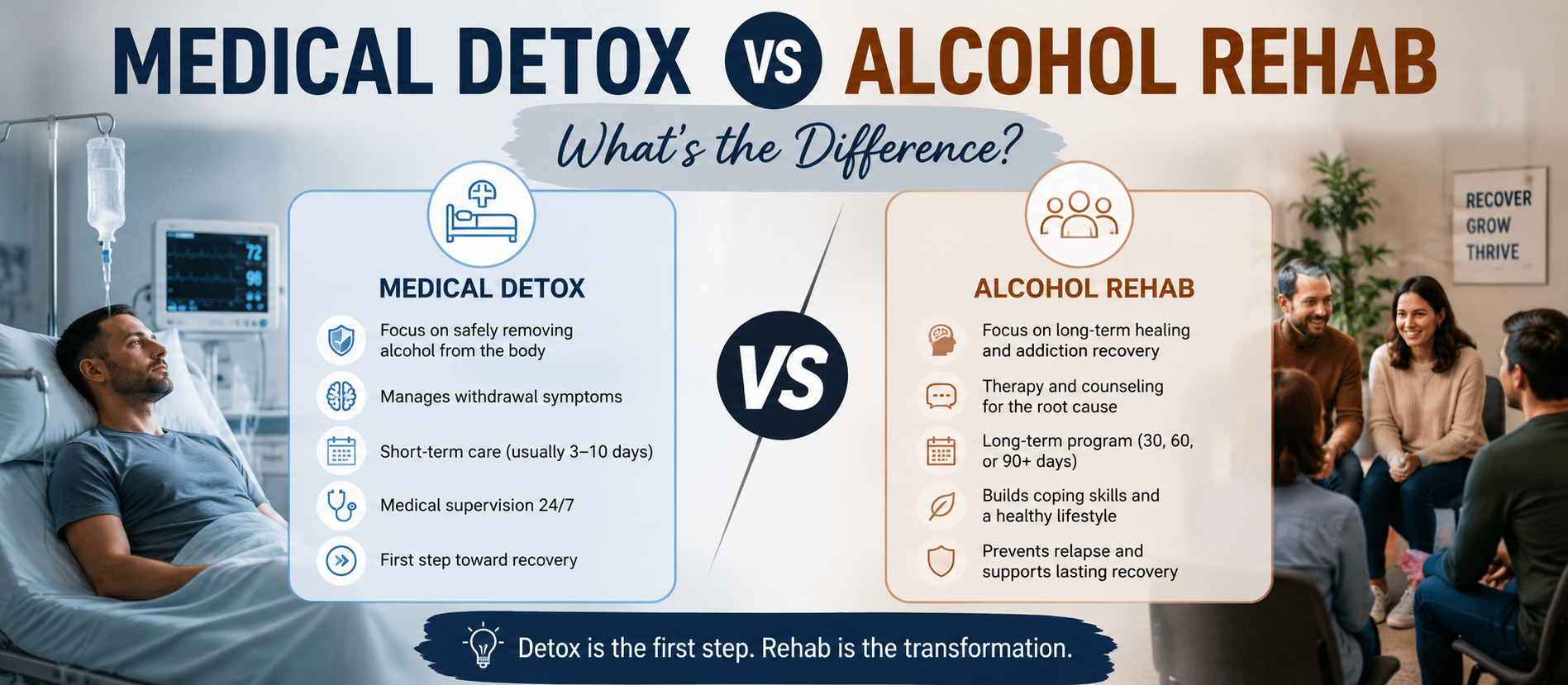
Medical Detox vs Alcohol Rehab: Key Differences
Purpose
Medical Detox: Focuses on safely removing alcohol from the body.
Alcohol Rehab: Focuses on long-term recovery and behavior change.
Duration
Medical Detox: Usually lasts between 3 and 10 days.
Alcohol Rehab: Can last from several weeks to several months.
Primary Focus
Medical Detox: Physical stabilization.
Alcohol Rehab: Emotional, psychological, and behavioral recovery.
Medical Supervision
Medical Detox: Intensive medical monitoring.
Alcohol Rehab: Therapeutic and recovery-focused support.
End Goal
Medical Detox: Safe withdrawal.
Alcohol Rehab: Sustainable sobriety and relapse prevention.
Why Detox Alone Is Not Enough
A common misconception is that completing detox means addiction has been cured.
In reality, detox addresses only the physical dependence on alcohol. The psychological and behavioral factors that contribute to addiction remain.
Without rehabilitation, many individuals return to drinking shortly after detox because they have not learned how to manage triggers, cravings, stress, or emotional challenges.
Research consistently shows that combining detox with rehabilitation significantly improves recovery outcomes.
The Recovery Journey: Detox Followed by Rehab
Successful treatment often follows a continuum of care.
Stage 1: Assessment
Healthcare professionals determine the severity of addiction and develop a personalized treatment plan.
Stage 2: Medical Detox
Withdrawal symptoms are managed safely under professional supervision.
Stage 3: Rehabilitation
Patients participate in counseling, therapy, education, and skill-building activities.
Stage 4: Aftercare
Ongoing support helps maintain recovery and prevent relapse.
- Support groups
- Continued counseling
- Sober living environments
- Recovery coaching
- Peer mentorship
Who Needs Medical Detox?
Medical detox may be recommended for individuals who:
- Drink heavily on a daily basis
- Experience withdrawal symptoms
- Have a history of seizures
- Previously experienced delirium tremens
- Have co-occurring medical conditions
- Have been unable to quit independently
A medical evaluation can determine whether supervised detox is necessary.
Who Benefits Most from Alcohol Rehab?
Alcohol rehab can benefit nearly anyone struggling with alcohol misuse, particularly individuals who:
- Experience repeated relapses
- Have co-occurring mental health conditions
- Need structured support
- Want to build long-term recovery skills
- Need help rebuilding relationships
- Require accountability and guidance
The Role of Mental Health in Recovery
Many individuals with alcohol addiction also experience mental health challenges such as anxiety, depression, PTSD, or stress-related disorders.
Modern rehabilitation programs increasingly use integrated treatment approaches that address both addiction and mental health simultaneously.
This comprehensive strategy improves treatment outcomes and reduces relapse risk.
SEO, AEO, GEO and AI Search Perspective
As search engines evolve, users increasingly seek direct answers regarding addiction treatment options.
From an SEO perspective, common search queries include:
- Medical detox vs rehab
- Alcohol detox treatment
- What happens during alcohol detox
- Best alcohol rehabilitation programs
- How long does alcohol rehab last
For AEO (Answer Engine Optimization), content should clearly answer questions such as:
- Is detox the same as rehab?
- Can detox cure alcoholism?
- Do I need rehab after detox?
For GEO (Generative Engine Optimization), AI-powered search systems prioritize authoritative, comprehensive, and well-structured content that explains treatment pathways clearly.
Organizations that provide accurate educational information are more likely to be referenced by AI-driven search experiences.
Frequently Asked Questions
Is medical detox the same as alcohol rehab?
No. Medical detox focuses on safely managing withdrawal symptoms, while alcohol rehab focuses on long-term recovery and relapse prevention.
Can I skip detox and go straight to rehab?
If physical dependence exists, detox may be necessary before participating fully in rehabilitation activities.
How long does alcohol detox take?
Most detox programs last between three and ten days, depending on the severity of dependence.
Does rehab include detox?
Some treatment centers offer both detox and rehab as part of a comprehensive treatment program.
Which is more important: detox or rehab?
Both are important. Detox provides a safe start, while rehab provides the tools needed for long-term recovery.
Conclusion
The difference between medical detox and alcohol rehab is one of purpose and scope. Detox helps individuals safely overcome the physical effects of alcohol withdrawal, while rehab addresses the psychological, emotional, and behavioral components of addiction.
For most people struggling with alcohol dependence, detox is only the beginning of the recovery journey. Long-term success often requires comprehensive rehabilitation, ongoing support, and a commitment to personal growth.
Understanding these distinctions can help individuals and families make informed decisions about treatment and recovery. By combining professional medical care with evidence-based rehabilitation services, people can achieve lasting sobriety and a healthier future.
Digiifrog is committed to providing educational content that helps individuals understand addiction treatment, recovery pathways, and wellness strategies in the evolving landscape of healthcare, SEO, AEO, GEO, and AI-powered search.
Visit www.digiifrog.com for more informative resources and digital content solutions.
Ready to Grow?
Talk to us about a strategy tailored to your brand — we will help you stand out in search, AI discovery and social.

Comments (0)
Log in to leave a comment.