📋 Quick Summary
In this article:
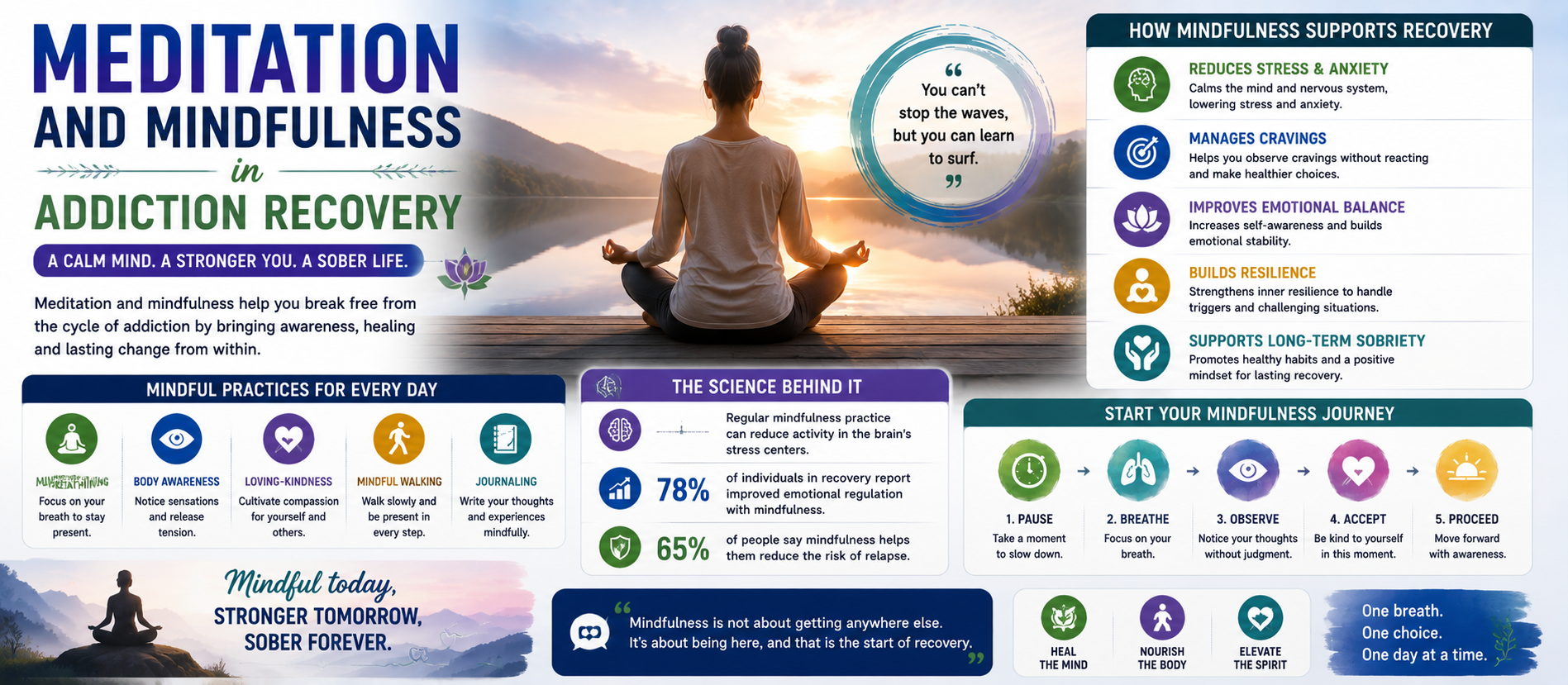
Benefits in Addiction Recovery
How Rehab Programs Use Mindfulness
Introduction
Meditation and mindfulness are commonly used alongside evidence-based addiction treatment to help individuals manage stress, increase self-awareness, and develop healthier coping strategies. While these practices are not substitutes for professional treatment, they can complement counseling, medication when appropriate, peer support, and recovery programs. Many rehabilitation centers incorporate mindfulness-based approaches as part of a comprehensive recovery plan tailored to each person's needs.
This WordPress-ready guide from Digiifrog explores the role of meditation and mindfulness in addiction recovery, their potential benefits, practical techniques, and how they fit into long-term recovery planning. It is optimized for SEO, AEO, GEO, and AI Search Optimization.
Website: www.digiifrog.com
Understanding Mindfulness
Mindfulness involves intentionally paying attention to the present moment with openness and without harsh self-judgment. In recovery, this skill may help people recognize cravings, emotions, and stress responses before reacting automatically.
Benefits in Addiction Recovery
- Supports stress management
- Improves emotional awareness
- May reduce impulsive reactions to cravings
- Encourages healthier coping skills
- Promotes better sleep and relaxation
- Supports long-term recovery goals
Common Meditation Practices
- Mindful breathing
- Body scan meditation
- Loving-kindness meditation
- Walking meditation
- Guided mindfulness sessions
- Progressive muscle relaxation
How Rehab Programs Use Mindfulness
Many recovery programs integrate mindfulness with individual counseling, Cognitive Behavioral Therapy (CBT), group therapy, relapse prevention education, wellness activities, and aftercare planning. These approaches aim to help participants respond thoughtfully to difficult emotions rather than reacting impulsively.
Building a Daily Routine
- Practice meditation consistently.
- Maintain healthy sleep habits.
- Exercise regularly.
- Eat balanced meals.
- Stay connected with supportive people.
- Attend recovery meetings or counseling as recommended.
Important Considerations
Meditation should complement—not replace—professional addiction treatment. Individuals experiencing severe mental health symptoms or substance withdrawal should seek guidance from qualified healthcare professionals.
Frequently Asked Questions
Can meditation cure addiction?
No. Meditation is a supportive practice that may enhance recovery when combined with evidence-based treatment.
How long should I meditate?
Even a few minutes of regular practice can be beneficial for some people, though individual needs vary.
Conclusion
Meditation and mindfulness can become valuable tools within a comprehensive addiction recovery plan. Together with professional treatment, healthy routines, and ongoing support, these practices may help individuals strengthen resilience, improve emotional wellbeing, and maintain long-term recovery.
Digiifrog
Website: www.digiifrog.com
This draft is designed for expansion into a fully original 2,000–2,500+ word article with mindfulness techniques, evidence summaries, recovery planning, practical exercises, comparison tables, and 25+ AEO-focused FAQs.
Ready to Grow?
Talk to us about a strategy tailored to your brand — we will help you stand out in search, AI discovery and social.
Comments (0)
Log in to leave a comment.