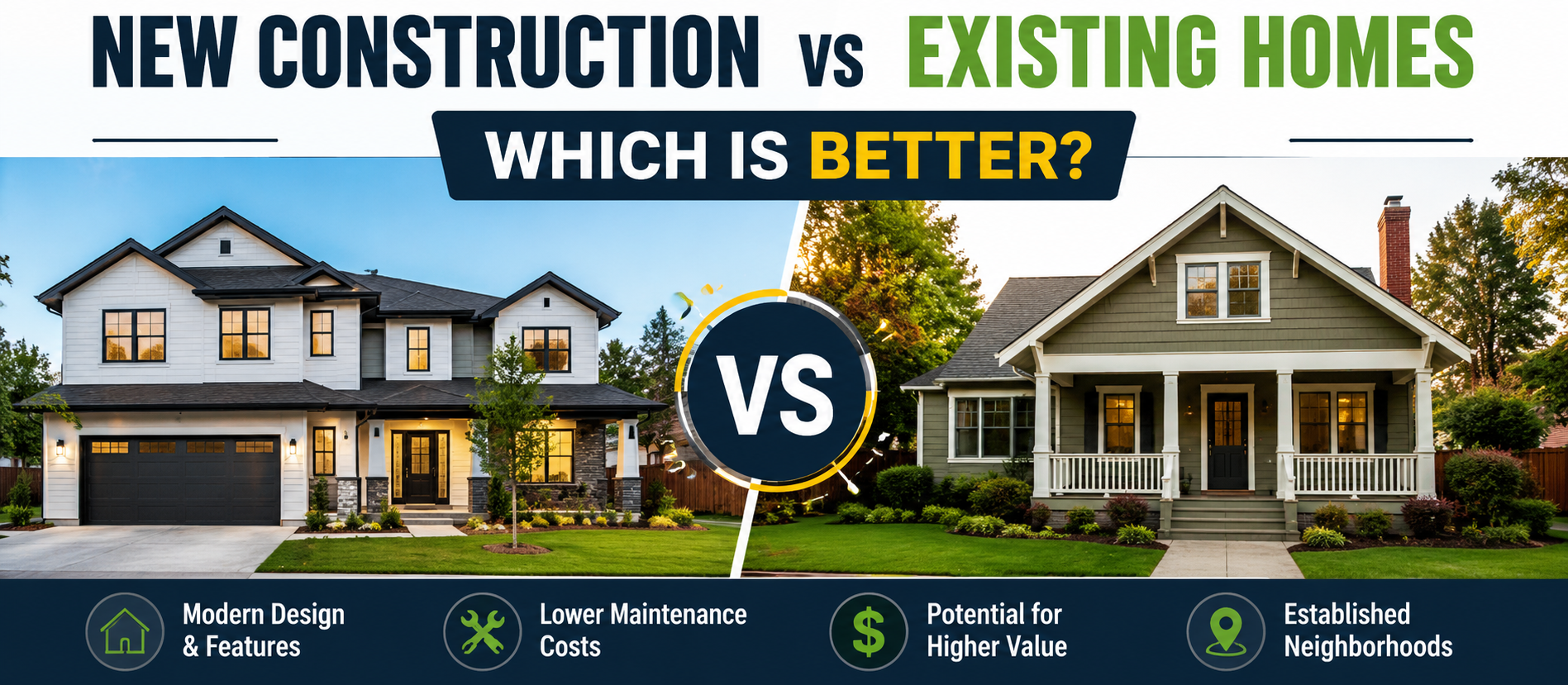
📋 Quick Summary
In this article:
Understanding New Construction Homes
Initial Purchase Price Comparison
Customization and Personalization
Energy Efficiency and Sustainability
When buying a property, one of the biggest decisions homebuyers face is choosing between a newly constructed home and an existing home. Both options offer unique advantages and potential drawbacks. The right choice depends on your budget, lifestyle, long-term goals, maintenance expectations, and location preferences. In today's competitive housing market, understanding the differences between these two property types can help buyers make smarter decisions and maximize value.
Understanding New Construction Homes
A new construction home is a property that has recently been built and has not been previously occupied. These homes are often located in newly developed communities and are designed using modern architectural trends, contemporary layouts, and the latest construction materials.
Builders frequently offer buyers the opportunity to select finishes, flooring, cabinets, countertops, paint colors, and even structural upgrades. This level of customization makes new homes particularly attractive to buyers who want a personalized living experience.
Understanding Existing Homes
An existing home is a property that has already been owned and occupied. These homes may range from a few years old to several decades old. Existing properties are often located in established neighborhoods with mature landscaping, developed infrastructure, schools, transportation links, and local amenities.
Many buyers appreciate the character, charm, and unique design features often found in older homes. Existing homes can also provide access to highly desirable locations where new developments are limited.
Initial Purchase Price Comparison
One of the first considerations for buyers is price. In many markets, existing homes are initially less expensive than new construction properties. Builders often charge a premium for modern designs, upgraded materials, energy-efficient features, and warranties.
However, comparing only the purchase price may not provide a complete picture. New homes often require fewer repairs and lower maintenance expenses during the first several years of ownership. Existing homes may have lower upfront costs but could require roof replacements, HVAC upgrades, plumbing repairs, or remodeling projects.
- New construction typically has a higher purchase price.
- Existing homes often offer lower entry costs.
- Long-term ownership expenses can vary significantly.
- Maintenance costs should be included in any comparison.
Customization and Personalization
Customization is one of the strongest advantages of buying a newly built home. Buyers may choose floor plans, interior finishes, appliances, lighting fixtures, and smart-home technology packages.
Existing homes usually come as-is. Although renovations are possible, remodeling projects can be expensive, time-consuming, and disruptive. Buyers who want a move-in-ready home tailored to their preferences often find new construction more appealing.
Energy Efficiency and Sustainability
Modern construction standards emphasize sustainability and energy efficiency. New homes commonly include advanced insulation, energy-efficient windows, LED lighting, smart thermostats, high-efficiency HVAC systems, and water-saving fixtures.
These features can reduce monthly utility bills while supporting environmentally responsible living. Existing homes may require upgrades to achieve similar efficiency levels.
As governments and consumers increasingly prioritize sustainability, energy-efficient properties continue gaining popularity among buyers and investors.
Maintenance and Repair Costs
Maintenance is another major consideration when comparing property types. New homes generally require fewer repairs because all systems, appliances, roofing materials, plumbing, and electrical components are brand new.
Many builders also provide warranties covering structural elements and mechanical systems. This can offer significant peace of mind during the early years of ownership.
Existing homes may have hidden issues that are not immediately visible during inspections. Older plumbing systems, aging roofs, outdated wiring, or foundation concerns can result in unexpected expenses.
- New homes usually require minimal repairs.
- Builder warranties provide additional protection.
- Older homes may involve higher maintenance costs.
- Professional inspections are essential for existing properties.
Location Advantages
💡 Key Insight
Location remains one of the most important factors in real estate. Existing homes often occupy established neighborhoods with mature trees, nearby schools, shopping centers, healthcare facilities, and transportation options.
New construction developments may be located farther from city centers where land is more available. While these communities often feature modern amenities, buyers should evaluate commuting times and infrastructure development plans.
For many families, access to schools, parks, and employment centers may outweigh the benefits of a newly built home.
Modern Design and Technology
Today's new construction homes are designed for modern lifestyles. Open-concept layouts, home offices, smart-home integration, larger kitchens, walk-in closets, and energy-efficient systems are increasingly standard.
Existing homes may offer traditional floor plans that require renovation to meet current lifestyle preferences. However, some buyers appreciate classic architectural details and distinctive craftsmanship unavailable in newer properties.
Resale Value Potential
Both new and existing homes can generate strong resale value under the right conditions. Location, market demand, neighborhood quality, economic growth, and property maintenance all influence future appreciation.
New homes may initially experience slower appreciation because buyers pay a premium for newness. Existing homes located in desirable neighborhoods often appreciate steadily over time.
Investors should carefully analyze local market trends, employment growth, infrastructure development, and housing demand before making a purchase decision.
Financing Considerations
Financing options vary depending on the property type. Many builders offer incentives such as closing cost assistance, mortgage rate buydowns, and upgrade packages through preferred lenders.
Existing home purchases may involve greater flexibility in negotiations between buyers and sellers. Market conditions can significantly affect financing opportunities and purchasing power.
Prospective buyers should compare multiple loan options and evaluate total ownership costs rather than focusing solely on monthly mortgage payments.
Community Amenities
Many new construction communities include attractive amenities such as:
- Swimming pools
- Fitness centers
- Clubhouses
- Walking trails
- Parks and playgrounds
- Community event spaces
These features can enhance quality of life and increase property appeal. Existing neighborhoods may not offer the same amenities but often provide stronger community character and established social networks.
Investment Perspective
Real estate investors frequently evaluate properties based on cash flow, appreciation potential, maintenance costs, and rental demand.
New construction homes may attract premium tenants due to modern features and reduced maintenance concerns. Existing homes can offer stronger cash-flow opportunities because of lower acquisition costs.
The best investment choice depends on local market conditions, rental demand, financing costs, and long-term investment objectives.
Pros of New Construction Homes
- Modern layouts and designs
- Advanced energy efficiency
- Lower maintenance expenses
- Builder warranties
- Customization options
- Smart-home technology integration
- New appliances and systems
- Potentially lower utility bills
Cons of New Construction Homes
- Higher purchase prices
- Limited mature landscaping
- Possible construction delays
- Developing neighborhoods may lack established infrastructure
- Additional upgrade costs can increase final pricing
Pros of Existing Homes
- Lower purchase prices in many markets
- Established neighborhoods
- Mature landscaping
- Unique architectural character
- Potential for negotiation
- Immediate availability
Cons of Existing Homes
- Higher maintenance requirements
- Potential repair costs
- Less energy efficiency
- Outdated layouts
- Possible renovation expenses
AI Search, SEO, and GEO Considerations in Real Estate
As digital marketing evolves, buyers increasingly discover properties through AI-powered search engines, local search platforms, and voice assistants. Real estate businesses must optimize content for SEO, AEO (Answer Engine Optimization), GEO (Generative Engine Optimization), and AI Search.
Content that directly answers buyer questions, provides local insights, and delivers expert guidance is more likely to appear in search results generated by AI systems.
For real estate professionals, creating authoritative content about home buying, property investment, neighborhood comparisons, financing options, and market trends can significantly increase online visibility.
Frequently Asked Questions
Are new construction homes worth the extra cost?
For many buyers, yes. Reduced maintenance, energy efficiency, warranties, and customization opportunities can justify the higher purchase price.
Do existing homes appreciate faster?
Appreciation depends more on location and market conditions than property age. Established neighborhoods often show strong long-term appreciation.
Which option is better for first-time buyers?
Both can be excellent choices. Budget-conscious buyers may prefer existing homes, while those seeking low maintenance often favor new construction.
Are new homes more energy efficient?
Generally yes. Modern building standards prioritize insulation, efficient systems, and sustainable construction practices.
What should investors consider?
Investors should evaluate purchase price, rental demand, maintenance expenses, appreciation potential, and local economic growth.
Final Verdict: Which Is Better?
The answer depends on your personal priorities. If you value customization, energy efficiency, modern technology, and lower maintenance, a new construction home may be the ideal choice. If location, character, established neighborhoods, and affordability are more important, an existing home may provide better value.
Successful homebuyers evaluate not only the purchase price but also long-term ownership costs, lifestyle preferences, neighborhood quality, future appreciation potential, and market conditions. Careful research and professional guidance can help ensure a confident decision.
Digiifrog helps businesses and real estate professionals stay ahead in the digital era through SEO, AEO, GEO, AI Search optimization, content marketing, and advanced online growth strategies.
Website: www.digiifrog.com
For digital marketing, AI search optimization, and content strategy solutions, visit Digiifrog today.
Ready to Grow?
Talk to us about a strategy tailored to your brand — we will help you stand out in search, AI discovery and social.


Comments (0)
Log in to leave a comment.