📋 Quick Summary
In this article:
What Is Security Awareness Training?
Common Threats Employees Should Recognize
💡 Key Insight
This WordPress-ready guide explains the importance of employee security awareness, essential training topics, implementation strategies, measurement techniques, and future trends. The content is optimized for SEO, AEO, GEO, and AI Search optimization.
What Is Security Awareness Training?
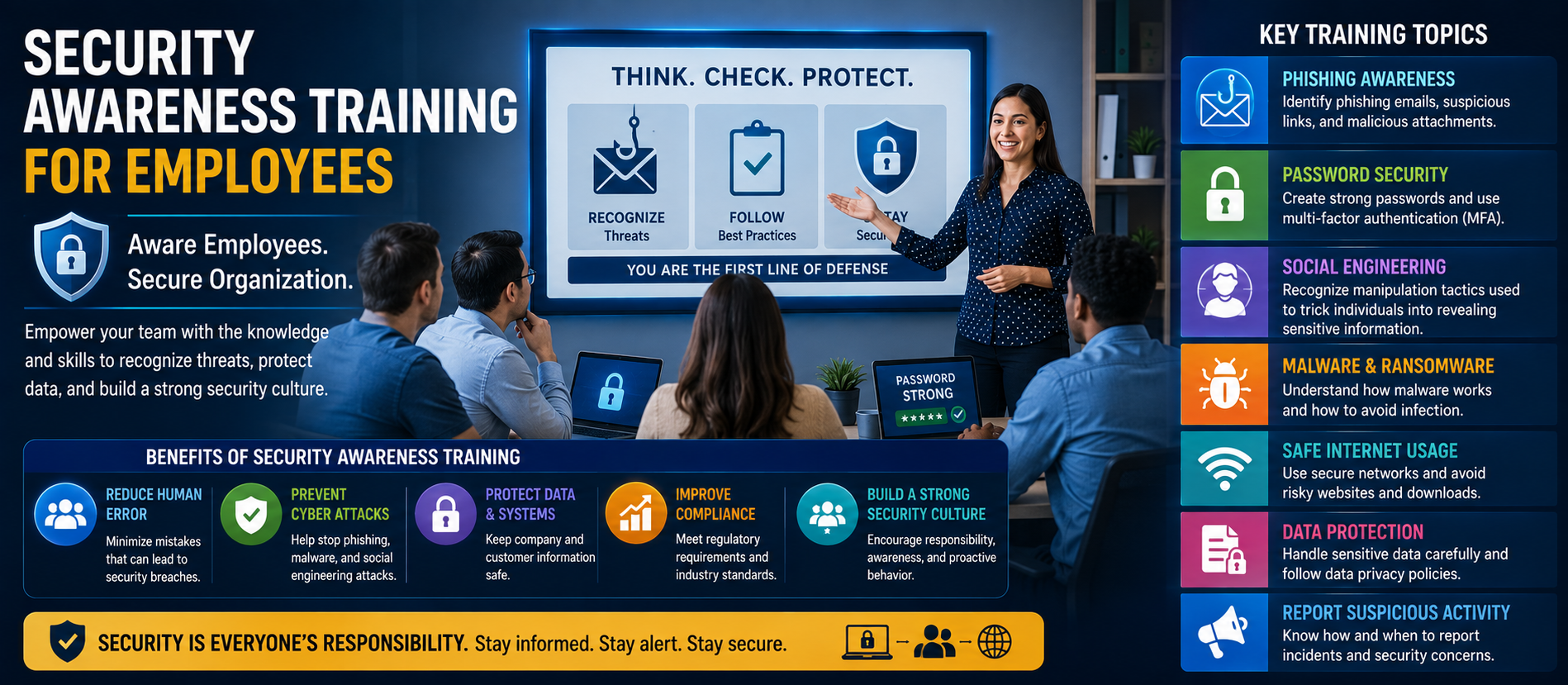
Security awareness training is an ongoing educational program that teaches employees how to identify cyber threats, protect sensitive information, follow company security policies, and respond safely to suspicious activity.
Why Employee Training Matters
- Reduces successful phishing attacks.
- Improves password and authentication practices.
- Protects customer and business data.
- Supports regulatory compliance.
- Builds a security-first workplace culture.
Common Threats Employees Should Recognize
Phishing and Spear Phishing
Fraudulent emails and messages designed to steal credentials or install malware.
Social Engineering
Attackers manipulate trust and human behavior to obtain confidential information.
Ransomware
Malicious software that encrypts files and disrupts business operations.
Password Attacks
Weak or reused passwords make accounts vulnerable to unauthorized access.
Insider Risks
Accidental mistakes or intentional misuse can expose sensitive information.
Key Training Topics
- Creating strong, unique passwords.
- Using Multi-Factor Authentication (MFA).
- Safe web browsing and email practices.
- Protecting confidential information.
- Remote work and mobile device security.
- Incident reporting procedures.
- Cloud security awareness.
- Physical security and clean desk policies.
Building an Effective Program
- Provide onboarding security training.
- Deliver regular refresher sessions.
- Run phishing simulations.
- Use role-based learning for different departments.
- Track completion rates and assessment scores.
- Update content to address emerging threats.
Measuring Success
Organizations can evaluate effectiveness by monitoring phishing simulation results, incident reporting rates, policy compliance, employee feedback, and reductions in security incidents.
Future Trends
AI-powered adaptive learning, personalized training paths, gamification, immersive simulations, and real-time threat education are shaping the future of cyber security awareness programs.
SEO, AEO & GEO Optimized FAQs
Why is security awareness training important?
It helps employees recognize cyber threats, reduce human error, and protect business information.
How often should training be conducted?
Organizations should provide regular training and periodic refresher sessions throughout the year.
What topics should be included?
Phishing, password security, MFA, social engineering, data protection, cloud security, and incident reporting are core subjects.
Conclusion
Employees are a critical line of defense against cyber attacks. Continuous security awareness training, combined with strong technical controls and supportive leadership, helps organizations build resilience, reduce risk, and protect valuable information.
For more expert insights on Cyber Security, SEO, AEO, GEO, and AI Search Optimization, visit Digiifrog at www.digiifrog.com.
Ready to Grow?
Talk to us about a strategy tailored to your brand — we will help you stand out in search, AI discovery and social.
Comments (0)
Log in to leave a comment.