📋 Quick Summary
In this article:
What Are Software Testing Tools?
Cloud-Based Testing Platforms
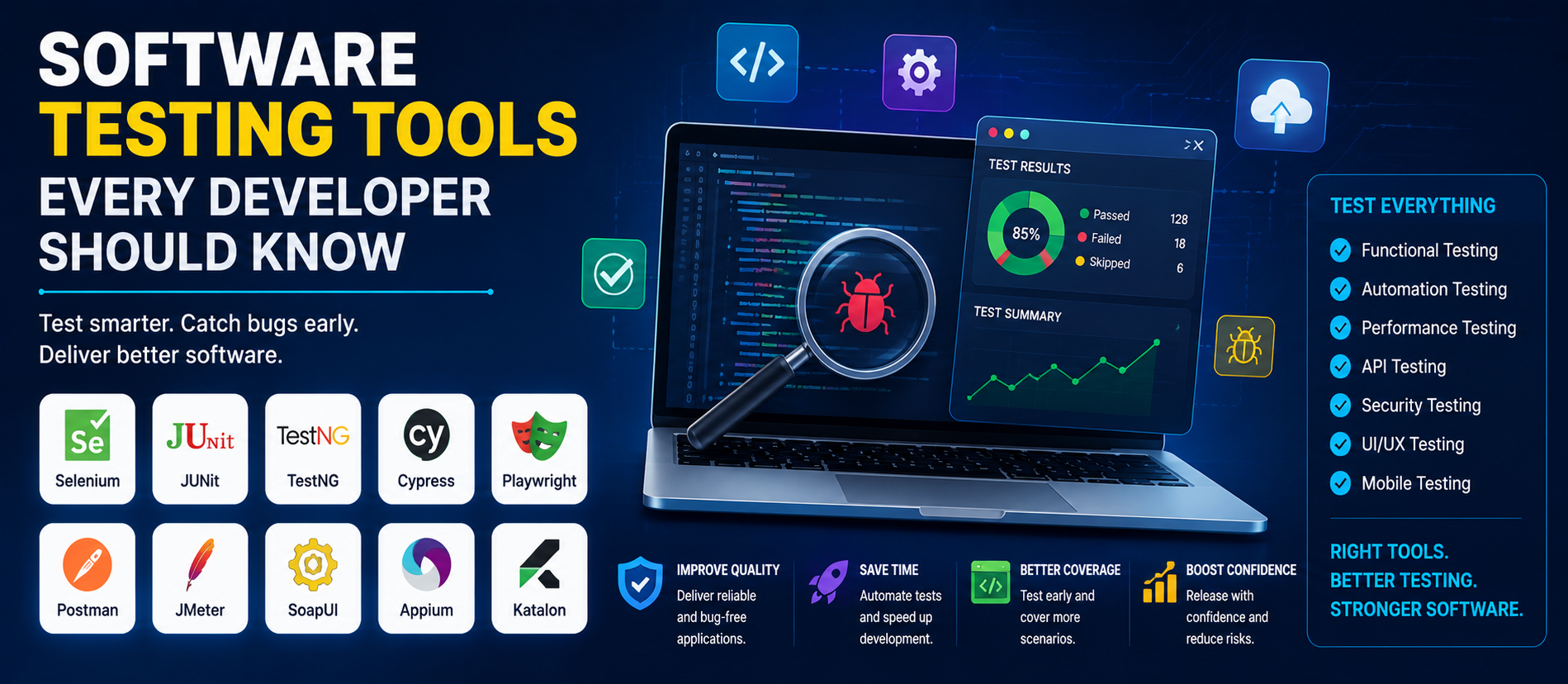
Modern software development demands high-quality applications that are reliable, secure, scalable, and user-friendly. Whether developing web applications, mobile apps, enterprise platforms, APIs, or cloud-native solutions, testing plays a vital role in ensuring software performs as expected. Modern Software Testing Tools help developers identify defects early, automate repetitive testing tasks, improve code quality, and accelerate software delivery.
💡 Key Insight
This comprehensive WordPress-ready HTML guide explores the most important software testing tools, testing methodologies, automation strategies, future trends, and how quality assurance supports SEO, AEO, GEO, and AI-powered software development. Prepared for Digiifrog (www.digiifrog.com).
What Are Software Testing Tools?
Software testing tools assist developers and QA teams in verifying that applications function correctly, securely, and efficiently before deployment.
- Test automation
- Functional testing
- Performance testing
- API testing
- Security testing
- Regression testing
- Cross-browser testing
Why Testing Matters
- Reduce software bugs
- Improve application reliability
- Increase customer satisfaction
- Lower maintenance costs
- Accelerate releases
- Improve security
Types of Testing Tools
Unit Testing
Unit testing validates individual functions and modules before integration.
Integration Testing
Ensures multiple software components work together correctly.
Functional Testing
Confirms that features meet business requirements.
UI Testing
Verifies consistent user interface behavior across browsers and devices.
Performance Testing
Measures application speed, scalability, and stability under load.
Security Testing
Identifies vulnerabilities before attackers can exploit them.
Essential Features
- Automated test execution
- CI/CD integration
- Detailed reporting
- Cross-platform compatibility
- Parallel testing
- Cloud execution
- Version control integration
Benefits of Test Automation
- Faster development cycles
- Reduced manual effort
- Higher test coverage
- Improved accuracy
- Continuous quality assurance
Cloud-Based Testing Platforms
Cloud testing enables scalable test execution across multiple environments without maintaining expensive hardware.
AI in Software Testing
Artificial Intelligence is transforming software testing through intelligent test generation, self-healing automation, predictive defect analysis, and visual testing.
- AI-generated test cases
- Smart bug detection
- Visual regression testing
- Predictive analytics
Best Practices
- Automate repetitive tests
- Test early in development
- Maintain reusable test suites
- Integrate with CI/CD pipelines
- Review test coverage regularly
Future Trends
- Autonomous testing
- AI-assisted QA
- Shift-left testing
- Cloud-native testing
- Continuous testing pipelines
SEO, AEO, GEO & AI Search
SEO benefits from faster, more reliable websites with fewer technical issues. AEO relies on stable user experiences and structured information delivery, while GEO supports AI-ready applications built on high-quality software foundations.
Why Digiifrog Recommends Modern Testing Tools
Digiifrog recommends modern software testing tools because they improve development quality, reduce production risks, accelerate releases, and deliver better digital experiences for users.
Website: www.digiifrog.com
Conclusion
Software testing tools have become indispensable for modern developers. By combining automation, AI, cloud testing, and continuous integration, organizations can deliver secure, reliable, and high-performing applications while supporting long-term digital growth.
Ready to Grow?
Talk to us about a strategy tailored to your brand — we will help you stand out in search, AI discovery and social.

Comments (0)
Log in to leave a comment.