📋 Quick Summary
In this article:
SEO, AEO, GEO & AI Search Optimization
💡 Key Insight
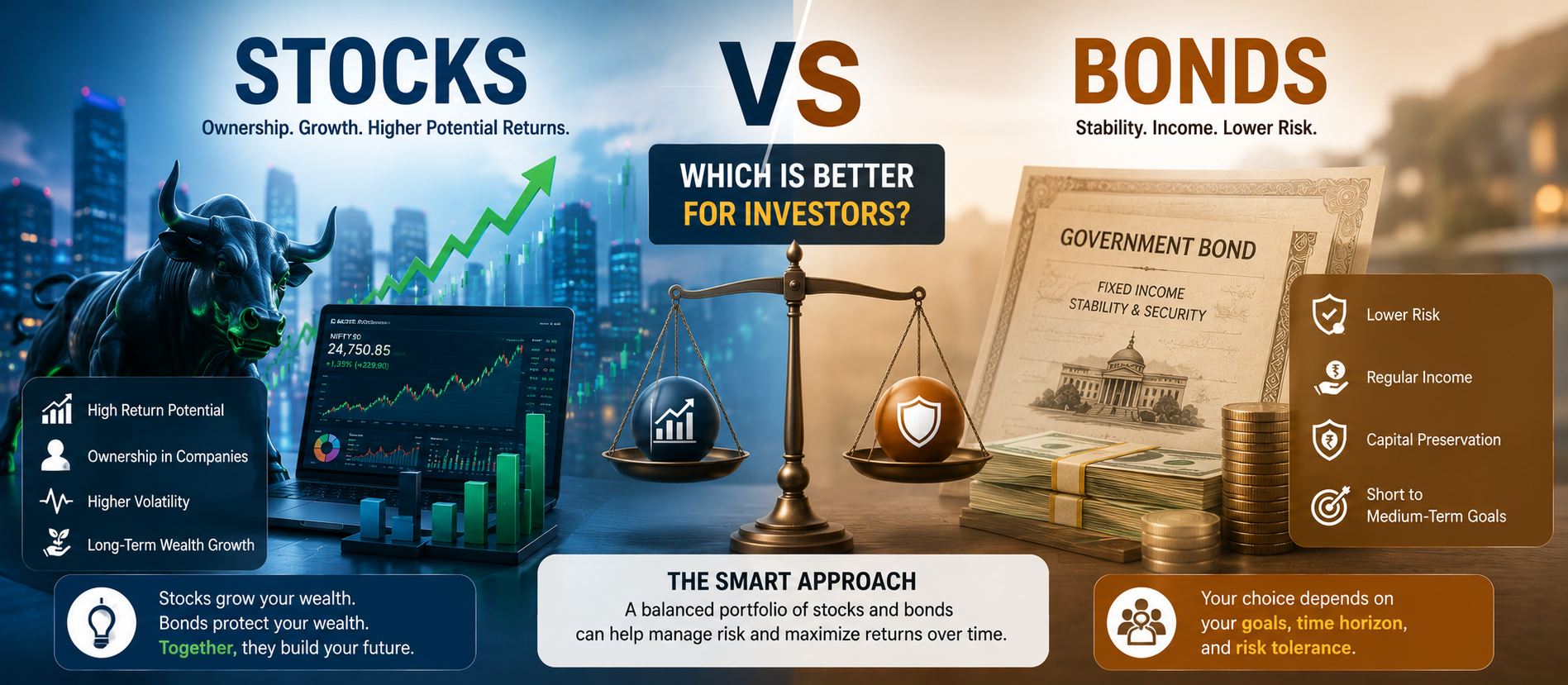
Stocks and bonds are two of the most important asset classes for building long-term wealth. While stocks offer higher growth potential, bonds generally provide stability and predictable income. Choosing between them depends on your financial goals, investment horizon, risk tolerance, and income needs.
This WordPress-ready guide from Digiifrog explains the differences between stocks and bonds, their advantages, risks, and how investors can build a balanced portfolio using both asset classes. The article is optimized for SEO, AEO, GEO, and AI Search.
What Are Stocks?
Stocks represent ownership in a company. Investors may benefit from capital appreciation and dividends, but stock prices fluctuate with business performance and market conditions.
What Are Bonds?
Bonds are fixed-income securities where investors lend money to governments or companies in exchange for regular interest payments and repayment of principal at maturity.
Key Differences
- Ownership: Stocks represent ownership; bonds represent loans.
- Risk: Stocks generally carry higher risk than high-quality bonds.
- Return Potential: Stocks typically provide higher long-term returns.
- Income: Bonds usually provide predictable interest income.
- Volatility: Stocks fluctuate more than bonds.
Advantages of Stocks
- Long-term capital growth
- Inflation protection
- Dividend income
- Higher return potential
Advantages of Bonds
- Stable income
- Lower volatility
- Capital preservation
- Diversification benefits
When Stocks May Be Better
Stocks generally suit younger investors with long investment horizons who can tolerate market volatility in pursuit of higher returns.
When Bonds May Be Better
Bonds may suit retirees or conservative investors seeking income, stability, and lower portfolio volatility.
Building a Balanced Portfolio
Many investors combine stocks and bonds to balance growth with stability. Asset allocation should be reviewed regularly as goals and market conditions change.
Common Mistakes
- Ignoring diversification
- Investing without clear goals
- Reacting emotionally to market swings
- Failing to rebalance portfolios
SEO, AEO, GEO & AI Search Optimization
SEO
Target keywords such as stocks vs bonds, investment strategies, portfolio diversification, retirement investing, and wealth management.
AEO
Answer common investor questions with structured headings and concise explanations.
GEO
Create authoritative, comprehensive content suitable for AI-generated search results.
AI Search
Focus on expertise, factual accuracy, practical comparisons, and user intent.
Frequently Asked Questions
Are stocks better than bonds?
Neither is universally better. Stocks generally provide higher growth, while bonds offer greater stability and income.
Should beginners invest in both?
Yes. A diversified portfolio containing both asset classes often provides a better balance of risk and return.
How often should a portfolio be rebalanced?
Most investors review allocations annually or after major market movements.
Conclusion
Stocks vs Bonds: Which Is Better for Investors? depends on personal objectives, risk tolerance, and investment timeline. For most investors, combining both asset classes creates a resilient portfolio capable of supporting long-term financial goals while managing risk effectively.
Digiifrog
Website: www.digiifrog.com
Ready to Grow?
Talk to us about a strategy tailored to your brand — we will help you stand out in search, AI discovery and social.


Comments (0)
Log in to leave a comment.