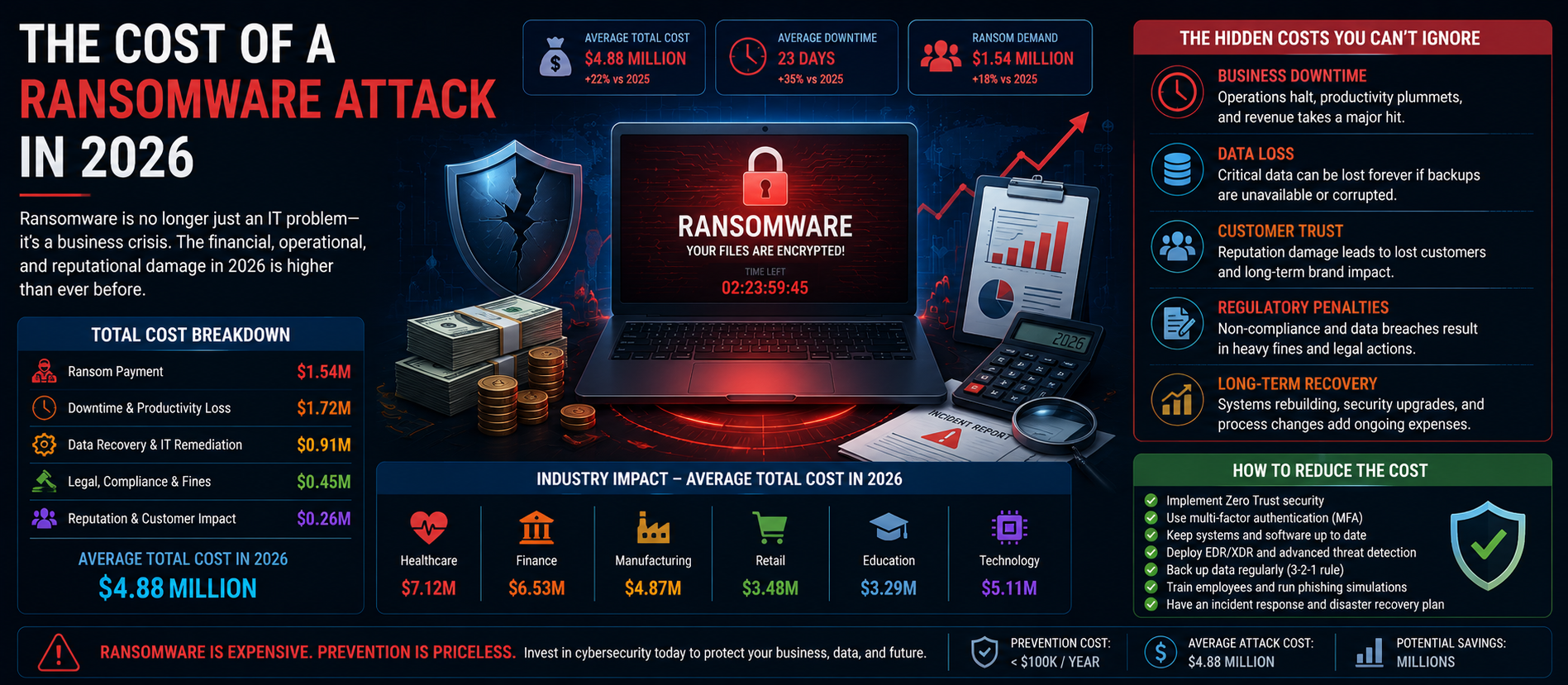
📋 Quick Summary
In this article:
Understanding Modern Ransomware
Why Costs Continue to Rise in 2026
Regulatory and Compliance Impact
How AI Changes the Threat Landscape
Reducing the Cost of Ransomware
Ransomware has evolved into one of the most expensive cyber threats facing organizations in 2026. Modern ransomware attacks no longer focus solely on encrypting files. Cybercriminals now combine data theft, double and triple extortion, supply chain compromise, AI-powered reconnaissance, and targeted disruption to maximize financial pressure on victims.
Understanding Modern Ransomware
Ransomware is malicious software that encrypts files or systems and demands payment for restoration. Many attackers also steal confidential data before encryption, increasing pressure on organizations to pay.
Why Costs Continue to Rise in 2026
- AI-assisted cyber attacks
- Critical infrastructure targeting
- Cloud workload compromise
- Supply-chain attacks
- Growing regulatory requirements
- Business dependence on digital services
Direct Financial Costs
- Incident response services
- Digital forensics investigations
- System restoration
- Infrastructure rebuilding
- Legal and consulting fees
- Cyber insurance deductibles
Even if no ransom is paid, recovery expenses can be substantial.
Business Downtime
Operational disruption is often the largest hidden cost. Manufacturing, healthcare, retail, finance, and logistics organizations may experience days or weeks of reduced productivity.
- Interrupted operations
- Lost sales
- Missed customer deadlines
- Reduced employee productivity
Data Breach Costs
Modern ransomware frequently includes data exfiltration. Organizations may face customer notification expenses, credit monitoring, regulatory investigations, and breach remediation.
Regulatory and Compliance Impact
Organizations subject to privacy and industry regulations may incur fines, audits, reporting obligations, and compliance remediation costs after a ransomware incident.
Reputational Damage
Loss of customer trust can reduce future revenue, increase customer churn, and negatively affect partnerships and investor confidence.
Recovery Costs
- Backup restoration
- Security improvements
- Endpoint replacement
- Network segmentation
- Identity security upgrades
- Employee retraining
Industries at Highest Risk
- Healthcare
- Financial services
- Manufacturing
- Government
- Education
- Retail and e-commerc
How AI Changes the Threat Landscape
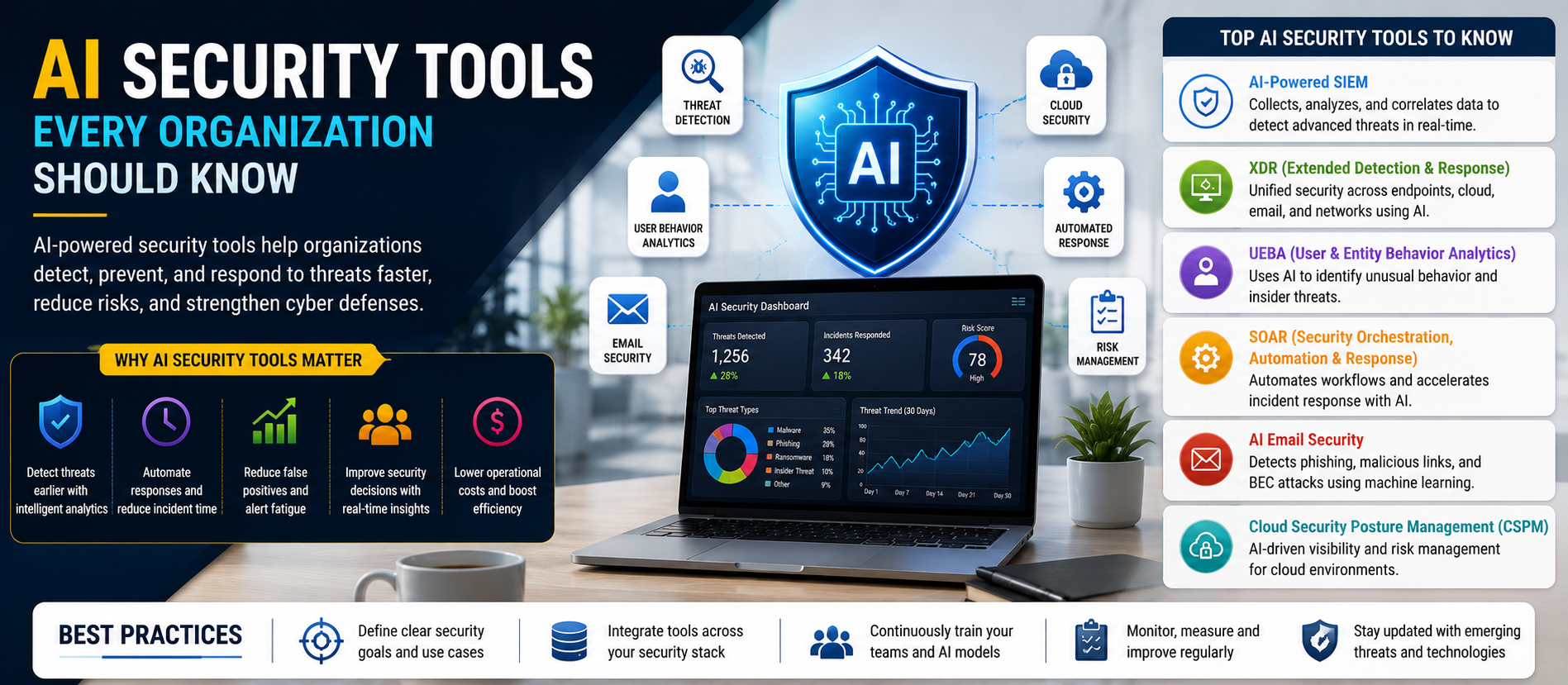
Artificial Intelligence enables defenders to detect anomalies faster, but attackers also use AI to automate phishing, reconnaissance, credential theft, and malware customization.
Reducing the Cost of Ransomware
Implement Zero Trust
Continuously verify users, devices, and workloads.
Enable Multi-Factor Authentication
Protect privileged and remote access accounts.
Maintain Offline Backups
Follow the 3-2-1 backup strategy and test recovery regularly.
Deploy EDR, XDR, and SIEM
Use AI-powered monitoring to detect threats early.
Patch Vulnerabilities
Keep operating systems, applications, firmware, and cloud workloads updated.
Train Employees
Regular awareness training reduces phishing and social engineering success.
Business Continuity Planning
Organizations should maintain documented incident response, disaster recovery, communication, and business continuity plans to minimize operational disruption.
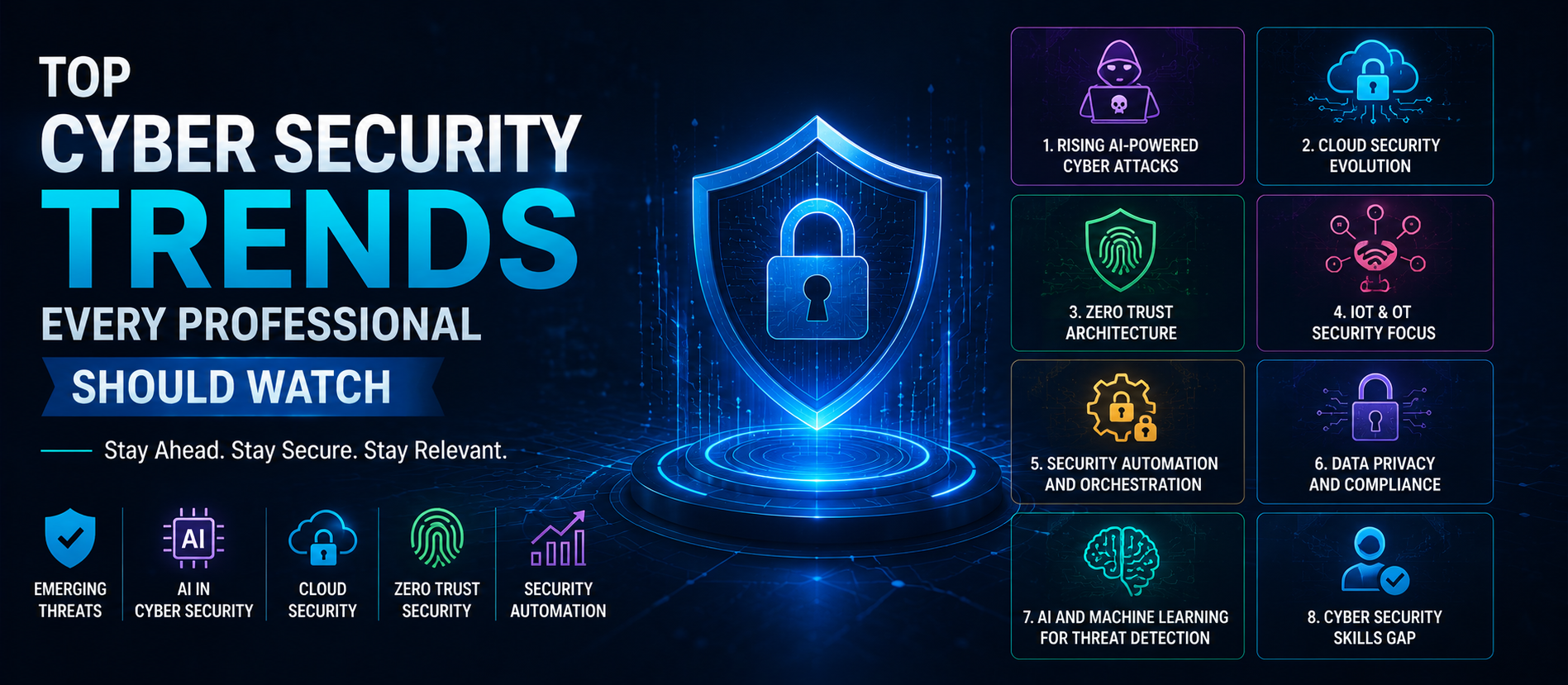
Future Trends
💡 Key Insight
Expect continued growth in AI-assisted ransomware, cloud-focused attacks, identity-based compromise, and supply-chain targeting. Proactive cyber resilience will become increasingly important.
AEO & GEO Optimized FAQs
What is the biggest cost of ransomware?
Business interruption and recovery expenses often exceed the ransom demand itself.
How can businesses reduce ransomware costs?
Implement Zero Trust, MFA, secure backups, employee training, AI-powered monitoring, and tested incident response plans.
Should organizations pay a ransom?
Organizations should follow legal guidance and established incident response procedures. Strong preparation is the most effective defense.
Does cyber insurance cover ransomware?
Coverage varies by policy and often depends on security controls, reporting requirements, and policy terms.
Conclusion
The true cost of a ransomware attack extends far beyond the ransom payment. Financial losses, downtime, legal obligations, reputational harm, and recovery efforts can affect organizations for months or even years. Investing in proactive cyber security, resilient backups, Zero Trust architecture, AI-powered detection, and employee awareness remains the most cost-effective strategy in 2026.
For more expert insights on Cyber Security, AI Search Optimization, SEO, AEO, GEO, Cloud Security, and Digital Transformation, visit Digiifrog at www.digiifrog.com.
Ready to Grow?
Talk to us about a strategy tailored to your brand — we will help you stand out in search, AI discovery and social.
Comments (0)
Log in to leave a comment.