
📋 Quick Summary
In this article:
Why Cyber Security Is More Important Than Ever in 2026
The Growing Cyber Threat Landscape
The Core Principles of Cyber Security
In today's hyper-connected digital world, cyber security has become one of the most critical priorities for individuals, businesses, governments, and organizations. As technology continues to evolve, so do cyber threats. From ransomware attacks and phishing scams to AI-powered cybercrime and large-scale data breaches, the digital landscape has become increasingly complex and risky.
In 2026, cyber security is no longer just an IT concern. It is a business necessity, a national security issue, and a personal responsibility. Every device connected to the internet, every cloud application, every online transaction, and every digital interaction creates opportunities for both innovation and cyber threats.
This comprehensive guide explains what cyber security is, why it matters more than ever in 2026, the key types of cyber security, emerging threats, best practices, and future trends that organizations and individuals must understand.
What Is Cyber Security?
Cyber security refers to the practice of protecting computer systems, networks, applications, devices, and data from unauthorized access, cyber attacks, theft, damage, or disruption.
The primary goal of cyber security is to ensure:
- Confidentiality of information
- Integrity of data
- Availability of systems and services
- Protection against cyber threats
- Business continuity
- User privacy
Cyber security combines technology, processes, policies, employee awareness, and risk management strategies to defend against evolving threats.
Why Cyber Security Is More Important Than Ever in 2026
Digital transformation continues to accelerate across industries. Organizations rely heavily on cloud computing, artificial intelligence, remote work technologies, connected devices, and digital services.
This rapid expansion creates more opportunities for cyber criminals.
Key reasons cyber security is essential in 2026 include:
- Increasing cyber attacks
- Growing dependence on technology
- Expansion of cloud computing
- Rise of AI-powered threats
- Protection of sensitive information
- Regulatory compliance requirements
- Business reputation management
- Critical infrastructure protection
Without strong cyber security measures, organizations face significant operational and financial risks.
The Growing Cyber Threat Landscape
Cyber threats continue evolving in sophistication and scale.
Common cyber threats in 2026 include:
- Ransomware attacks
- Phishing campaigns
- Spear phishing
- Business Email Compromise (BEC)
- Malware infections
- Supply chain attacks
- Insider threats
- Distributed Denial of Service (DDoS) attacks
- Credential theft
- Cloud security breaches
Attackers are increasingly using Artificial Intelligence to automate attacks and identify vulnerabilities faster than ever before.
The Core Principles of Cyber Security
Cyber security is built around three foundational principles commonly known as the CIA Triad:
Confidentiality
Ensures that sensitive information is accessible only to authorized individuals.
Integrity
Protects data from unauthorized modification or corruption.
Availability
Ensures systems, applications, and data remain accessible when needed.
Organizations use these principles to design effective security programs.
Major Types of Cyber Security
Network Security
Network security protects communication systems, routers, switches, and network infrastructure from unauthorized access and attacks.
Examples include:
- Firewalls
- Intrusion Detection Systems (IDS)
- Intrusion Prevention Systems (IPS)
- Network monitoring tools
Application Security
Application security focuses on protecting software and applications from vulnerabilities and exploitation.
Cloud Security
Cloud security protects cloud-based infrastructure, services, and data.
Endpoint Security
Endpoint security protects devices such as laptops, smartphones, desktops, and servers.
Identity and Access Management (IAM)
IAM controls who can access systems and what actions they can perform.
Data Security
Data security focuses on protecting information from unauthorized access and loss.
Cyber Security and Artificial Intelligence
Artificial Intelligence is reshaping cyber security in both positive and negative ways.
AI helps defenders by:
- Detecting threats faster
- Automating investigations
- Reducing false positives
- Predicting attack patterns
- Improving incident response
However, cyber criminals are also using AI to:
- Create realistic phishing emails
- Automate malware development
- Analyze vulnerabilities
- Launch targeted attacks
This creates a continuous technological arms race between attackers and defenders.
How Cyber Attacks Impact Businesses
Cyber incidents can cause significant consequences.
Potential impacts include:
- Financial losses
- Data breaches
- Regulatory fines
- Business disruption
- Customer trust erosion
- Legal liabilities
- Reputational damage
Even small businesses are increasingly becoming targets due to weaker security controls.
Why Small Businesses Need Cyber Security
Many small business owners mistakenly believe attackers only target large enterprises.
In reality, cyber criminals often target smaller organizations because:
- Security budgets are limited
- Security expertise may be lacking
- Systems are often poorly maintained
- Employees receive less training
Every organization, regardless of size, requires effective cyber security measures.
Cyber Security Best Practices for Organizations
Implement Multi-Factor Authentication (MFA)
MFA adds an extra layer of protection beyond passwords.
Regular Software Updates
Patching vulnerabilities reduces attack opportunities.
Employee Security Awareness Training
Employees must understand phishing, social engineering, and security best practices.
Data Encryption
Encryption protects sensitive information even if attackers gain access.
Network Monitoring
Continuous monitoring helps identify suspicious activity early.
Incident Response Planning
Organizations should prepare for potential security incidents before they occur.
Cyber Security Best Practices for Individuals
- Use strong passwords
- Enable MFA
- Keep software updated
- Avoid suspicious links
- Secure home Wi-Fi networks
- Use trusted applications
- Monitor account activity
Simple habits significantly improve personal cyber security.
The Role of Cyber Security Compliance
Organizations must comply with various regulations and standards related to data protection and privacy.
Compliance objectives typically include:
- Protecting customer information
- Maintaining audit trails
- Managing risk effectively
- Reporting incidents appropriately
- Implementing security controls
Compliance supports both legal obligations and security goals.
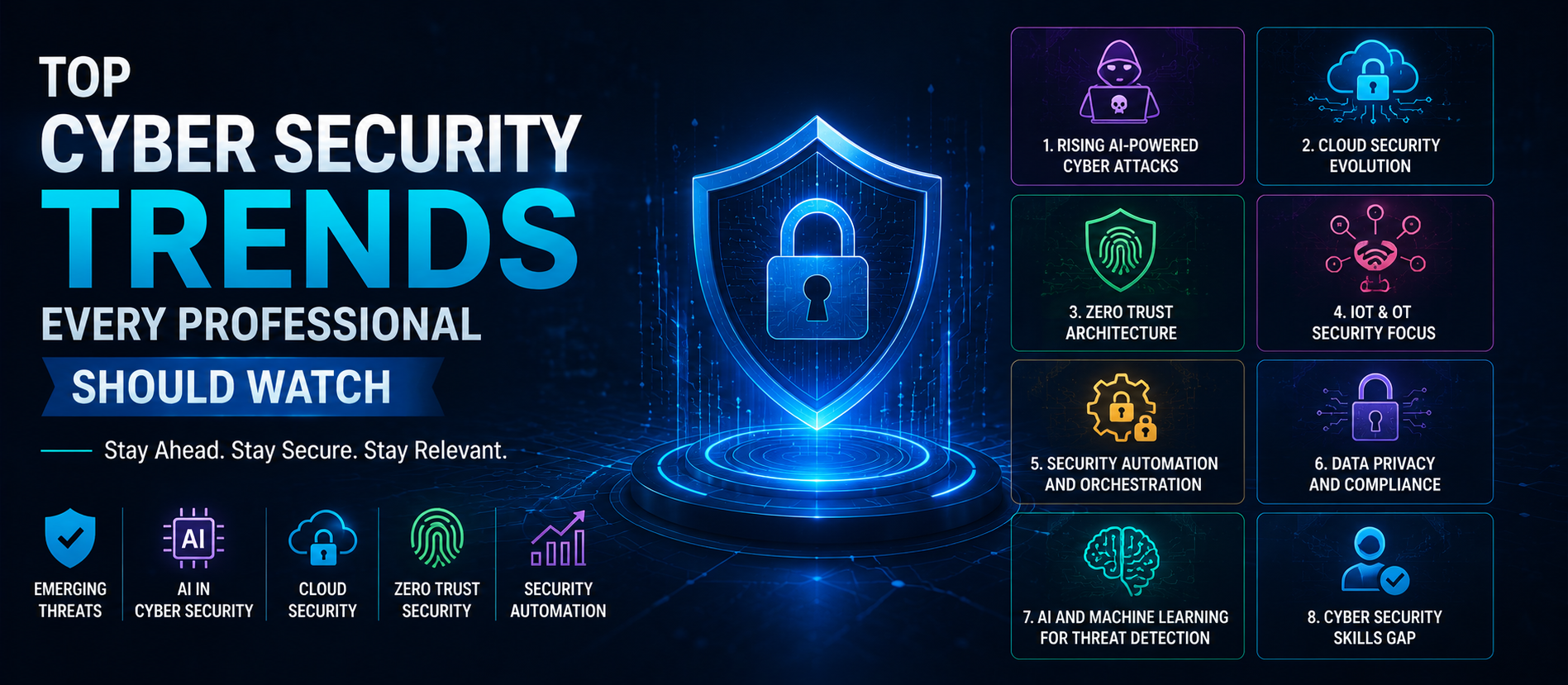
Emerging Cyber Security Trends in 2026
Several trends are shaping the future of cyber security:
- AI-powered threat detection
- Zero Trust security architectures
- Cloud-native security platforms
- Extended Detection and Response (XDR)
- Passwordless authentication
- Behavioral analytics
- Quantum-resistant encryption
Organizations that adopt these innovations will be better positioned to defend against emerging threats.
Career Opportunities in Cyber Security
The cyber security industry continues experiencing strong growth.
Popular career paths include:
- Security Analyst
- Penetration Tester
- Security Engineer
- Incident Responder
- Cloud Security Specialist
- Threat Hunter
- Chief Information Security Officer (CISO)
The demand for skilled professionals remains exceptionally high.
AEO & GEO Optimized Frequently Asked Questions
What is cyber security?
Cyber security is the practice of protecting systems, networks, devices, applications, and data from cyber threats and unauthorized access.
Why is cyber security important?
Cyber security protects sensitive information, prevents financial losses, maintains business continuity, and helps organizations comply with regulations.
What are the biggest cyber threats in 2026?
Major threats include ransomware, phishing, AI-powered attacks, insider threats, cloud security breaches, and supply chain attacks.
How can businesses improve cyber security?
Businesses should implement MFA, employee training, encryption, monitoring, incident response planning, and Zero Trust security strategies.
What role does AI play in cyber security?
AI helps detect threats, automate responses, analyze behavior, and improve security operations while also being used by attackers to enhance cyber attacks.
Conclusion
💡 Key Insight
Cyber security is one of the most important challenges and opportunities of the digital age. As technology continues advancing in 2026, organizations and individuals must remain vigilant against increasingly sophisticated cyber threats.
By understanding cyber security principles, implementing best practices, embracing emerging technologies, and fostering a culture of security awareness, businesses can reduce risk and strengthen resilience.
Cyber security is no longer optional—it is essential for protecting digital assets, maintaining trust, ensuring compliance, and supporting long-term success in a connected world.
For more expert insights on Cyber Security, AI Search Optimization, SEO, AEO, GEO, Digital Transformation, and emerging technology trends, visit Digiifrog at www.digiifrog.com.
Ready to Grow?
Talk to us about a strategy tailored to your brand — we will help you stand out in search, AI discovery and social.

Comments (0)
Log in to leave a comment.